

The Northern Lights in Iceland in December can create unforgettable views of green, pink, and purple light across the winter sky. Long nights and snowy landscapes make this a popular time to visit.

Clouds, solar activity and weather conditions affect your chances of seeing the aurora. Flexible plans and regular forecast checks help you make the most of your trip. This guide covers the best viewing times, locations, weather conditions, and forecasts to help you plan your trip.
TL;DR: Northern Lights in Iceland in December
- December offers some of the longest nights of the year for aurora watching.
- Reykjavík gets around four to five hours of daylight near the winter solstice.
- Clear skies, darkness, and sufficient aurora activity are essential for viewing.
- A new Moon offers darker skies, while a full Moon can make faint auroras harder to see.
- Check the Icelandic Meteorological Office’s aurora and cloud forecasts before heading out.
- Pack thermal layers, waterproof outerwear, insulated boots, gloves, and a warm hat.
- Choose a guided tour if you are not confident driving in Iceland’s winter conditions.
What You Will Learn in This Guide
This guide covers the best times and places to see the northern lights, December weather, moon phases, and aurora forecasts. It also explains how to choose between guided tours and self driving, photograph the lights, and prepare for cold winter nights.
Can You See the Northern Lights in Iceland in December?
Yes, December is a good time to see the Northern Lights in Iceland. Your chances depend on three things: enough darkness, clear skies, and active auroras.
Winter brings very short days to Iceland. Near the winter solstice in late December, Reykjavík gets only around four hours of daylight. This gives visitors plenty of nighttime hours to watch for the aurora borealis.
Three factors influence whether you will see the lights:
- Solar activity: Solar activity helps create the colourful lights in the night sky.
- Dark skies: Darkness makes the aurora easier to spot, especially when the display is faint.
- Cloud cover: Clouds can block your view, even when aurora activity is strong.
Seeing the Northern Lights is never guaranteed. Stay in Iceland for several nights if possible, check the forecasts regularly, and be ready to try again if the sky is cloudy.
How Many Hours of Darkness in Iceland in December?
Iceland has roughly 19–20 hours between sunrise and sunset at the winter solstice? No. The exact figure depends on the location, but in Reykjavík the sun is above the horizon for only about four hours around the shortest day. The remaining hours consist of twilight and darkness.
The winter solstice falls around 21 December. Around this date, Reykjavík gets only about four hours of daylight, with sunrise close to 11:20 AM and sunset around 3:30 PM Exact times vary slightly by date.
| Period | Approximate daylight in Reykjavík | What it means |
| Early December | Around 5 hours | Long evenings for aurora watching |
| Mid-December | Around 4–4.5 hours | Very short days |
| Around 21 December | Around 4 hours | The shortest daylight period |
| Late December | Gradually increasing | Nights remain long |
These are rounded planning figures, not exact daily sunrise and sunset times. Check the Icelandic Meteorological Office for darkness and moon timings.
Long nights provide more opportunities to watch the sky, but an aurora display may last only a few minutes before fading and returning later.
What Is the Best Time to See the Northern Lights in Iceland?

The Northern Lights can appear at any time after dark when the right conditions align. Evening and around midnight are practical times to watch, but there is no guaranteed hour for an aurora display.
Many travellers begin watching around 9 PM and stay until midnight or later if conditions look promising. Keep watching throughout the night if the forecast shows good aurora activity and clear skies.
| Time | What to expect |
| 4–7 PM. | Darkness arrives early; check the forecast |
| 7–9 PM. | A useful time to begin watching |
| 9 p.m.–1 a.m. | A practical window for many aurora outings |
| After 1 a.m. | Displays may continue, depending on conditions |
These are planning suggestions, not a scientific timetable. Solar activity does not follow a reliable daily schedule.
Before heading out, check three things: cloud cover, the aurora activity forecast, and local weather warnings. A strong aurora forecast is of little use if thick clouds cover the entire area.
Moon Phases and the Northern Lights
The Moon can affect how well you see the Northern Lights. Its light brightens the night sky, making faint auroras harder to spot. However, it also lights up snow, icebergs, and mountains, adding more detail to night photos.
A new Moon creates darker skies, making faint auroras easier to see. A full Moon brightens the sky and may reduce contrast, making weaker displays harder to see. Still, strong auroras can remain visible during a full Moon.
Does a Full Moon Affect the Northern Lights?
Yes, a full Moon can make faint auroras harder to see, but it does not stop them from appearing. Your chances of seeing them also depend on clear skies, darkness, and the strength of the aurora.
For better viewing, choose a clear night and find a spot away from city lights. Check the Moon phase and position before heading out. If you plan to take photos, some moonlight can help light up the landscape and create more detailed images.
What Can You Expect from Solar Activity Through 2030?
According to NASA and NOAA, Solar Cycle 25 peaked around 2024. Solar activity is expected to decline over the years that follow, but the Sun can still produce strong flares and geomagnetic storms during this period.
For Northern Lights travelers, this means 2026 through 2030 can still bring good aurora displays. However, solar activity can vary from day to day. A quieter year does not mean the aurora will disappear, and a more active year does not mean every night will be spectacular.
The general outlook is:
- 2026–2027: Solar activity may be lower than its 2024 peak, but strong solar storms can still occur.
- 2027–2028: Solar activity is likely to keep declining, though powerful storms and bright auroras remain possible.
- 2028–2030: Solar Cycle 25 should move further toward its quieter phase. The timing of the next solar cycle is still uncertain.
NOAA’s Space Weather Prediction Center estimates that Solar Cycle 26 could begin between 2029 and 2032, but its strength and timing remain uncertain.
For your trip, do not rely on the year alone. Long-range solar forecasts cannot tell you which night will have the best aurora. During your trip, check the latest aurora and cloud forecasts, and choose nights with dark, clear skies.
How to Read the Aurora Forecast and Kp Index
The Kp index measures aurora activity on a scale from 0 to 9. A higher number means stronger activity, but it does not guarantee a clear view of the Northern Lights.
Here is what each Kp level means:
- Kp 0–1: Very low activity. The aurora may appear faint, but you can still see it in Iceland.
- Kp 2–3: Low to moderate activity. Look for the lights if the sky is dark and clear.
- Kp 4–5: Stronger activity. The aurora may appear brighter and cover a wider area.
- Kp 6–7: High activity. Bright displays may appear across more of the sky.
- Kp 8–9: Very high activity. The aurora may reach areas farther from the poles.
You do not need a high Kp value to see the Northern Lights in Iceland. The aurora may appear even at Kp 1 or 2. Dark skies and clear weather also help you spot the lights.
Before you go out, check the Icelandic Met Office’s aurora forecast and cloud map. If you plan to drive, check SafeTravel and Road.is for the latest travel and road conditions.
NOAA’s 30 minute aurora forecast is useful for near term context, but it doesn’t guarantee visibility on a specific street, beach, or tour route.
Iceland in December Weather: What to Expect

December in Iceland is cold, windy, and changeable. The weather can shift quickly, especially outside Reykjavík and along the coast.
In Reykjavík, temperatures often hover around freezing, commonly between 0°C and 4°C (32°F–39°F). Wind can make it feel considerably colder. Rain, sleet, snow, and icy surfaces are all possible.
The south coast can be wet and windy, while northern and inland areas may experience snow and more challenging road conditions.
| Weather factor | Typical December conditions |
| Average daily high | 3.3°C (38°F) |
| Average daily low | -1.6°C (29°F) |
| Monthly precipitation | Around 95 mm (3.7 inches) |
| Daylight near the solstice | About 4 hours |
| Common conditions | Rain, snow, wind, ice and changing cloud cover |
These figures describe long-term averages, not a forecast for your travel dates.
How weather affects your aurora plans
- Cloud: Blocks your view of the sky.
- Wind: Makes long waits outside uncomfortable and can create dangerous driving conditions.
- Snow and ice: Slow travel and may close roads.
- Rain or sleet: Makes outdoor viewing and camera use harder.
- Cold: Drains phone batteries and makes it difficult to stand still for long periods.
Check the Icelandic Met Office for weather warnings and forecasts. Never put an aurora sighting ahead of your safety.
Best Places to See Northern Lights in Iceland
The best places to see the Northern Lights in Iceland are dark locations with clear views of the sky and safe access. You don’t always need to leave Reykjavík, but moving away from streetlights can improve contrast.
Here are five places worth considering.
1. Þingvellir National Park

Þingvellir is a popular choice for travellers staying in Reykjavík. It offers wide views, open landscapes, and less light pollution from the city.
The drive usually takes 45–60 minutes, depending on your starting point and road conditions. Allow extra time in winter, and check for road closures before you leave.
2. Grótta Lighthouse

Grótta Lighthouse is a convenient option for visitors without a car. It sits on Reykjavík’s edge, near the sea. You can reach the area by taxi or, depending on your accommodation, on foot. City lights remain visible, so it is not as dark as remote locations. Check coastal weather and access conditions before visiting.
3. Kleifarvatn Lake

Kleifarvatn lies on the Reykjanes Peninsula, south of Reykjavík. The lake offers a wide horizon and a dramatic setting for aurora viewing. However, the area can be windy, and winter roads may be icy. Visit only when conditions are safe.
4. Snæfellsnes Peninsula

Snæfellsnes offers mountains, coastlines and open landscapes. It is a good choice for travellers who plan to spend more than one night outside Reykjavík. Cloud cover can vary across the peninsula. A longer stay gives you more chances to see clear skies.
5. Jökulsárlón Glacier Lagoon

Jökulsárlón is known for floating icebergs and striking winter scenery. If the aurora appears above the lagoon, it can make for excellent photos.
It is a long drive from Reykjavík, often around five hours or more in good conditions. Winter weather can extend that journey or make it unsafe. It is better suited to a multi day trip than a quick evening drive.
Can you see the northern lights from Reykjavík?
Yes, you can see the northern lights from Reykjavík when the aurora is strong enough, and the sky is clear. You may even see them from your accommodation.
For a better view, move away from bright streetlights if it is safe. Grótta Lighthouse is a well known viewing spot, but check local access and weather conditions before you go.
If you do not have a car, a guided tour can take you away from the city’s light pollution without requiring you to navigate winter roads yourself.
Tours vs. Self-Driving: Which is right for you?
Choosing between a Northern Lights tour vs self driving in Iceland depends entirely on your experience and comfort level.
Driving Yourself
Self driving gives you total freedom. You can stay out as late as you want and go exactly where the cloud map tells you. However, Icelandic roads in December are often covered in “black ice,” thin, invisible ice that is incredibly slippery. Always check road.is for “Live” road conditions and safetravel.is for weather alerts. If the road is colored red (closed) or blue (very slippery), take it seriously.
Taking a Tour
Northern lights tours in Iceland in December are the safest and most reliable option for most. Professional guides spend their entire lives reading cloud maps and know the secret “holes” in the clouds where the sky might clear.
- Expertise: Guides know exactly where to go.
- Safety: You don’t have to worry about driving on ice.
- The “Free Rebook”: Most standard tours offer a “free re-try” if the lights don’t show up. This is a huge value. It means you can book for your first night and keep going back until you see them.
How much does an aurora trip cost?
A Northern Lights tour in Iceland can cost around €60–€200 per person, depending on the tour type, group size, vehicle, and what is included. Private tours usually cost more.
Remember to budget for accommodation, meals, transport, and winter clothing. Prices can also increase around Christmas and New Year, so compare options and check the final price before booking.
What to Wear Northern Lights Iceland: The Three-Layer System
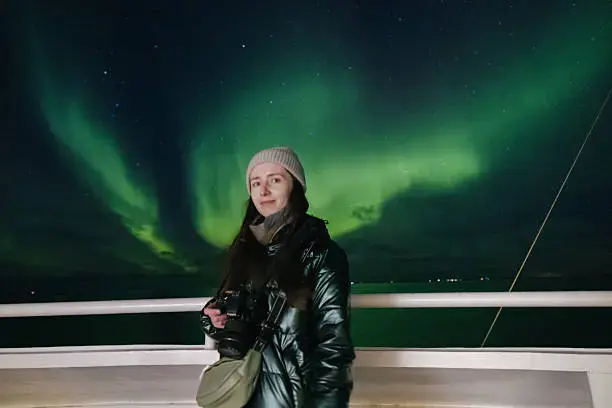
You may spend an hour or longer standing outside while waiting for the aurora. Dressing for the wind and cold makes a real difference.
The most useful approach is a three layer clothing system.
Layer 1: A Thermal Base Layer
Wear thermal underwear made from merino wool or synthetic fabric. These materials help manage moisture and keep you warm.
Avoid cotton next to your skin because it holds moisture and can leave you feeling cold.
Layer 2: An Insulating Mid Layer
Add a fleece, wool jumper or lightweight down jacket. You can wear more than one mid layer if temperatures drop or the wind becomes stronger.
The aim is to trap warm air around your body without restricting movement.
Layer 3: A Waterproof, Windproof Outer Layer
A warm winter parka or insulated waterproof jacket protects you from wind, rain and snow. Windproof trousers are also useful when you stand still for long periods.
Essential Gear You Might Forget
- Waterproof trousers: Avoid jeans, which can become cold and uncomfortable when wet.
- Waterproof hiking boots: Choose boots with good grip for snowy or slippery paths.
- Crampons or microspikes: Improve grip on icy paths and slippery sidewalks.
- Gloves: Wear warm, wind-resistant gloves or mittens to keep your hands warm.
- Beanie: Cover your head and ears to keep them warm in cold winds.
- Wool socks: Carry an extra pair in your day bag in case your socks get wet.
Rent Winter Clothing in Iceland
Winter clothing can take up a lot of luggage space, especially bulky jackets, waterproof trousers, and boots. If you want to travel light, you can rent outdoor clothing in Iceland instead of packing bulky winter gear.
Renting gives you access to practical winter gear without having to carry everything from home. IcelandCover offers outdoor clothing and equipment to help you stay warm and dry while exploring Iceland in winter.
For more advice, read this guide on what to pack for Iceland in winter.
What to Pack for Iceland in December

Pack for long periods outdoors, not just for daytime sightseeing.
Your winter packing list should include:
- Thermal tops and bottoms
- Fleece or wool mid layers
- Waterproof, windproof jacket and trousers
- Insulated, waterproof boots and hiking shoes with good grip
- Warm socks, gloves, mittens and a beanie.
- Neck warmer or scarf
- Headlamp and sunglasses
- Swimsuit and quick dry towel
- Microspikes or crampons
- Hand warmers for very cold nights
- Phone, camera and spare batteries
- Power bank and charging cables
- Small torch with a red-light mode
- Reusable water bottle and light snacks
- Swimwear for geothermal pools
- Lip balm and moisturizer
- Small backpack with rain cover
- Travel documents and any required medication
Keep spare camera batteries in a warm inside pocket, as cold weather can drain them quickly.
Northern Lights Photography Settings
Use a tripod and adjust your camera settings to capture the northern lights clearly. The best settings depend on the brightness and movement of the aurora.
Try these settings as a starting point:
| Setting | Starting point | Adjustment |
| Aperture | f/1.4–f/2.8 if available | Use a wider aperture in low light |
| Shutter speed | 2–10 seconds | Shorten it for fast-moving lights |
| ISO | 800–3200 | Raise it if the image is too dark |
| Focus | Manual focus near infinity | Check sharpness on a bright star |
| White balance | Around 3500–4000 K | Adjust to suit the scene |
| Support | Tripod | Keeps the image steady |
These are starting points rather than fixed rules. A bright aurora may need a shorter exposure, while a faint display may need more light. Use the camera timer or a remote shutter to reduce movement.
How to Photograph Northern Lights with an iPhone
Use Night mode if your iPhone supports it, and place the phone on a tripod or stable surface. Tap the aurora or a distant light to set focus, lower the exposure if bright areas look washed out, and use the longest practical Night mode exposure.
Newer phones may capture visible colour even when your eyes see only a faint glow. Avoid judging the display from a photo alone: long exposures collect more light than your eyes can see in real time.
December vs Other Months: Which Month Fits Your Trip?
December offers the longest nights. It is not automatically the best month for weather, comfort, or aurora activity. Compare darkness, road conditions, and the type of trip you want before you choose a date.
| Month | What works well | Main trade-off |
| September | Mildest conditions among the aurora months; equinox period; more daylight | Shorter nights; viewing often starts late. |
| October | A useful balance of dark evenings and daytime sightseeing | Autumn storms begin; weather can shift quickly. |
| November | Long nights and early evening darkness | More winter weather and shorter sightseeing days. |
| December | Longest nights and a festive atmosphere | Winter storms, icy roads, limited daylight, holiday closures, and a full moon on 24 December. |
| January | Very long nights and excellent darkness for aurora viewing | Cold, wind, snow, and limited daylight remain. |
| February | Longer days than midwinter while nights are still substantial | Winter road conditions continue; moonlight can affect viewing. |
| March | Equinox season and longer days for sightseeing | Dark hours are shorter; aurora viewing shifts later. |
| Early April | A final chance on dark nights early in the month | Full darkness fades; the season closes as nights brighten. |
NOAA describes the spring and autumn equinox periods as generally favourable for aurora activity. This is a general tendency, not a guarantee for a particular night.
For a first visit, October, February, or March may offer a better balance of daylight and aurora opportunities. Choose December if you value the midwinter atmosphere and long nights and can allow for weather-related changes.
Christmas and New Year: What to Know Before You Go
If you plan to visit Iceland during the holiday season, check opening hours and tour schedules in advance.
- 24 December (Christmas Eve): This is Icelanders’ main celebration day. Many shops, restaurants, public services, and tours reduce hours or close early, so check each operator’s 2026 schedule and stock up on essentials before the afternoon. Exact opening times vary.
- 25 December (Christmas Day): The city is very quiet. Self-driving is possible only if the roads and weather are suitable, and restaurant and attraction availability is limited. Reserve ahead and don’t assume normal service.
- 31 December (New Year’s Eve): Fireworks are a major part of the celebration in Reykjavík. Smoke, light, and crowds around midnight can make aurora viewing difficult, so treat the evening as a celebration first and check the latest local guidance for event details.
- 6 January (Twelfth Night): This is the end of Christmas. You can find “Twelfth Night bonfires” (Þrettándabrenna) around the city, a great way to warm up while you wait for the lights.
Holiday arrangements vary, so confirm opening hours and event details with the relevant operators before your visit.
Things to Do in Iceland in December
The most important rule for an Iceland trip is: Don’t make the Northern Lights your only goal. If you do, you might leave disappointed. Instead, plan a trip full of amazing activities and treat the lights as a “bonus.”
Popular winter activities include:
- Explore Reykjavík: Visit cafés, museums, shops, and festive streets.
- See waterfalls: Visit accessible waterfalls when weather and roads permit.
- Tour the Golden Circle: Explore Þingvellir, Geysir, and Gullfoss with a suitable tour or safe transport plan.
- Geothermal Pools: Visit the Blue Lagoon or Sky Lagoon. Nothing beats being in 40°C water while the air is -5°C.
- Ice Caves: December is the heart of the “Natural Ice Cave” season. Glacial meltwater forms these caves, and they’re only safe to visit in deep winter.
- Museums: The Perlan Museum has a spectacular aurora planetarium show. If you don’t see the real ones, this is the next best thing.
- South Coast: Visit the waterfalls Skógafoss and Seljalandsfoss. They often freeze into giant ice sculptures in December.
Remember that some attractions have shorter opening hours around Christmas and New Year. Book popular activities ahead of time and check their current schedules.
How Many Nights Do You Need to See the Northern Lights?
Four to seven nights is a sensible target for a northern lights trip to Iceland. A longer stay gives you more opportunities to find clear skies and suitable aurora activity.
One night might be enough to see the Northern Lights, but there is no guarantee. Several cloudy nights can occur in a row, particularly when a weather system remains over the same region.
If your budget allows, aim for at least three nights, ideally four or more. Keep your schedule flexible so you can move a tour or adjust your plans when conditions change.
A Simple Four Night December Plan
4 nights give you several chances to watch, but they still don’t guarantee a sighting. A multi-night stay gives weather and activity more chances to line up.
- Night 1: Arrive, get warm, and check the aurora and cloud forecasts. If conditions look good, join a nearby guided tour.
- Night 2: Keep your evening flexible. Choose a nearby viewing spot or book a tour that can change locations when cloud cover shifts.
- Night 3: Check the regional forecast and head towards the clearest safe area. Avoid driving across Iceland at night to chase a small gap in the clouds.
- Night 4: Try again if the weather and road conditions allow. If the sky stays cloudy, enjoy a local meal, relax in a geothermal pool, or explore Reykjavík.
If you are driving, check road conditions before every journey and avoid routes that exceed your experience. If you are unsure about winter driving, stay near Reykjavík and use a guided tour.
Choose flexible accommodation when possible, and read the tour’s cancellation and retry policies before booking.
FAQs about Northern Lights in Iceland in December
What is the best time at night to see the Northern Lights?
There is no fixed best time: the aurora can appear whenever it is dark and conditions align. Check the forecast throughout the night rather than assuming a single time window.
Can I see the Northern Lights from Reykjavík?
Yes, you can see them from Reykjavík when activity is strong and the sky is clear, but darker areas near the city usually give better contrast.
Will a Northern Lights tour be cancelled if it is cloudy?
A tour may be cancelled or rescheduled when cloud, wind, or road conditions make the trip unsafe or make viewing unlikely. The operator’s policy controls the outcome, so check it before booking.
Is December better than January for seeing the lights?
December and January both provide long nights and real aurora opportunities. December offers the shortest daylight and a Christmas atmosphere, while January may be calmer after the holidays but isn’t automatically safer or clearer.
Do I need a special aurora app?
No. Start with the Icelandic Met Office aurora forecast, SafeTravel, and Road.is. Other apps can provide supplementary information, but always prioritise official weather and road updates.
What happens if I do not see the lights?
You may see nothing, even with careful planning, because clouds and solar activity are outside your control. Build in several nights, ask about tour retry policies, and plan daytime experiences that make the trip worthwhile without an aurora.
Conclusion: Final Tips for Your December Aurora Trip
The northern lights in Iceland in December are worth planning for, but no sighting is guaranteed. Long nights provide plenty of viewing opportunities, while clouds, solar activity, and moonlight affect what you see.
Stay for several nights, follow official forecasts, dress in warm layers, and choose safe viewing locations. With realistic expectations and a flexible itinerary, you can enjoy Iceland’s winter scenery whether the aurora appears or not.
Ready to experience Iceland’s winter magic? Explore IcelandCover for winter clothing, gear, and travel essentials. Renting warm layers and waterproof outerwear can help reduce luggage space while keeping you comfortable during cold December evenings.

Iceland in January is cold, dark, windy, and wonderfully dramatic. Snow covered landscapes, frozen waterfalls, geothermal pools, glaciers, and long winter nights make this one of the most unique times to visit.

The country is also quieter after the Christmas and New Year holidays. However, winter brings short days, icy roads, strong winds, and changing weather. With the right clothing and a flexible plan, you can enjoy an unforgettable Icelandic winter adventure.
TL;DR: Iceland in January
- January is one of Iceland’s coldest and darkest months. Temperatures often stay close to freezing.
- Daylight increases from about 4 hours at the start of January to almost 7 hours by the end.
- Long nights make January a good month for Northern Lights viewing, but sightings are never guaranteed.
- Popular winter activities include ice caving, glacier hiking, snowmobiling, geothermal pools, and sightseeing.
- Iceland’s weather can change quickly, so check the latest forecast before heading out.
- Roads can become icy or closed during storms. Check current road conditions before driving.
- Pack thermal layers, a warm waterproof jacket, waterproof boots, gloves, a hat, and traction aids.
- Reykjavík is a convenient base for first time visitors, especially if you plan to join guided winter tours.
What You Will Learn in This Guide
This guide covers everything you need to know about visiting Iceland in January.
You will learn about the weather, daylight hours, costs, things to do, festivals, driving conditions, clothing, regional access, and common travel questions.
You’ll also learn about the disadvantages of visiting Iceland in January. This can help you decide whether winter is the right season for your trip.
Is January a Good Time to Visit Iceland?
Yes, January is an excellent time to visit if you want a true winter experience.
Snow highlights volcanic mountains, waterfalls may develop curtains of ice, and the low sun creates long blue shadows across the coast. The long nights also give you a good chance of seeing the Northern Lights.
January is quieter than the Christmas period and often less expensive than high season.
However, a road, tour, or attraction may close because of wind, snow, poor visibility, or unsafe ice. Plan key experiences, but leave space to change direction when the forecast changes.
Weather and Temperature in Iceland in January

January is a true winter month in Iceland. Temperatures are often around freezing, but strong winds can make it feel much colder.
You may experience snow, rain, sleet, hail, and even sunshine on the same day. Coastal areas tend to have milder temperatures, while northern and inland regions are generally colder. Wind can also be strong, especially in open and exposed places.
Typical January Conditions
| Area | Typical temperature | What to expect |
| Reykjavík and southwest | -2°C to 3°C (28°F–37°F) | Wind, rain, snow and occasional ice |
| South Coast | Around 0°C to 4°C (32°F–39°F) | Wet weather, snow, strong coastal winds |
| Akureyri and north | Around -5°C to 2°C (23°F–36°F) | Colder weather and more persistent snow |
| East Iceland | Around -4°C to 3°C (25°F–37°F) | Snow, wind and icy roads |
| Highlands | Often below freezing | Heavy snow and very limited access |
These are useful planning ranges, not guarantees. Weather can change quickly, and some January days may be warmer or colder than expected.
For live forecasts and weather warnings, check the Icelandic Meteorological Office.
Does It Snow in Iceland in January?
Yes. Snow is common in January, especially in northern Iceland and higher areas.
Reykjavík can experience snow, but it can also switch between rain, sleet, and freezing conditions. Snow cover is usually more reliable farther north and inland.
This creates beautiful winter scenery, but it can also make roads and walking paths slippery.
Wind Is Often More Important Than Temperature
Many first time visitors focus on the temperature and underestimate the wind.
A temperature around 0°C (32°F) may not feel extremely cold, but strong winds and wet clothing can make it feel much colder.
That is why windproof and waterproof clothing is so important in Iceland.
Always secure car doors carefully in strong winds. Avoid opening doors fully in strong gusts, as the wind can damage them.
Storms and Winter Weather
Iceland can experience severe winter storms, particularly when strong winds combine with snow, freezing rain, or poor visibility.
Don’t rely on temperature alone when deciding whether to travel. Check the latest weather and road warnings before setting out, especially if you are driving between regions.
If conditions deteriorate, it is better to delay a journey or change your itinerary than to take unnecessary risks.
How Much Daylight Does Iceland Get in January?

Iceland has very short days in January, especially at the start of the month.
However, daylight increases quickly as January goes on.
| Date | Approx. Sunrise | Approx. Sunset | Daylight |
| 1 January | 11:20 AM | 3:40 PM | About 4 hr 20 min |
| 15 January | Around 11:00 AM | Around 4:15 PM | About 5 hr 15 min |
| 31 January | Around 10:10 AM | Around 5:05 PM | Almost 7 hr |
Exact times vary slightly by location.
Short days aren’t necessarily a disadvantage. They simply change how you plan your trip.
Use the brightest part of the day for waterfalls, viewpoints, beaches, and longer drives. Save museums, restaurants, cafés, swimming pools, and northern lights hunting for the darker hours.
By late January, the extra daylight becomes noticeable.
Northern Lights in Iceland in January

Can you see the northern lights in Iceland in January?
Yes. January is one of the best times to see the Northern Lights in Iceland because the long nights provide plenty of viewing opportunities.
But there is one important point: darkness alone does not guarantee an aurora.
You also need suitable solar activity and, most importantly, clear or partly clear skies.
Cloud cover can completely hide a strong aurora. That is why it is smart to stay in Iceland for several nights rather than planning your entire trip around one evening.
Where to See the Aurora
Best locations include:
- Þingvellir National Park
- The South Coast
- Vík
- Snæfellsnes Peninsula
- North Iceland
- Mývatn
- Rural areas away from Reykjavík’s light pollution
You can also see the Northern Lights from Reykjavík when conditions are right. Grótta is a popular choice because it has less light pollution than many parts of the city.
For the best chance, check the aurora forecast and cloud cover before going outside.
If you are not comfortable driving at night in winter, a guided Northern Lights tour is often the easier option.
See IcelandCover’s Northern Lights guide for more trip inspiration.
Expert Tips for Seeing the Lights
Check aurora and cloud forecasts online. Let your eyes rest for 15 minutes away from phone screens or city lights.
Wear warm, thick clothes and stay outside for a while. Use ice spikes on your boots to stay safe on the ice.
If you drive yourself, always park in a safe spot off the road. Do not stop in the middle of the road to look at the sky.
What to Wear in Iceland in January

Your clothing can make or break your trip.
The goal isn’t to wear the thickest jacket possible. You need a layering system that protects you from cold, wind, rain, and snow.
Base layer
Start with a thermal base layer made from merino wool or synthetic material.
This layer helps move moisture away from your skin and keeps you warmer during outdoor activities.
Avoid cotton for long outdoor trips. Cotton holds moisture and can become cold when wet.
Mid layer
Add insulation with fleece, wool, or a warm synthetic or down jacket.
You can add or remove this layer depending on the weather and your activity level.
Outer layer
Your outer layer needs to protect you from wind and precipitation. Choose a waterproof and windproof jacket and outdoor trousers.
IcelandCover’s winter packing guidance also recommends thermal layers, fleece or wool, a suitable winter parka, outdoor trousers, and sturdy footwear.
If you do not want to pack bulky winter gear, renting outdoor clothing in Iceland can be a convenient option.
Essential Gear You Might Forget
- Waterproof trousers: Jeans can become cold and uncomfortable when they get wet.
- Waterproof hiking boots: Choose boots with good grip for snow and icy surfaces.
- Crampons or microspikes: These provide extra grip on icy paths and sidewalks. IcelandCover also offers hiking crampons for rent.
- Gloves: Pack warm, wind resistant gloves or mittens to protect your hands.
- Beanie: Keep your ears covered to protect them from cold winds.
- Wool socks: Pack an extra pair in your day bag in case your socks get wet.
For more local advice, see IcelandCover’s what to wear in Iceland in January guide or its complete winter clothing guide.
What to Pack for Iceland in January
Beyond clothing, keep these essentials in your luggage:
- Thermal base layers
- Fleece or wool mid-layer
- Waterproof winter jacket
- Waterproof outdoor trousers
- Insulated boots
- Wool socks
- Warm hat
- Gloves or mittens
- Neck warmer
- Swimsuit
- Sunglasses
- Portable charger
- Camera and spare batteries
- Headlamp or small flashlight
- Hand and foot warmers
- Ice cleats or crampons where appropriate
- Medication and personal essentials
A waterproof backpack or rain cover is also useful because rain and snow can arrive unexpectedly.
Don’t worry if you don’t own every piece of specialist winter gear. Renting outdoor clothing in Iceland can save valuable luggage space and give you access to gear suited to local conditions.
If you are planning to travel light, then rent your winter clothing at IcelandCover before your adventure and leave room in your suitcase for everything else.
The Best Things to Do in Iceland in January
January is the peak season for glacial activities and geothermal relaxation. Cold temperatures keep ice formations stable and accessible.
1. Explore a Natural Ice Cave

January is in the middle of Iceland’s ice cave season. Caves change as glaciers move, so each season offers different shapes, colors, and passages. Blue ice, frozen walls, and unusual formations create an unforgettable winter scene.
Never explore a natural ice cave alone. Glacier conditions can change quickly, and caves may collapse or flood. Always join a guided tour led by qualified professionals. Popular areas include Vatnajökull, Katla, Skaftafell, and Langjökull.
A South Coast trip can combine ice caving with Jökulsárlón, Diamond Beach, and glacier hiking. You can book the South Coast and Katla Ice Cave trip with IcelandCover to experience these winter highlights with a guided tour.
2. Go Glacier Hiking

Glacier hiking is possible in winter with the right guide and equipment. Solheimajokull is one of the most accessible glaciers from Reykjavik, while Skaftafell and Vatnajokull offer further opportunities in Southeast Iceland.
A guided hike may include crampons, an ice axe, and safety instruction. You should still wear warm, waterproof clothing and sturdy footwear. Glacier ice is uneven and slippery, and strong winds can make the experience demanding.
3. Relax in a Geothermal Pool

A warm geothermal pool is one of the best ways to balance Iceland’s cold weather. Choose from public swimming pools, natural hot springs, or modern spa complexes.
The Blue Lagoon is open year-round and sits between Reykjavik and Keflavik International Airport. Sky Lagoon is close to Reykjavik and offers an ocean-facing infinity pool and a multi-step spa ritual. In North Iceland, the Forest Lagoon and Mývatn Nature Baths are scenic alternatives. Laugaras Lagoon, opened in 2025, is another newer option in South Iceland.
Bring swimwear even if swimming is not your main plan. Icelandic pools are popular with locals and visitors, and many have indoor areas for warming up afterward.
4. Take a Snowmobiling Tour

Snowmobiling offers a fast way to experience Iceland’s glaciers. Tours operate in locations such as Langjökull and Vatnajökull, depending on weather and snow conditions. Some tours also combine snowmobiling with a Golden Circle trip.
Guides provide safety instructions, but routes may change if wind, visibility, or glacier conditions become unsafe.
5. Snorkel or Dive at Silfra

Silfra Fissure in Thingvellir National Park is known for clear water and its location between the North American and Eurasian tectonic plates. The spring does not freeze because of its underground water flow, and visibility can exceed 100 meters.
Winter snorkeling is possible with drysuit equipment, but participants must meet age, height, weight, swimming, and experience requirements. These differ between drysuit snorkeling, wetsuit snorkeling, and drysuit diving. Check current operator requirements before traveling. You must be able to swim and should disclose relevant medical concerns.
6. See Icelandic Horses in Their Winter Coats

Horseback riding is available throughout the year. In January, Icelandic horses grow thick winter coats and look especially fluffy. Their sure-footed nature and distinctive fifth gait, called the tolt, make them a memorable part of Icelandic culture.
Winter rides may take you across lava fields, snowy countryside, black-sand landscapes, or valleys near Reykjavik. Choose a beginner-friendly tour if you have limited experience and wear warm clothing that allows comfortable movement.
7. Try Whale Watching
January is not peak whale-watching season, but tours may operate from Reykjavik, Husavik, and Akureyri.
Possible sightings include orcas, harbor porpoises, and white-beaked dolphins. Sea conditions can be rough in winter, so wear warm and waterproof outer layers.
8. Visit Reykjavik’s Museums and Cafes

Reykjavik is an excellent January base. When weather interrupts outdoor plans, visit museums, galleries, or interactive exhibitions. Perlan features displays on glaciers, volcanoes, and the Northern Lights.
The city also has cafes, restaurants, pools, music venues, and bars. A balance of indoor culture and outdoor tours helps you handle unpredictable weather.
Where to Stay in Iceland in January
For most first time visitors, Reykjavík is the easiest base.
It has the largest selection of accommodation, restaurants, museums, pools, and tour departures. It is also a good place to wait out poor weather.
For a road trip, you can add overnight stops along the South Coast.
Good Winter Bases
- Reykjavík: Best for first time visitors, tours, restaurants, museums, and flexible plans.
- Vík: Useful for exploring the South Coast, although weather can be harsh.
- Hella or Hvolsvöllur: Convenient for South Coast trips while remaining relatively close to Reykjavík.
- Skaftafell area: Useful for glacier and ice-cave adventures farther east.
- Akureyri: A good base for northern Iceland, although winter road conditions can make the journey more difficult.
Try not to plan your accommodation too tightly. One winter storm can affect your route, so some flexibility can make your trip much easier.
Driving in Iceland in January

Driving is possible in January, but winter conditions require preparation and patience. Roads can be icy, storms can reduce visibility, and sections of the Ring Road may temporarily close. Mountain roads, remote tracks, and Highland routes are especially likely to be unavailable.
A four wheel drive vehicle with suitable winter tires can provide additional confidence, but it does not remove the risks of wind, ice, poor visibility, or closures. Four wheel drive helps with traction. It does not make driving through a storm safe.
Official Safety Sources
Check these official resources before every major drive:
- vedur.is: The main source for local weather forecasts, wind maps, and storm alerts.
- road.is: Provides live information about road conditions, including icy, snowy, and closed roads.
- safetravel.is: Operated by ICE-SAR. It provides travel alerts and allows you to submit a travel plan.
Essential Driving Tips for Winter
Follow these practical tips:
- Check the weather forecast and road conditions before every journey.
- Keep headlights on at all times.
- Reduce speed before bends, bridges, and exposed areas.
- Never stop in the middle of the road to take photos.
- Avoid unpaved roads and mountain tracks unless they are confirmed open and suitable.
- Keep warm clothing, food, water, a phone, and a charged power bank in the vehicle.
- If you become stranded, remain with the vehicle and call 112 for emergency assistance.
For many visitors, guided tours are a safer, less stressful option. They also let you enjoy the scenery without focusing on unfamiliar winter roads.
For more Iceland travel inspiration, tips, and winter experiences, watch IcelandCover’s videos on YouTube.
January festivals and events
Icelanders know how to celebrate despite the darkness. January features several unique cultural events:
- Þrettándinn (The Thirteenth): Celebrated on 6 January. This marks the end of the Christmas season with bonfires and fireworks.
- Reykjavík International Games: Scheduled for January 21–26, 2026. This multi-sport event brings athletes from around the world to the capital.
- Dark Music Days: A contemporary and new music festival held at Harpa Concert Hall. The 2026 dates are January 29–31.
- Þorrablót: A traditional Icelandic celebration connected with the old Icelandic calendar. It is associated with traditional foods and Icelandic heritage.
Events and dates can change, so check the official event information for the year you travel.
Is January Expensive in Iceland?
January is generally part of Iceland’s quieter winter travel period, particularly after the holiday season.
However, don’t assume every January trip will be cheap. Your total cost depends on flights, accommodation, rental cars, tours, food, and travel dates.
You may find better prices outside major holiday periods and by staying outside the most expensive central areas.
It’s also worth comparing January with February, November, and other nearby travel dates.
Remember that the cheapest option isn’t always the easiest in winter. A self-drive trip may cost less on paper, but a guided tour can provide better value if you’re uncomfortable driving on icy roads or dealing with sudden weather changes.
January compared with nearby months
Choosing the right winter month depends on how much daylight, winter scenery, and flexibility you want. Here is the simple comparison.
| Month | Weather | Daylight | Northern Lights | Main advantage |
| December | Cold, windy, snowy | Very short | Excellent potential | Christmas atmosphere |
| January | Cold, windy, snowy | 4.5–7 hours | Excellent potential | Quiet winter experience |
| February | Cold but gradually brighter | Around 7–10 hours | Excellent potential | More sightseeing daylight |
| March | Milder, more daylight | Around 10–13 hours | Still possible | Better balance of light and winter |
January is a good choice if you want the darkest skies, winter landscapes, and classic cold-weather experiences.
February may suit travelers who want more daylight without giving up winter activities. IcelandCover’s February guide notes that conditions remain wintry while daylight increases.
How to Plan a January Trip
The best January itinerary is one that leaves room for change.
Don’t pack every day with long drives and fixed outdoor activities. Weather can quickly change your plans, so leave some free time between major activities.
A Simple 5-Day Iceland Itinerary
Day 1: Reykjavík
Arrive, explore Reykjavík, visit a museum or geothermal pool, and look for the Northern Lights if conditions are good.
Day 2: Golden Circle
Visit Þingvellir, Geysir, and Gullfoss. Return to Reykjavík and consider an evening aurora tour.
Day 3: South Coast
Explore waterfalls and the black-sand coast. Stay flexible because road conditions can affect how far you travel.
Day 4: Glacier Adventure
Take a guided glacier hike or ice-cave tour, depending on conditions and availability.
Day 5: Reykjavík and Departure
Keep your final day flexible. Enjoy a geothermal pool, museum, café, or another short activity before leaving.
If you have more time, add extra days to the South Coast. You can also explore Snæfellsnes or North Iceland when weather and road conditions allow.
Is Iceland in January Right for You?
January is a great option if you want:
- Northern lights opportunities
- Snowy landscapes
- Ice caves
- Glacier experiences
- Fewer crowds
- Winter photography
- Geothermal pools
- A true Icelandic winter atmosphere
It may not be the best option if your priorities are:
- Long daylight hours
- Easy driving
- Hiking on most trails
- Access to the Highlands
- Mild weather
- A completely predictable itinerary
January’s biggest advantage is also its biggest challenge: winter.
If you accept that plans may change because of weather, pack properly, and leave room in your schedule, January can be an unforgettable time to visit.
FAQs about Visiting Iceland in January

How many daylight hours are there?
Reykjavík has just over four to 5 hours of daylight near the start of January and close to seven hours near the end.
Are Northern Lights tours available?
Yes. Tours operate from Reykjavík and other towns when conditions allow. Stay several nights because clear skies matter more than the date.
Is it safe to drive?
It can be, with winter experience and good conditions. Check alerts, use suitable tires, drive slowly, and be ready to change plans.
What tours run in January?
Options include the Golden Circle, South Coast, aurora trips, glacier hikes, ice caves, snowmobiling, whale watching, spas, and ice climbing.
Should cold-sensitive travelers visit?
Reykjavík’s museums, pools, restaurants, and spas offer comfortable alternatives, but outdoor highlights require proper winter clothing.
Is the Blue Lagoon open in January?
It normally operates year-round, but check current opening information before traveling and keep another geothermal pool as a backup.
Can you drive around Iceland in January?
Some routes are accessible, but roads can close, and the Highlands are generally unavailable. Check conditions before every journey and consider a guided tour.
What should I pack for Iceland in January?
Bring thermal layers, waterproof outerwear, insulated boots, warm socks, gloves, a hat, swimwear and skincare. Ice grips and spare gloves are useful.
Is January cheaper than summer in Iceland?
It is often cheaper after the holidays, but flights, accommodation and specialist tours can still be costly. Budget for weather related changes.
Conclusion
Iceland in January suits travelers who want dramatic winter landscapes, dark skies, geothermal relaxation, and fewer crowds.
You can explore ice caves, hike glaciers, search for the Northern Lights, visit waterfalls, soak in geothermal pools, and experience Reykjavík’s cultural scene.
The key is preparation. Check the weather and road conditions regularly. Dress for wind and wet weather. Most importantly, keep your itinerary flexible.
When winter conditions change, be ready to change your plans too.
Ready for Your Iceland Winter Adventure?
Make your January trip easier by preparing for cold, wind, rain, snow, and changing conditions.
Instead of filling your suitcase with bulky winter gear, consider renting outdoor clothing in Iceland at IcelandCover. You can travel with less luggage while still having winter equipment suited to Icelandic conditions.
Stay warm. Travel light. Spend more time enjoying Iceland.

Thinking about visiting Iceland in December? You are in for a truly magical experience. Picture snowy rooftops, glowing Christmas lights, steaming hot pools in the middle of winter, and a sky that might light up with the Northern Lights after dark.
December is a beautiful time to experience Iceland, but winter travel requires preparation. Weather can change quickly, daylight is limited, and road conditions can become difficult.
Good preparation makes all the difference. With the right clothing, flexible plans, and regular weather checks, you can enjoy Iceland’s winter scenery without unnecessary stress.

TL;DR: Iceland in December
- Iceland in December brings darkness, snow, storms, and magic.
- Expect four to five daylight hours daily.
- Northern lights need clear skies, not guarantees.
- Ice caves and glaciers require certified guides.
- Guided tours significantly reduce winter driving stress.
- Pack waterproof layers, grip, and warm accessories.
- Christmas lights make Reykjavik especially atmospheric.
What You Will Learn From Our Iceland in December Guide
This guide explains Iceland in December weather, daylight, costs, driving, packing, northern lights, activities, Christmas traditions, places to visit, accommodation, and a practical eight day itinerary.
It also compares December with November and January so you can choose the right winter month.
Is It Worth Visiting Iceland in December?
Yes, if you enjoy winter travel and do not mind changing plans.
Iceland in December brings Christmas lights, snowy landscapes, geothermal pools, and long nights for Northern Lights viewing. Even ordinary streets can look magical under snow and festive lights.
However, winter travel is less predictable than summer travel. Roads can be icy, strong winds can affect travel, and some tours may be cancelled because of weather.
If you are comfortable with a slower pace and flexible plans, December can be a memorable time to visit Iceland.
For a broader seasonal overview, read our Iceland weather by month guide.
Weather in Iceland in December

The weather is one of the most important things to consider when planning Iceland in December. You may experience rain, snow, wind, and sunshine on the same day.
Although Iceland is warmer than its name might suggest because of the Gulf Stream, winter can still feel very cold, especially with strong winds.
Temperature and Typical Conditions in December
Coastal areas are generally close to freezing, while northern and inland areas can be colder. Strong winds can also make temperatures feel much colder than the thermometer suggests.
| Region | Average Low | Average High | Typical Conditions |
| South / Reykjavík | -2°C / 28°F | 4°C / 39°F | Rain, snow, and sleet |
| North / Akureyri | -5°C / 23°F | 2°C / 36°F | Colder and snowier |
| Highlands | -10°C / 14°F | -2°C / 28°F | Snowy and generally closed |
Wind is an important part of Iceland’s winter weather. Even temperatures around 0°C can feel much colder when strong winds are blowing.
Always check the forecast before heading outside.
For current weather information, check the Icelandic Meteorological Office.
Rain, Snow, and Sleet
December can bring several types of precipitation. Rain, sleet and snow are all possible.
Winter storms can also bring strong winds and poor visibility. Weather warnings may affect roads, tours, and outdoor activities.
If a storm warning is issued, consider staying in Reykjavík. Museums, cafés, restaurants, swimming pools, and shops can make a good alternative to outdoor sightseeing.
Daylight and Darkness Times in December
December is Iceland’s darkest month.
The shortest day occurs around 21 December, when Reykjavík gets only about four hours and 20 minutes of daylight.
| Period | Approx. Sunrise | Approx. Sunset | Daylight |
| Early December | 10:30 AM | 4:00 PM | About 5.5 hours |
| 21 December | 11:22 AM | 3:30 PM | About 4 hours 20 minutes |
| Late December | 11:15 AM | 3:45 PM | About 4.5 hours |
The short days may sound difficult, but they also create beautiful winter light. The sun stays low, producing soft pink, orange, and purple tones around sunrise and sunset.
The key is to plan your sightseeing around daylight.
For example, if you are taking a South Coast and Katla Ice Cave day trip, start early. The drive from Reykjavík to Vík is about 187 km (116 miles) and can take around 2.5 to 3 hours in good conditions.
Winter conditions can make the journey longer, so always allow extra time.
What to Wear and Pack for Iceland in December

Good clothing is one of the most important parts of a December trip.
The best approach is to wear several layers instead of relying on one heavy coat. This lets you adjust your clothing as temperatures change.
The Three Layer System
1. Base layer
Choose thermal underwear that fits snugly against your skin for better warmth and insulation.
Merino wool is the gold standard because it stays warm even when it gets slightly damp. Avoid cotton at all costs. Once cotton gets wet, it stays wet and drains your body heat.
2. Mid layer
The mid layer provides insulation. A fleece, wool sweater, down vest, or insulated jacket can work well.
On especially cold days, you can add another mid layer.
3. Outer layer
Your outer layer protects you from rain and wind.
Choose a waterproof and windproof jacket. A good winter parka can provide extra coverage and protection from strong winds.
Essential Gear You Might Forget
- Waterproof trousers: Jeans can become cold and uncomfortable when wet.
- Waterproof hiking boots: Choose boots with good grip.
- Crampons or microspikes: These can help on icy paths and sidewalks. You can rent hiking crampons from IcelandCover.
- Gloves: Choose warm, wind resistant gloves or mittens.
- Beanie: Cover your ears to protect them from the cold wind.
- Wool socks: Pack at least one spare pair in your day bag.
Winter Gear Rental in Reykjavík
Winter clothing can take up a lot of luggage space, especially if you are bringing a bulky parka, waterproof trousers, and winter boots.
If you don’t want to pack all your winter gear, you can rent outdoor clothing in Iceland. Renting can help you travel lighter while giving you access to warm clothing suited to Icelandic winter conditions.
IcelandCover keeps you warm and dry so you can explore our little island without worrying too much about the weather.
For a complete checklist, see our Ultimate Winter Packing List.
Iceland in December Packing Checklist
Packing correctly matters more than packing heavily.
Use adjustable layers that handle wind, rain, snow, and indoor heating. One thick coat alone is not enough.
Clothing Essentials
- Thermal base layer
- Thermal leggings or warm long underwear
- Fleece, wool, or insulated mid layer
- Waterproof and windproof jacket
- Waterproof trousers
- Insulated boots with good grip
- Beanie
- Warm wool or thermal socks
- Gloves or mittens
- Neck warmer or scarf
- Comfortable indoor clothing
Useful Extras
- Microspikes or crampons
- Swimsuit
- Quick dry towel
- Reusable water bottle
- Power bank
- Sunglasses
- Lip balm and moisturizer
- Small backpack with rain cover
- Headlamp
- Spare gloves and socks
Cold temperatures can quickly drain your phone and camera batteries. Keep spare batteries close to your body to help them stay warm.
A lens cloth is also useful when photographing snow, rain, or condensation.
Best Things to Do in Iceland in December
December offers several experiences that are especially enjoyable in winter.
Here are 8 best activities to consider.
1. Explore a Blue Ice Cave

Winter is the main season for many natural ice cave tours.
Meltwater creates caves inside glaciers, and freezing temperatures can produce striking blue ice formations. Vatnajökull is one of Iceland’s most popular glacier areas for ice cave tours.
Ice caves can change quickly. Never enter a natural ice cave alone.
Always use an experienced glacier guide who checks current conditions.
2. Hunt for the Northern Lights
December brings long nights, creating plenty of opportunities to look for the Aurora Borealis.
Northern Lights tours leave Reykjavík by bus, minibus, Super Jeep, and sometimes boat.
However, you need clear skies and solar activity. A sighting is never guaranteed.
If you book a tour, look for an operator that offers rebooking when conditions are poor.
For more information, read our guide to seeing the Northern Lights in Iceland.
3. Walk on a Glacier

Guided glacier hikes are available in several parts of Iceland.
Sólheimajökull and Skaftafellsjökull are popular options. Tours usually include safety equipment and instruction.
Glaciers contain hidden crevasses and unstable ice. Always explore them with a qualified guide.
4. See Frozen Waterfalls
Iceland’s waterfalls look different in winter.
Gullfoss can develop large ice formations around the falls. Seljalandsfoss may also become very icy, making the path behind the waterfall difficult or unsafe.
Skógafoss remains impressive throughout winter, with powerful water flowing between dark basalt cliffs.
Always follow safety barriers and local instructions.
5. Snorkel at Silfra
Silfra Fissure in Þingvellir National Park is famous for its exceptionally clear water.
The water is around 2°C (35°F), but dry suits help protect visitors from the cold.
Tour operators provide equipment and instructions. Some tours have requirements related to age, height, weight, swimming ability, and health.
Check the requirements before booking.
6. Go Whale Watching or Snowmobiling

Whale watching tours operate from Reykjavík in December. White beaked dolphins are among the species that may be seen.
You can also join snowmobile tours on Langjökull. Some tours combine snowmobiling with a visit to the Into the Glacier tunnel.
Bring warm layers even when the operator provides safety equipment.
7. Relax in a Geothermal Pool
Few things feel better than sitting in a warm pool while cold air surrounds you.
The Blue Lagoon is Iceland’s best-known geothermal spa. Other popular options include Sky Lagoon near Reykjavík and Mývatn Nature Baths in North Iceland.
Local swimming pools are also worth visiting. They are often less expensive and offer a more everyday Icelandic experience.
8. Winter Wildlife and Icelandic Horses

December is a good time to see Icelandic horses in their thick winter coats.
You may also see reindeer in East Iceland. They often move to lower areas in winter to find food.
Arctic foxes also live in Iceland, but they are shy and difficult to spot.
If you see wildlife, keep a safe distance and never feed animals without permission from the owner or operator.
Things to Do in Reykjavik in December
Reykjavík is a convenient base for a December trip.
The city has museums, cafés, restaurants, swimming pools, shops, and tour operators. This is especially useful when bad weather affects outdoor plans.
Consider these activities:
- Visit Harpa Concert Hall.
- Explore the National Museum of Iceland.
- Visit Perlan’s exhibitions and planetarium.
- Walk along Laugavegur and Skólavörðustígur.
- Explore cafés and galleries in Grandi.
- Join a Reykjavík food tour.
- Swim at Sundhöllin or Laugardalslaug.
- Visit Sky Lagoon.
- Explore Árbæjarsafn Open Air Museum.
- See the Christmas lights and seasonal decorations downtown.
For more Iceland travel inspiration, tips, and winter experiences, watch IcelandCover’s videos on YouTube.
For nearby attractions, consider a guided Golden Circle or South Coast tour. You can also read our guide on what to wear in Reykjavík.
Best Places to Visit in December

Different parts of the country offer vastly different experiences in early winter.
1. Reykjavík and the Southwest
The capital is the heart of the festive season. The streets are lined with lights, and the “Christmas Cat” statue stands tall in the center.
The Golden Circle is usually accessible, though Gullfoss may be partially frozen.
2. The South Coast
Home to the famous black sand beaches of Reynisfjara and the glacier lagoons of Jökulsárlón.
In December, the contrast between the black sand and white snow is breathtaking. However, the wind can be particularly brutal here, especially near the mountains.
Check our guide on outdoor clothing for the South Coast.
3. North Iceland (Akureyri and Mývatn)
The North is a true winter wonderland with guaranteed snow. It is the best place for skiing and seeing the “real” winter.
The Mývatn Nature Baths are a fantastic alternative to the Blue Lagoon.
Note that driving to the North in December can be challenging due to mountain passes. Flights from Reykjavík are a good alternative.
4. Snaefellsnes Peninsula
The Snaefellsnes Peninsula is magical in December and is often called “Iceland in Miniature.”
Mount Kirkjufell looks stunning under the Aurora, but be prepared for heavy winds coming off the ocean. Snaefellsnes can offer dramatic coastlines, mountains, sea stacks, and glacier views.
Winter weather may limit access or make a multi day visit more demanding. Guided tours are a good choice if you do not have winter driving experience.
5. North, East, Westfjords, and the Highlands
These regions can be beautiful but more difficult in December.
The Highlands are generally closed to ordinary traffic, and parts of the Westfjords, North, and East may be affected by deep snow, storms, or temporary road closures.
Check conditions rather than relying on a fixed summer map.
Driving in Iceland in December: Safety First

Driving in Iceland during the winter requires experience, patience, and extreme caution.
Roads are frequently icy, and sudden weather shifts can reduce visibility to zero in minutes
Official Safety Sources
Check these websites before every major drive:
- vedur.is: The go to source for local weather forecasts, real time wind maps, and storm alerts.
- road.is: This site provides live maps showing which roads are icy, snow covered, or closed. The Road and Coastal Administration manages it.
- safetravel.is: It is operated by ICE-SAR. This site provides travel alerts and allows you to submit a travel plan so they can find you in an emergency.
Essential Driving Tips for Winter
Before every long drive, follow these winter tips:
- Rent a 4×4: For any trip outside of Reykjavik, a 4×4 SUV with winter tires is highly recommended. It provides better traction on icy roads and more stability in strong winds.
- Watch for Black Ice: Roads that look wet might actually be covered in invisible, slippery ice. Slow down when temperatures drop below freezing.
- Use Gentle Control: Avoid sudden braking or steering. Steady, gentle movements are key to maintaining traction on packed snow.
- Watch for Wind Exposure: Crosswinds are strongest on bridges and open plains. Maintain a firm grip on the steering wheel, and open car doors carefully to avoid the wind catching them.
- Refuel Often: Gas stations can be limited in rural areas. Never let your tank drop below half, especially in winter when you might need to keep the engine running for heat if you get stuck.
Driving Regulations
Seat belts are required for all passengers.
General speed limits include:
- Urban areas: 30–50 km/h, depending on the road
- Gravel roads: Up to 80 km/h where posted
- Paved rural roads: Up to 90 km/h where posted
Always follow the posted speed limit and adjust your speed to the weather and road conditions.
The 112 Iceland app can also help with emergencies and safety information.
For more information about winter clothing, read our guide to what to wear in Iceland in December.
Cultural Etiquette: Geothermal Pools
Visiting a local pool is one of the most authentic Icelandic experiences.
However, there are strict rules:
1. Shower Naked: You must shower thoroughly without a swimsuit before entering the pool. This is a hygiene requirement, as Icelandic pools use very little chlorine.
2. Leave Shoes Outside: Most locker rooms require you to leave your outdoor shoes in a rack at the entrance.
3. Socialize in the Hot Tub: The heitir pottar (hot tubs) are an important part of Icelandic pool culture. Locals often use this time to chat about the weather, current events, and everyday life.
Photography Tips for the December Darkness
Short daylight hours create some excellent photography opportunities.
Here are a few useful tips.
- Capture the Golden Hour: Since the sun stays low, you can capture “golden hour” light all day long.
- Long Exposures: Use a tripod for landscapes to compensate for the low light.
- Keep Batteries Warm: Camera batteries drain significantly faster in the cold. Keep spares in an inner pocket close to your body heat.
- Avoid Condensation: When coming back inside, keep your camera in its bag to let it warm up slowly. This prevents moisture from forming on the internal electronics.
December vs. November and January: A Comparison
Many travelers wonder whether December is the best choice compared with the adjacent months.
If you are still deciding between November, December, and January, this table helps compare the winter experience.
Table 3: Winter Month Comparison
| Feature | November | December | January |
| Daylight | 6–8 hours | 4–5 hours | 5–6 hours |
| Temp (Avg High) | 4°C (39°F) | 4°C (39°F) | 2°C (36°F) |
| Snow Likelihood | Moderate | High | Very High |
| Crowd Levels | Low | High (end of month) | Low |
| Festivities | Low | Very High | Low |
| Northern Lights | Excellent | Excellent | Excellent |
December peaks for “coziness” and holiday spirit. November offers slightly more daylight for driving.
January can offer a deeper winter feel but may also bring challenging weather. You can read more about other months in our November guide or our March guide.
How Much Does Iceland Cost in December?
Iceland can be an expensive destination, and prices vary by travel style.
Early December can be quieter than the Christmas and New Year period. Accommodation, tours, and restaurants may be more expensive around the holidays.
| Expense area | December planning note |
| Accommodation | Book early for Christmas and New Year. Prices vary widely |
| Car rental | Four wheel drive may cost more than a small car |
| Tours | Ice caves and aurora tours can sell out |
| Food | Restaurants may offer seasonal menus and Christmas buffets |
| Attractions | Pools and museums may have different holiday hours |
| Transport | Airport transfers and guided packages simplify winter travel |
Opening hours can change around Christmas and New Year.
Some businesses may close or reduce their hours on December 24–26 and around 31 December and 1 January.
Always check directly before visiting.
Christmas and New Year’s Traditions

Icelanders take the holidays seriously, and December is filled with local customs and festivities.
The 13 Yule Lads and the Christmas Cat
Iceland has 13 Yule Lads, known as Jólasveinar.
According to Icelandic tradition, they arrive one by one during the 13 nights before Christmas.
Children leave out a shoe, and the Yule Lads may leave small gifts.
Iceland also has the Jólakötturinn, or Christmas Cat.
According to the legend, the giant cat eats people who do not receive new clothes for Christmas.
Christmas Eve and Christmas Day
Christmas Eve is the main Christmas celebration for many Icelandic families.
Families usually gather for dinner and exchange gifts in the evening.
Popular seasonal foods include hangikjöt, smoked lamb, and laufabrauð, a thin decorative bread.
If you want to try Icelandic food, consider booking a local Reykjavík food tour earlier in your trip.
New Year’s Eve
New Year’s Eve is one of Reykjavík’s biggest celebrations of the year.
Fireworks fill the sky around midnight, and local communities also hold traditional bonfires known as brennur.
If you plan to spend New Year’s Eve in Reykjavík, book accommodation and restaurants well in advance.
Suggested Eight Day Iceland Itinerary
This plan uses guided tours and city time rather than assuming safe winter self driving every day.
Day 1: Arrive in Iceland
Arrive at Keflavík Airport, transfer to Reykjavík, and relax at a geothermal spa.
Day 2: Explore Reykjavík
Visit museums, cafés, shops, and local swimming pools. Keep the day relaxed in case of bad weather.
Day 3: Visit the Golden Circle
Take a guided Golden Circle tour and see Þingvellir National Park, Geysir, and Gullfoss.
Day 4: Explore the South Coast
Travel along the South Coast toward Vík or join a guided day tour. Visit waterfalls and other attractions if weather conditions allow.
Day 5: Visit Jökulsárlón
Visit the Jökulsárlón Glacier Lagoon and join a guided ice caving tour, if conditions allow.
Day 6: Return to Reykjavík
Travel back toward Reykjavík and leave the evening open for a Northern Lights tour.
Day 7: Choose a Flexible Activity
Visit the Snaefellsnes Peninsula, explore a lava cave, try Silfra snorkeling, or spend another day exploring Reykjavík.
Day 8: Fly Home
Enjoy a relaxed breakfast, allow plenty of time for your airport transfer, and fly home.
Add an extra buffer day if seeing the Northern Lights or reaching the Glacier Lagoon is important.
Weather cancellations are normal in Icelandic winter and should not be treated as a travel failure.
Pros and cons of visiting Iceland in December
December can be a fantastic winter destination, but it is not right for every traveler.
Pros
- Festive Christmas atmosphere in Reykjavík
- Long nights for Northern Lights tours
- Winter landscapes and snowy scenery
- Ice cave season
- Geothermal pools are especially enjoyable in cold weather
- Fewer daylight hours can create beautiful photography conditions
Cons
- Very limited daylight
- Unpredictable weather
- Possible road and flight disruptions
- Some businesses close or reduce hours around Christmas
- Winter driving can be challenging.
FAQs about Iceland in December

1. Is everything closed on Christmas?
Most shops and grocery stores close by 2:00 PM on 24 December and stay closed all day on the 25th. Some restaurants in the Reykjavik city center remain open, but they will be fully booked weeks in advance. If you are staying in an Airbnb, buy your groceries by the 23rd!
2. Is it too dark to enjoy the scenery?
No. The “limited” daylight is actually a 4-5 hour sunrise/sunset. The colors are spectacular, and the snow makes the landscapes feel brighter than you would expect. Just plan to be at your main destination by 11:30 AM to catch the start of the light.
3. Should I rent a car or take tours?
If you are not experienced in driving on ice and snow, we strongly recommend taking guided tours. Professional drivers know how to handle Arctic storms and icy mountain passes. If you rent, make sure it’s a 4×4 with studded winter tires.
4. What is the most important item to pack?
Besides a good parka, pack a waterproof layer. Getting wet in 0°C (32°F) weather is the fastest way to get hypothermia. Whether you buy or rent your clothes, make sure they are tested for Icelandic rain and wind.
5. Are there any hidden gems in December?
The Christmas Cat (Jólakötturinn) in downtown Reykjavik is a must see. Also, seek out the Yule Lads’ trail in the botanical gardens.
6. Can I visit the Blue Lagoon on Christmas Day?
Yes, the Blue Lagoon typically remains open on Christmas, but you must book months in advance as it is one of the few things to do on that day.
7. Is December a good time to visit Iceland?
Yes, for winter scenery, Christmas atmosphere, geothermal bathing, ice caves, and long northern lights nights. It is less suitable for fixed schedules or inexperienced self drive travelers.
8. Can you go ice caving in December?
Yes. Natural caves are weather dependent and require experienced glacier guides.
9. Is it safe to drive in Iceland in December?
It can be safe for experienced winter drivers who check conditions and remain flexible. Guided tours are often easier for visitors unfamiliar with snow, ice, and strong wind.
10. What should I pack for Iceland in December?
Bring thermal layers, waterproof outerwear, insulated boots, warm accessories, grip aids, swimwear, a power bank, and spare camera batteries.
Conclusion
Iceland in December offers snowy landscapes, festive lights, geothermal pools, ice caves, and long nights for Northern Lights viewing. However, short daylight hours, changing weather, and icy roads require careful planning.
Pack warm, waterproof layers and keep your itinerary flexible. With the right preparation, December can be an unforgettable winter adventure. Ready to plan your trip? Explore IcelandCover for winter clothing, gear, and travel essentials.

November is a magical time to visit Iceland.
Snow begins to cover parts of the country, daylight gets shorter, and the nights become best for Northern Lights hunting.
You can still enjoy waterfalls, glaciers, black sand beaches, geothermal pools, and famous sightseeing routes. Winter tours also begin to take center stage, with ice caves and snowmobiling among the top choices.
However, Iceland in November needs careful planning. Weather can change fast. Roads may become icy, and daylight is limited.
With the right clothes, a flexible plan, and careful driving, Iceland in November can be an amazing experience.

Key Takeaways: Iceland in November
- Iceland in November has cold temperatures and limited daylight.
- Temperatures average between 0°C and 4°C (32°F to 39°F).
- Daylight drops quickly during the month.
- November offers good chances to see the Northern Lights.
- Ice caves and snowmobiling are popular winter activities.
- The Golden Circle is usually open and easy to visit.
- Winter driving needs extra care.
- Tourist numbers are lower than in summer.
- Warm layers and waterproof clothing are essential.
What You Will Learn in This Guide
This guide explains what to expect when visiting Iceland in November.
You will learn about November weather, daylight hours, Northern Lights opportunities, winter activities, driving conditions, clothing, costs, events, and places to stay.
You will also find a practical packing list and a sample seven-day itinerary.
Is November a Good Time to Visit Iceland?

Yes, November can be an excellent time to visit Iceland. The country looks peaceful, dramatic, and often snowy. Summer crowds have reduced, while winter activities are becoming available.
Flights and accommodation may also cost less than during the summer peak. Popular attractions can still become busy. The Golden Circle and South Coast remain especially popular.
November does bring challenges. Roads may become icy, daylight is limited, and storms can disrupt plans. Keep your plans flexible so you can change them when needed.
The Northern Lights are never guaranteed, so enjoy them as an extra part of your trip rather than the main reason to visit Iceland.
Iceland Weather in November
The Iceland weather in November is unpredictable. Average temperatures often range from 0°C and 4°C (32°F to 39°F). Temperatures may fall lower outside the capital.
Coastal areas can feel colder because of strong winds. Higher areas may receive more snow. Wind chill can make mild temperatures feel freezing.
You may experience the following conditions:
- Snow and icy roads
- Rain and sleet
- Strong coastal winds
- Clear blue skies
- Sudden weather changes
- Temporary road closures
Always check the forecast before leaving your accommodation. Check road conditions before a long drive, and change your route if the roads become unsafe.
How Much Daylight Does Iceland Get in November?
Daylight hours decrease quickly throughout November.
- Early November: Iceland gets nearly 8 hours of daylight. The sun rises around 9:10 AM and sets around 5:10 PM.
- Late November: Daylight drops to just over 5 hours. The sun rises around 10:43 AM and sets around 3:49 PM.
Exact times depend on your location and travel date.
The low sun creates beautiful golden and purple light. It also gives photographers more atmospheric conditions. Plan outdoor activities during the brightest part of the day.
Remember that darkness comes early in November. Driving after sunset needs extra care, and bad weather can make some attractions harder to reach.
Does it snow in Iceland in November?
Yes. Snow is possible in November, but it is not guaranteed everywhere.
Reykjavík may see snowfall without keeping the snow settled. Northern areas and higher elevations usually have more wintry conditions.
Some trips produce white landscapes and frozen paths. Other trips bring rain, wind, and only small patches of snow. Both experiences are normal.
Prepare for winter, but do not expect a permanent snow covered country. Iceland’s landscape can look different from one region to another.
Can You See the Northern Lights in November?

Yes. November offers good opportunities to see the Northern Lights because of the long hours of darkness. The aurora season usually runs from late August or early September until April.
November has long, dark nights, so you have more chances to see the Northern Lights. However, darkness does not guarantee a sighting.
You also need clear skies and enough aurora activity. Thick clouds can hide even a strong display, while bright city lights can make faint auroras harder to see.
Try to plan several aurora opportunities. Do not rely on your first night. You might see a display immediately, or you might need several attempts.
What to Wear in Iceland in November

Packing for Iceland in November means preparing for cold temperatures, rain, snow, and strong wind.
Layers are the best approach because conditions can change throughout the day.
For more seasonal packing advice, read our complete guide on what to wear on your Iceland trip for extra tips and packing ideas.
Layering for Unpredictable Weather
A three layer system works well for Iceland in November.
Base layer: Wear thermal tops and leggings made from wool or synthetic materials. Avoid cotton because it holds moisture.
Middle layer: Add a fleece, wool sweater, or warm insulated layer to help retain body heat.
Outer layer: Wear a waterproof and windproof jacket with a hood. Waterproof trousers can also provide extra protection on rainy or snowy days.
Footwear
Waterproof hiking boots with good grip are essential for Iceland in November. Choose boots with good ankle support and enough room for warm socks.
Trail runners and regular sneakers are no longer a good choice for November. They may work well in warmer months, but they provide less protection from cold, wet, snow, and icy conditions.
Ice and slush can make paths slippery. Depending on the activity and conditions, traction aids such as ice cleats may also be useful.
Rent Instead of Packing Everything
You do not need to fill your suitcase with bulky winter clothing.
IcelandCover provides winter gear rentals in Reykjavík including jackets, gloves, boots, crampons, and complete winter clothing packages.
Renting the right gear helps you travel lighter while staying prepared for Iceland’s cold, wet weather.
What to Pack for Iceland in November

Packing the right clothing is essential for staying warm and comfortable in Iceland in November.
Cold temperatures, rain, snow, and strong winds can occur, so focus on warm layers and waterproof outerwear.
Base Layers
- Thermal long sleeve tops
- Thermal leggings
- Wool or synthetic base layers
- Extra base layer set
Avoid using cotton as a base layer, as it absorbs moisture and can leave you feeling colder.
Mid Layers
- Fleece jacket
- Wool sweater
- Warm insulated jacket
- Lightweight down or synthetic insulated layer
Wear multiple layers that you can easily add or remove as temperatures fluctuate.
Outer Layers
- Waterproof and windproof jacket
- Waterproof trousers
- Warm winter coat
- Jacket with a hood
Choose an outer layer that shields you from snow, rain, and strong winds.
Warm Accessories
Other Clothing
- Warm hiking pants
- Comfortable indoor clothes
- Swimsuit for geothermal pools
- Extra underwear
- Sleepwear
Save Space Tip: You do not need to pack every winter item yourself.
If you need additional clothing for your trip, IcelandCover offers convenient winter clothing packages for rent.
This can save luggage space while helping you prepare for Iceland’s cold and wet November weather.
Driving in Iceland in November

Driving in Iceland during November requires preparation.
Snow, ice, rain, wind, and poor visibility can make roads difficult. Road and weather conditions in Iceland can change rapidly, and temporary road closures may occur.
Always check the latest weather and road conditions before setting out on a long journey.
Check the weather and road conditions before every long journey.
If conditions become unsafe, change your plans. Missing an attraction is better than taking an unnecessary risk.
Should You Hire a 4×4 in November?
A 4×4 can help on certain routes and in winter conditions, but it does not eliminate the risks of winter driving.
Four-wheel drive cannot remove ice from the road or make a closed or unsafe route passable.
Choose a vehicle based on your route, expected conditions, and driving experience. Your rental company can also advise you on suitable vehicles.
Can You Drive the Ring Road in November?
Much of Route 1 remains open in November, but winter conditions can make a Ring Road trip more challenging than a summer journey.
Snow, ice, strong winds, poor visibility, and road closures can affect your plans.
Leave extra time between destinations and avoid scheduling long drives every day.
If you are not used to winter driving, consider focusing on Reykjavík, the Golden Circle, and the South Coast instead.
Can You Visit the Highlands in November?
Most travellers should not plan a November trip around Iceland’s Highlands.
Many F-roads close for winter, and some areas become difficult or impossible to reach.
Never drive past a closed road sign. Always follow current road information and local safety guidance.
How to Get Around Iceland in November
Most international travellers arrive at Keflavík International Airport.
From the airport, you can travel to Reykjavík by shuttle bus, private transfer, or rental car.
Many visitors select Reykjavík as a base for day trips. Guided tours can also be useful because they remove much of the stress of winter driving.
Public buses are available in Reykjavík, but public transport is limited in many rural areas.
Domestic flights can connect Reykjavík with other parts of Iceland, including Akureyri.
Always allow extra travel time because weather can cause delays.
Is Iceland Expensive in November?
Yes. Iceland can still be expensive in November, although some travel costs may be lower than during the summer peak.
Your budget should include accommodation, food, rental car, fuel, tours, airport transfers, geothermal pools and other paid attractions.
You can save money by purchasing some of your food and supplies from local supermarkets. Bread, fruit, snacks, drinks, and simple meals can work well for road trips.
Public swimming pools and many natural attractions are also more affordable than private tours.
Are There Fewer Tourists in Iceland in November?
November is generally quieter than July and August.
You may find fewer visitors at major attractions, making some places feel more peaceful.
However, famous locations can still become busy. Reykjavík, the Golden Circle, the Blue Lagoon, and popular South Coast attractions remain popular.
Hotels and tours can also fill up, especially during busy weekends and events.
Book important activities in advance when possible.
Where to Stay in Iceland in November
Reykjavík is a convenient base for many November trips.
The city has restaurants, cafés, museums, swimming pools, shops, and tour operators. It is also a convenient base for Northern Lights and Golden Circle tours.
If you plan to visit Jökulsárlón Glacier Lagoon, consider staying farther east along the South Coast.
This can save time on the road and make your trip easier.
When choosing accommodation, look for reliable heating, parking, easy road access, flexible booking terms and breakfast options.
During severe weather, always check whether your accommodation can be reached safely.
What Is Open in Iceland in November?
Many popular attractions remain open in November.
These can include:
- The Golden Circle
- The South Coast
- Reykjavík museums
- Geothermal pools
- Restaurants and cafés
- Glacier tours
- Ice cave tours
However, opening hours and tour availability can change.
Some mountain roads, Highland routes, and remote trails are closed for winter.
Always check current information before travelling to a specific attraction.
Advantages of visiting Iceland in November
November has several benefits:
- Long nights create good Northern Lights opportunities.
- Snow can transform the landscape.
- Geothermal pools feel especially relaxing.
- Ice cave tours are available in winter.
- Popular attractions are usually less crowded than they are in summer.
- Reykjavík has many indoor activities.
The shorter days can also encourage a slower travel pace.
You do not need to rush from one attraction to another.
Disadvantages of Visiting Iceland in November
November also has some challenges:
- Daylight is limited.
- Weather can change your plans.
- Snow and ice can make driving harder.
- Some mountain roads are closed.
- Northern Lights sightings are never guaranteed.
- Outdoor paths can become slippery.
If you want long days and easier driving, summer may suit you better.
If you enjoy winter scenery and flexible plans, November can be a great choice.
Practical Tips for Visiting Iceland in November
Keep these tips in mind:
- Check the weather every morning.
- Check road conditions before long drives.
- Book popular tours and spas ahead of time.
- Leave extra time between destinations.
- Keep your itinerary flexible.
- Carry a power bank because cold weather can drain batteries faster.
- Wear reflective clothing when walking near roads after dark.
- Follow signs and local safety advice.
- Never enter a glacier or ice cave without a qualified guide.
- Do not plan your entire trip around seeing the Northern Lights.
Good planning can make winter travel in Iceland easier.
Recommended Iceland Itineraries for November
A seven-day trip can cover Reykjavík, the Golden Circle, and parts of the South Coast.
Day 1: Arrive at Keflavík and travel to Reykjavík. Visit a geothermal spa if conditions allow.
Day 2: Explore the Golden Circle. Visit Þingvellir, Geysir, and Gullfoss.
Day 3: Drive along the South Coast. Stop at Seljalandsfoss and Skógafoss.
Day 4: Visit Vík and nearby black sand beaches. Check road and wave conditions before visiting the coast.
Day 5: Visit an ice cave with a guide and explore Jökulsárlón Glacier Lagoon when road conditions are safe.
Day 6: Begin the drive back west. Stop at suitable attractions along the way if conditions allow.
Day 7: Return to Reykjavík. Enjoy shopping, cafés, museums, and a final meal before departure.
Keep the itinerary flexible. November weather may require you to change the order of activities or skip a stop.
Common mistakes to avoid
Many November travel problems come from poor planning.
Avoid these common mistakes:
- Packing only light clothing
- Wearing shoes with smooth soles
- Planning too many stops in one day
- Driving without checking road conditions
- Treating the Northern Lights as guaranteed
- Entering glaciers without a guide
- Ignoring wind warnings
- Leaving no spare time in your schedule
- Underestimating driving distances
- Assuming every outdoor attraction will be accessible
A slower trip is often better in November.
FAQs About Iceland in November

1. How cold is Iceland in November?
In November, Iceland is quite cold and experiences the true arrival of winter, with average temperatures ranging from 0°C and 4°C (32°F to 39°F).
2. How many hours of daylight does Iceland get in November?
Daylight decreases from around eight hours early in the month to approximately five hours by the end.
3. Can you drive the Ring Road in November?
Often, yes, but conditions can be challenging. Check the road forecast daily and drive only when conditions are suitable.
4. Are the F-roads open in November?
They are generally closed during winter and must not be entered when officially closed.
5. What should I wear in Iceland in November?
Wear thermal layers, warm mid-layers, waterproof outerwear, sturdy waterproof footwear, gloves, a hat, and a neck warmer.
6. Can you visit the Blue Lagoon in November?
Yes, although opening information and access can change, so check current conditions before your visit.
7. Are ice caves open in November?
Yes, some ice cave tours are available in November. However, access depends on the weather and glacier conditions. Always check with the tour operator before booking.
8. Can you see whales in Iceland in November?
Whale watching trips may operate from Reykjavík and other ports, although sea conditions can affect departures and sightings.
9. Is November too cold for a trip to Iceland?
Not if you pack properly, choose realistic activities, and plan for changing weather.
10. How many days do you need in Iceland in November?
Seven days can cover Reykjavík, the Golden Circle, and the South Coast. Longer trips provide more flexibility and weather buffers.
Conclusion: Is Iceland in November Right for You?
Iceland in November is a good choice if you enjoy winter views, dark skies, and outdoor activities.
You can look for the Northern Lights, visit waterfalls and glaciers, explore ice caves, walk along black sand beaches, and relax in warm geothermal pools.
November is generally quieter than the summer months. However, winter travel needs some extra planning.
Pack warm and waterproof clothes. Wear waterproof hiking boots with good grip. Check the weather and road conditions before you travel. Leave extra time in your plans in case the weather changes.
Most importantly, keep your plans flexible.
If you do not want to buy winter clothes for one trip, you can rent the gear you need from IcelandCover.
With good planning, November can be a memorable time to visit Iceland.

Iceland in October is a great choice for travelers who want fewer crowds and dramatic scenery.
The busy summer season is over, but many popular attractions and tours are still operating. You can explore waterfalls, black sand beaches, glaciers, hot springs, and the Golden Circle.

October also brings longer nights. This creates better opportunities to see the Northern Lights.
However, the weather in Iceland in October can be cold, wet, windy, and unpredictable. Snow and ice are also possible, especially in northern and higher areas.
The key is to pack suitable clothing, plan around daylight, and keep your itinerary flexible.
Key Takeaways
- October is a quieter month with fewer tourists than summer.
- Reykjavík averages temperatures around 5°C (41°F).
- Rain, strong wind, fog, sleet, and snow are possible.
- Daylight drops from about 11 hours to just over 8 hours.
- The Northern Lights are possible throughout the month.
- The Ring Road is usually open, but temporary closures can happen.
- Waterproof layers and sturdy footwear are essential.
- Many winter activities begin operating in October.
- Some campsites and seasonal businesses reduce their hours.
- October camping is not recommended for ordinary travelers.
- Always check the weather, road, and safety conditions before driving.
What You Will Learn in This Guide
This guide covers everything you need to know about Iceland in October.
You will learn about weather, daylight, the Northern Lights, driving, camping, clothing, costs, attractions, and itineraries.
We also cover the best places to visit and common questions travelers ask.
The goal is to help you plan a safe, flexible, and enjoyable October trip.
Is October a Good Time to Visit Iceland?
Yes. October is a good time to visit Iceland.
It is a shoulder season month. The busy summer season is over. Yet, many popular attractions and tours are still available.
You can enjoy quieter roads and fewer tourists. You can also see fall colors before winter arrives.
October is also special because it sits between summer and winter. Some summer tours still run. Winter activities also begin to appear.
The main downside is the weather.
Rain, wind, snow, and ice can affect your plans. Some roads may also close for a short time.

For this reason, keep your schedule flexible.
Why Visit Iceland in October?
There are many reasons to visit Iceland in October.
- Fewer crowds: Summer is over, so popular places are often quieter.
- Northern Lights: The nights are long enough to look for the aurora.
- Fall colors: Moss, grass, and trees can show rich autumn colors.
- Lower demand: Hotels and tours may have more availability than in summer.
- Mix of activities: You can enjoy sightseeing, hot springs, glacier tours, and Northern Lights trips.
October also offers beautiful light for photography. The sun sits lower in the sky, which can create warm colors around waterfalls and mountains.
What Are the Downsides of Visiting in October?
October weather can be hard to predict.
One day may be sunny and calm. The next day may bring strong wind and rain.
Snow and ice are also possible. Daylight becomes shorter as the month goes on.
Some campsites and seasonal businesses may close or reduce their hours.
The best solution is to stay flexible. Do not plan every hour of your trip.
Iceland Weather in October
Iceland’s October weather can change from sunshine to rain, hail, fog, or snow within hours.
Reykjavík and the south are often milder than North Iceland, the Westfjords, and exposed mountains.

Average Temperature in Iceland in October
In Iceland, October temperatures average between 2°C and 7°C (36°F to 45°F), though they vary significantly by location and elevation.
Reykjavík is usually milder than many northern and inland areas, with average October temperatures around 5°C (41°F) in some climate datasets.
Wind and moisture can make it feel colder, especially beside the ocean or after sunset.
Higher ground and northern locations may be colder still. Plan for a range of conditions.
Thermal layers and a waterproof shell are more useful than one bulky sweater.
Rain, Wind, and Snow in October
Rain is common in Iceland during October.
Reykjavík receives roughly 90–95 millimeters of precipitation during the month, and strong gusts are common.
Strong wind can also be a problem. This is especially true near the coast and in open areas.
Snow is possible too. It is more likely in northern areas, higher ground, and mountain regions.
Do not rely on an umbrella. Strong winds can easily make one useless. A waterproof jacket and trousers are much better choices.
How Quickly Can Iceland Weather Change?
Weather can change within minutes.
You may leave your hotel in the sunshine. A few hours later, you could face rain or fog.
Conditions can also be different from one region to another.
Always check the forecast before leaving. Check it again during long road trips.
Do not assume that Reykjavík’s weather is the same as the weather at your next stop.
Daylight Hours in Iceland in October
October provides a good balance between sightseeing hours and nights.
However, daylight decreases quickly throughout the month.
- Beginning of October: Around 1 October, Reykjavík has sunrise shortly before 7:40 AM and sunset shortly before 7:00 PM. That gives you about 11¼ hours of daylight. This is enough time for a full day of sightseeing if you start early and keep driving distances reasonable.
- End of October: By 31 October, sunrise is around 9:07 AM, and sunset is about 5:15 PM. Daylight drops to just over eight hours. Morning starts later and evening darkness arrives sooner, making careful route planning increasingly important.
How Shorter Days Affect Your Itinerary
Plan your outdoor activities around daylight.
Group nearby attractions together and avoid scheduling long drives late in the evening. Leave extra time for weather delays and unexpected stops.
Dark evenings are ideal for Northern Lights viewing, but less suitable for unfamiliar roads and remote trails.
Northern Lights in Iceland in October
October is a popular month for Northern Lights trips.
The nights are becoming longer, giving you more darkness for aurora viewing.

However, seeing the Northern Lights is never guaranteed.
You need darkness, reasonably clear skies, and suitable solar activity.
Can You See the Northern Lights in October?
Yes. The Northern Lights season generally runs from late summer through spring when the skies are dark enough.
October is particularly appealing because nights become longer as the month progresses.
You may see the aurora from Reykjavík during strong displays. However, darker areas outside the city usually provide better viewing conditions.
Where to See the Northern Lights
Good viewing areas include:
- Golden Circle
- South Coast
- Snæfellsnes Peninsula
- North Iceland
- Rural areas outside Reykjavík
Within Reykjavik, darker places such as Grótta Lighthouse can work when conditions are favorable.
You can also join a guided bus, super jeep, or boat tour.
A guided tour can be useful if you do not want to drive at night.
What to Wear in Iceland in October
The right clothing can make or break your Iceland trip.
October can bring rain, wind, snow, and cold temperatures.
You may also spend time near waterfalls and beaches where wind and spray make conditions feel colder.
The best approach is layering.
1) Base Layer
Choose a moisture wicking thermal layer made from merino wool or synthetic fabric.
It helps move moisture away from your skin and keeps you comfortable during outdoor activities.
Avoid cotton as your main base layer. Cotton holds moisture and dries slowly.
2) Mid Layer
Use a fleece, wool sweater, or lightweight insulated jacket.
This layer provides warmth and can be removed when you become too warm while hiking.
A lightweight insulated jacket is especially useful during early mornings and evening Northern Lights searches.
3) Outer Layer
October can bring strong wind, rain, sleet, and even snow, so your outer layer should provide serious protection from the elements.
A winter parka is a practical choice for October because it provides warmth while protecting you from wind and wet conditions.
If you do not want to buy bulky winter clothing for one trip, consider the IcelandCover Winter Clothing Package. The package includes a winter parka, outdoor pants, hiking boots, beanie, gloves, neck gaiter, and city crampons.
You can also rent a Winter Parka from IcelandCover if you only need a warm outer layer.
Waterproof trousers are also useful for long outdoor activities and wet trails.
4) Footwear
Waterproof hiking boots with strong traction are a great choice.
Some trails can become muddy, wet, icy, or slippery.
Pack several pairs of warm socks. A second pair of comfortable shoes can also be useful for Reykjavík.
5) Accessories
Do not overlook small accessories.
A warm hat, gloves, neck warmer, and thick socks can make cold and windy stops much more comfortable.
Sunglasses are still useful because October sunlight can be bright, especially when reflected from wet surfaces or fresh snow.
Lip balm and moisturizer can help protect your skin from wind and dry indoor heating.
Rent Instead of Packing Everything
If you do not want to purchase expensive winter clothing for one trip, renting from IcelandCover can make your preparation easier.
The Winter Clothing Package includes essential cold weather layers and outerwear, while the Winter Parka can be rented separately if you already have suitable base and mid layers.
This can help you save luggage space and avoid purchasing bulky clothing that may sit unused after your holiday.
What to Pack for Iceland in October: Complete Packing List
Use this checklist to prepare for changing autumn and early winter conditions.
Clothing
- Waterproof and windproof jacket
- Waterproof trousers
- Moisture-wicking thermal base layers
- Fleece or wool mid layer
- Lightweight insulated jacket
- Warm hiking trousers
- Comfortable travel trousers
- Warm hat
- Parka
- Gloves
- Neck warmer or scarf
- Several pairs of wool socks
- Swimsuit for geothermal pools and lagoons
Footwear
- Waterproof hiking boots with good traction
- Comfortable shoes for Reykjavík and indoor activities
- Optional lightweight slippers for guesthouses or changing areas
Travel Essentials
- Sunglasses
- Reusable water bottle
- Power bank
- Camera and spare batteries
- Travel adapter
- Small waterproof daypack
- Dry bags or waterproof packing cubes
- Lip balm
- Moisturizer
- Personal medication
- Microfiber towel
- Headlamp or small flashlight
- Hand warmers for Northern Lights tours
Save Space Tip: You do not need an entire winter wardrobe. Pack versatile layers and consider renting bulky outdoor clothing.
Best Things to Do in Iceland in October
October is a crossover month, so you can enjoy a wide range of activities.
1. See the Northern Lights
Northern Lights hunting is one of October’s most popular activities.
You can join a bus tour, super jeep excursion, or boat trip from Reykjavík.
Self-driving is another option if you are comfortable driving at night.
Always check weather and road conditions before leaving.
2. Go Whale Watching
Whale-watching tours continue in October from Reykjavík and Akureyri.
Common sightings include minke whales, white-beaked dolphins, humpback whales, and harbor porpoises.
Orcas can also appear in some areas.
If poor weather cancels your trip, the Whales of Iceland exhibition in Reykjavík provides an indoor alternative.
3. Explore a Glacier or Ice Cave
Glacier activities remain popular in October.
You can join a guided glacier hike or snowmobile tour on selected glaciers. Popular areas include Sólheimajökull, Vatnajökull, and Langjökull.
Ice cave tours also begin operating as winter conditions develop. Many tours visit caves connected to Vatnajökull.
Always use a qualified guide because glacier and ice cave conditions can change quickly.
4. Ride an Icelandic Horse
Horse riding is a classic Icelandic experience.
Icelandic horses are friendly, strong, and known for their special gait, called the “tolt.”
You can ride across lava fields near Reykjavik or explore valleys and beaches in the countryside.
Beginners and experienced riders can find suitable excursions.
5. Snorkel at Silfra
Silfra Fissure is located in Þingvellir National Park between the North American and Eurasian tectonic plates.
The water is extremely clear, with visibility of around 100 metres.
The water remains cold year round, so participants wear drysuits.
Operators also have swimming and other eligibility requirements.
6. Drive the Golden Circle
The Golden Circle is one of Iceland’s easiest sightseeing routes.
Its main attractions are Thingvellir National Park, the Geysir geothermal area, and Gullfoss Waterfall.
Strokkur usually erupts every few minutes, making the geothermal area a popular stop.
You can drive the route yourself or join a guided tour from Reykjavík.
7. Relax in Geothermal Water
A warm geothermal pool is an excellent way to finish a cold day outdoors.
Iceland has swimming pools, hot springs, and geothermal lagoons across the country.
The Blue Lagoon is open in October, although reservations are recommended.
Check the latest local safety information before visiting, as volcanic activity on the Reykjanes Peninsula can affect access.
Best Places to Visit in Iceland in October
October is still a good month for exploring much of Iceland.
Here are some of the best regions to consider.
1. Reykjavík
Location: Southwest Iceland, close to Keflavík International Airport.
Reykjavík is the main starting point for most trips to Iceland. It is also a great place for a short city break. You can visit museums, relax in local geothermal pools, enjoy good food, and attend autumn events.
The city is also a useful base for day trips. You can explore the countryside without changing hotels.
Do not miss:
- The food halls
- The Perlan exhibition
- Views of Reykjavík and Mount Esja from the harbour
You can also join a multi day tour from Reykjavík or visit the city’s best museums.
2. Reykjanes Peninsula
Location: Southwest Iceland, around Keflavík Airport.
The Reykjanes Peninsula is where most visitors arrive. It is worth exploring instead of driving straight to Reykjavík. The area has lava fields, geothermal sites, fishing villages, and active volcanic systems near Fagradalsfjall.
The Blue Lagoon is also here. The peninsula is a good choice for the first or last part of your trip because it lies between the airport and Reykjavík.
Do not miss:
- The Blue Lagoon
- The lava fields
- The small fishing villages along the coast
3. Snæfellsnes Peninsula
Location: West Iceland, northwest of Reykjavík.
Snæfellsnes offers many types of scenery in one compact area. You can see lava fields, waterfalls, sea cliffs, mountains, and the glacier covered Snæfellsjökull National Park.
It is a good October destination if you want to see a lot without having to drive to the most remote parts of Iceland. The peninsula is also close enough to Reykjavík for a shorter trip.
Do not miss:
- Snæfellsjökull National Park
- Kirkjufell mountain
A self drive tour is a good way to explore the peninsula at your own pace.
4. The Golden Circle
Location: Southwest Iceland, inland from Reykjavík.
The Golden Circle is Iceland’s easiest sightseeing route. It remains accessible through October and has three famous main stops. At the Geysir geothermal area, Strokkur typically erupts every few minutes, sending hot water into the air.
The hot water can rise 20 to 40 metres into the air. Gullfoss is a wide, tiered waterfall. Þingvellir National Park is a UNESCO World Heritage Site and the first main stop on the route.
Do not miss:
- The Geysir geothermal area
- Gullfoss waterfall
- Þingvellir National Park
- Lunch at Friðheimar greenhouse, where tomatoes grow with geothermal heat
You can visit the Golden Circle on a guided group tour or as a self drive day trip.
5. South Coast
Location: Along the southern coast, east of Reykjavík.
The South Coast is one of the best areas to visit in October. Many famous sights follow the same road, which saves time when daylight is shorter. On the way east, you can see waterfalls, black sand beaches, small villages, glaciers, lagoons, and ice-covered shores.
Dyrhólaey is closed each year from 15 May to 23 June due to the nesting season. It is normally open in October, but you should still check local conditions before visiting.
Do not miss:
- Seljalandsfoss waterfall
- Skógafoss waterfall
- Reynisfjara black sand beach
- Jökulsárlón glacier lagoon
- Diamond Beach
The South Coast is also a good place to look for the Northern Lights when conditions are right.
6. Diamond Circle
Location: North Iceland, near the northern coast.
The Diamond Circle is a good choice for travellers who want wide-open landscapes, geothermal areas, waterfalls, and coastal towns. The route connects Akureyri, the largest town in the north, with Húsavík, Ásbyrgi Canyon, and the Lake Mývatn area.
October is near the end of the main travel season in North Iceland. Check road and weather conditions before starting the drive. Some routes may become difficult in poor weather.
Do not miss:
- Dettifoss, one of Europe’s most powerful waterfalls
- A whale watching trip from Húsavík
- Lake Mývatn
- Ásbyrgi Canyon
7. Westfjords
Location: A large peninsula in northwest Iceland.
October is often the last comfortable month to visit the Westfjords. Winter weather can later make some roads difficult to use. This region is ideal if you want quiet roads, deep fjords, tall sea cliffs, and fewer visitors.
The roads are more exposed than those in many other parts of Iceland. Allow extra time and check the forecast often.
Do not miss:
- Ísafjörður, the main town in the region
- Dynjandi waterfall, with a main drop of about 100 metres
- The hot tubs at Drangsnes
Driving in Iceland in October
Driving provides flexibility, but October requires extra caution.
Rain, wind, fog, snow, ice, and darkness can make even familiar roads difficult to navigate.
Is It Safe to Drive in Iceland in October?
Yes, provided conditions are suitable, and you are prepared to change your plans.
Drivers should be comfortable with gravel roads, narrow sections, darkness, and strong crosswinds.
If you lack experience in these conditions, choose shorter routes or guided transportation.
Iceland Road Conditions in October
Check road and weather conditions before leaving and during your journey.
Some routes may be wet, icy, gravel covered, or temporarily closed.
Some bridges are narrow, and many roads outside towns are unlit. Never enter a closed road.
Tips for Renting a Car
Choose a vehicle suited to your route and expected conditions, and understand its insurance and operating guidance before departure.
A four wheel drive vehicle may provide more confidence on difficult surfaces, especially in the North, but it cannot make unsafe weather safe.
Drive slowly, use headlights, keep distance, and never enter a closed road.
What to Do When Weather Conditions Change
If visibility becomes poor or winds become severe, slow down and find a safe place to stop.
Never stop on a narrow road or blind corner.
If necessary, delay your journey and contact your accommodation or tour provider.
Can You Drive the Ring Road in October?
Yes. The Ring Road is usually open in October.
However, temporary closures can occur because of storms, flooding, snow, ice, avalanches, or accidents.
Do not assume that conditions are the same around the entire country. Check each region before driving.
If you plan to complete the Ring Road, allow enough time for weather delays rather than following a rigid schedule.
Is Camping Open in October?
Some campsites may stay open in October, but camping in Iceland during this month is not recommended for most travelers. The weather can be very cold, windy, wet, and snowy, with long, dark nights.
October camping requires strong winter camping skills and special four-season gear. Regular three season camping equipment is not suitable.
For most visitors, hotels, guesthouses, and hostels are safer choices.
IcelandCover does not rent the special winter gear needed for October camping. If you visit Iceland in October, it is better to spend your budget on safe accommodation and warm, waterproof outdoor clothing.
Why October Camping Can Be Dangerous
October nights are much longer than summer nights. Temperatures can approach freezing, while strong winds can make conditions feel considerably colder.
Wet ground, rain, sleet, snow, and sudden weather changes can also make it difficult to stay warm and dry. Strong winds may create additional risks for tents and other camping equipment.
Remote campsites can also be difficult to reach when road conditions deteriorate. A campsite being open does not mean that conditions are suitable for camping.
What Should You Do Instead?
Choose indoor accommodation and use your daytime hours for sightseeing.
You can still enjoy Iceland’s landscapes, Northern Lights, waterfalls, glaciers, and geothermal attractions without taking the risks associated with October camping.
If you are an experienced winter camper and intend to camp despite the conditions, make sure you have appropriate professional grade winter equipment and sufficient experience before attempting it.
Check the weather, road conditions, campsite status, and local safety information before traveling.
Iceland in October: Crowds and Tourism
October is generally quieter than the summer months.
Popular attractions can still become busy around midday, particularly near Reykjavík and the Golden Circle. However, the overall travel experience is usually calmer.
Advantages of Traveling During the Shoulder Season
Fewer visitors can make scenic stops more enjoyable and self driving less stressful.
Autumn light is attractive for photography, and darker evenings make aurora watching easier.
Accommodation and tours may also have more availability than in July or August.
What Services May Have Limited Availability?
Some tours, campsites, restaurants, museums, and regional services reduce their schedules after summer.
Highland access is limited, and boat trips may stop toward the end of the month.
Check opening days and seasonal schedules before traveling to remote areas, and keep a nearby alternative in mind.
Is Iceland Expensive in October?
Yes, Iceland is still an expensive destination in October, but it can offer better value than the busy summer months.
Accommodation may be more affordable, and you may find better availability outside Reykjavík.
Your main costs will include accommodation, rental cars, fuel, food, and activities.
Save money by staying in guesthouses or apartments with kitchens, buying groceries, choosing free natural attractions, and comparing tours before booking.
If you need warm outdoor clothing, renting a winter parka or winter clothing package can also help you avoid buying expensive gear for a single trip.
Monthly Comparison: Is October the Best Month to Visit Iceland?
The best time to visit Iceland depends on your priorities.
October is especially appealing to travelers who want dark skies, smaller crowds, and the possibility of winter scenery without committing to the season’s deepest part.
| Month | Weather | Daylight | Crowds | Northern Lights | Best For |
| January | Cold, snowy, often stormy | 4–7 hours | Low | Excellent | Ice caves and winter landscapes |
| February | Cold and wintry | 7–10 hours | Low | Excellent | Aurora trips and snow adventures |
| March | Cold but improving | 10–13 hours | Moderate | Good | Winter activities with longer days |
| April | Cool and changeable | 13–16 hours | Moderate | Possible early in the month | Waterfalls and spring scenery |
| May | Mild and brighter | 17–20 hours | Moderate | Very unlikely | Puffins and early hiking |
| June | Mild and bright | Nearly 24 hours | High | No | Midnight sun and road trips |
| July | Generally mildest | Nearly 24 hours | Highest | No | Hiking, camping, and Highlands |
| August | Mild and variable | 15–18 hours | High | Possible late month | Festivals and outdoor adventures |
| September | Cool and changeable | 11½–14 hours | Moderate | Good | Road trips and autumn colors |
| October | Cool, windy, and increasingly wintry | 8¼–11 hours | Low to moderate | Very good | Northern Lights and shoulder season travel |
Sample 7 Day October Itinerary
A seven day trip can work well if you focus on Reykjavík, the Golden Circle, and the South Coast.
Day 1: Reykjavík
Arrive in Iceland, collect your rental car, and explore Reykjavík.
Relax at a geothermal pool if time allows.
Day 2: Golden Circle
Visit Þingvellir, the Geysir geothermal area, and the mighty Gullfoss.
Return to Reykjavík or stay closer to the South Coast.
Day 3: South Coast
Visit Seljalandsfoss and Skógafoss.
Continue toward Vík and stay overnight in the area.
Day 4: Vík and Jökulsárlón
Explore Reynisfjara and continue toward Jökulsárlón.
Visit Diamond Beach before returning to your accommodation.
Day 5: Glacier Adventure
Join a guided glacier hike in the Skaftafell area.
Keep the schedule flexible because the weather can affect glacier tours.
Day 6: Flexible Exploration
Use this day as a weather buffer.
If conditions are good, explore another South Coast attraction or begin your return toward Reykjavík.
Day 7: Blue Lagoon and Departure
If access is available and it fits your flight schedule, relax at the Blue Lagoon before heading to Keflavík Airport.
Important: Treat this itinerary as a framework, not a fixed schedule.
October weather can require major changes.
Common Mistakes to Avoid
Avoid these mistakes when visiting Iceland in October:
- Assuming every day will have similar weather.
- Planning long driving days without buffer time.
- Ignoring wind or road warnings.
- Driving too fast on wet or icy roads.
- Wearing cotton as your main outdoor layer.
- Packing a warm jacket that is not waterproof.
- Forgetting gloves, a hat, or extra socks.
- Planning a Highland or F-road itinerary.
- Scheduling major outdoor attractions after sunset.
- Expecting guaranteed Northern Lights.
- Approaching dangerous beaches without understanding sneaker waves.
- Leaving popular tours and accommodation until the last minute.
The best October itinerary includes backup plans.
If bad weather cancels a boat trip, visit a museum or geothermal pool.
If a road closes, explore the region where you are staying.
For most travelers, choosing indoor accommodation instead of camping is the safest option in October.
Flexibility is one of the most important parts of traveling in Iceland during October.
FAQs About Visiting Iceland in October
1. Is October a good time to visit Iceland?
Yes. October offers fewer tourists, autumn scenery, opportunities for the northern lights, and both summer and winter activities. The main drawback is unpredictable weather.
2. How cold is Iceland in October?
The average temperature across Iceland is generally around 2°C and 7°C (36°F to 45°F) in October, although temperatures vary by region. Reykjavík can average around 5°C (41°F), while northern and higher areas can be colder.
3. Is the Ring Road open in October?
It is usually open, but storms, flooding, avalanches, snow, or ice can close sections. Check conditions before every journey.
4. Are ice caves open in October?
Many tours begin operating as cooler conditions return. Access depends on glacial safety, weather, and the cave selected that season.
5. What should I pack for Iceland in October?
Pack waterproof outer layers, thermal clothing, warm socks, gloves, a hat, sturdy shoes, casual layers, swimwear, and sunglasses.
6. Can I visit the Blue Lagoon in October?
The Blue Lagoon operates year round, but reservations and local volcanic conditions can affect access. Confirm current information before visiting.
7. Can I visit the Highlands in October?
Some guided day tours may operate, but most interior roads are closed, and private access is generally unsuitable. Never drive a closed F-road.
8. How many days do I need in Iceland in October?
Five to seven days works well for Reykjavik, the Golden Circle, and the South Coast. A full Ring Road journey suits seven to eleven days with weather flexibility.
9. Can I camp in Iceland in October?
Camping in Iceland in October is not recommended for ordinary travelers. The month can bring freezing temperatures, strong winds, rain, sleet, snow, and long nights. October camping should only be attempted by professional or highly experienced winter campers with proper winter camping equipment. IcelandCover does not rent this specialized winter camping gear.
Conclusion
Iceland in October offers fewer crowds, dramatic scenery, and great Northern Lights opportunities. Pack warm, waterproof layers, check road conditions, and keep your plans flexible.
Avoid camping unless you have professional winter camping experience and proper equipment. For most travelers, indoor accommodation is the safer choice.
Keep your itinerary flexible and allow extra time for changing conditions. With the right preparation, October can be a memorable time to explore Iceland.
Ready to prepare for Iceland’s unpredictable October weather? Rent suitable cold weather clothing from IcelandCover. The Winter Clothing Package provides essential outerwear for your trip, while you can also rent a Winter Parka separately if you already have suitable layers.
Pack smart, stay flexible, and enjoy everything Iceland has to offer in October.

Iceland offers unparalleled landscapes where waking up to waterfalls or the midnight sun is a common reality.
While camping provides the ultimate freedom to explore, logistics can be challenging. Transporting heavy equipment across oceans is expensive and cumbersome for most travelers.
This is why camping gear rental in Reykjavík has become the preferred solution. It allows for an authentic outdoor experience without the burden of extra luggage, ensuring every adventurer is prepared for the Arctic elements.

This camping in Iceland guide explains how camping gear rental works, what equipment you need, where to camp, and how to prepare for a Ring Road adventure.
Key Takeaways
- Travel Light: Renting locally eliminates airline baggage fees and the hassle of transporting bulky equipment.
- Quality Matters: Icelandic weather requires specialized, high-quality 4-season tents and professional-grade sleeping bags.
- Cost-Effective: Camping can significantly reduce accommodation expenses compared with staying in hotels throughout your trip.
- Designated Sites Only: Wild camping is restricted. Travelers should always utilize established campgrounds with facilities.
- Eco-Friendly: Rental services promote a circular economy, reducing waste and your journey’s carbon footprint.
What You Will Learn in this Guide
This guide covers everything you need to know about renting camping equipment in Iceland.
You will learn which gear to rent, what to bring from home, how to prepare for the Ring Road and Highlands, and how to choose a suitable rental provider.
You will also find a practical camping equipment checklist Iceland travelers can use before departure.
The Appeal of Camping in the Land of Fire and Ice
Iceland is famous for its dramatic landscapes. Hotels and guesthouses are comfortable, but camping puts you closer to nature.
You can spend the evening beside a mountain, fjord, glacier, or waterfall. You can also adjust your plans as weather or road conditions change.
Camping is especially useful for travelers driving the Ring Road. Route 1 covers about 1,300 kilometers and passes through many different landscapes.
Weather can change quickly in Iceland. You may see sunshine in the morning, followed by strong winds or rain a few hours later.
For this reason, good Ring Road camping gear is more than a comfort. It can help you stay safe and warm.
Why Renting Gear Beats Buying or Bringing Your Own Gear in Iceland
Many travelers contemplate bringing their own equipment from home. However, once you factor in the cost of extra checked luggage, especially for heavy items like tents and sleeping bags, the price often equals the cost of a rental.
Furthermore, standard festival tents or basic sleeping bags from warmer climates often fail in the face of Icelandic winds.
Choosing a professional Iceland camping equipment rental service like IcelandCover ensures you get gear tested for the North Atlantic climate.
When you rent a tent from us, you aren’t just getting fabric and poles. You’re getting peace of mind.
The Benefits of Renting:
- No Luggage Fees: Avoid additional airline baggage costs and the hassle of transporting bulky equipment.
- Professional Grade: We provide durable, outdoor-ready equipment designed to handle demanding camping conditions.
- Hassle-Free Logistics: Pick up your gear near the airport or in the city and drop it off when you’re done. No need to carry a wet tent through an airport.
- Zero Waste: Avoid the “buy and discard” cycle that harms Iceland’s fragile ecosystem.
What Camping Gear Do I Need for Iceland?
When preparing for a journey through the Land of Fire and Ice, knowing what camping gear I need for Iceland is the first step toward a successful expedition.
A complete rental kit should cater to three main areas: shelter, sleep, and sustenance.
The High Performance Shelter

The tent is the most critical piece of equipment. In Iceland, a tent must be more than just waterproof. It must be aerodynamically stable. Think about size before booking. A solo traveler may prefer a one-person tent. Couples can choose a two-person tent. Three-person tents provide extra room for a couple with more luggage.
Families need more space. A larger family tent can make several nights much more comfortable. IcelandCover currently lists 1-person, 2-person, 3-person, and six-person tent options. Pop-up tents, like those offered at IcelandCover, are excellent for quick setups during the calm summer months.
The Sleep System

Temperature regulation is one of the biggest challenges for campers in Iceland. Even during summer, nighttime temperatures can become surprisingly cold.
A good sleep system should include:
- Rated Sleeping Bags: The sleeping bag should have a comfort range around +3°C to -3°C, depending on the specific model and your personal cold tolerance.
- Insulated Sleeping Pads: The ground in Iceland is often damp and cold. An insulated sleeping mat or air mattress provides a thermal barrier that is essential for a restful night.
- Pillows and Liners: Small additions like inflatable pillows and silk liners can significantly enhance comfort levels without adding bulk to the vehicle.
Campers should also be prepared to sleep in their clothes, especially during colder nights. Even in summer, temperatures can fall, and wearing a dry base layer or warm clothing inside your sleeping bag can make a major difference.
Avoid going to bed in wet clothing. Keep a dry set of base layers specifically for sleeping so you can stay warmer overnight.
The Mobile Kitchen and Comfort

Eating out in Iceland can quickly deplete a travel budget. Portable kitchens allow travelers to prepare warm meals in remote locations. Ring road camping gear usually includes:
- Camping Stoves: Reliable gas stoves are the standard. Wind burners are particularly effective in Iceland’s breezy conditions.
- Fuel: Gas canisters are widely available, but ensure the rental kit includes a compatible burner.
- Cookware Sets: Lightweight pots, pans, and kettles designed for outdoor use.
- Utilities: Reusable cutlery, plates, bowls, and a sharp knife for food preparation.
- Cooler Bags: To keep perishables fresh while moving between towns.
- Camping Chairs and Table: Having a dedicated space to sit and enjoy the view makes a world of difference for comfort.
- Reusable Water Bottle: Iceland has clean, fresh tap water, so there is usually no need to buy bottled water.
Comfort and Utility

Camping does not have to mean giving up every comfort. A few practical extras can make evenings at the campsite much more enjoyable.
- Backpacks: High-quality backpacks in various sizes (e.g., 28/30L backpacks) are useful for day hikes.
- Furniture: A foldable camping chair and table allow for a civilized dining experience at campsites that may lack sheltered picnic areas.
Clothing and Personal Gear
Clothing is the first line of defense against the elements. The “layering system” is the golden rule for any Icelandic adventure.
- Base Layer: Moisture-wicking wool or synthetic fabrics (avoid cotton).
- Mid Layer: A fleece or wool sweater for insulation.
- Outer Layer: A waterproof and windproof shell jacket and pants.
- Waterproof Gloves: Essential for setting up camp in the rain.
- Wool Beanie: Much of the body’s heat is lost through the head.
- Gore-Tex Hiking Boots: Proper ankle support and waterproofing are necessary for the uneven, often muddy terrain of campsites.
- Footwear: Sturdy, waterproof hiking boots with Gore-Tex or similar membranes.
It is also worth packing several pairs of wool or synthetic hiking socks. Having a dry pair available after a wet hike can make a big difference.
Where to Secure Your Gear
Most travelers begin their journey in the capital. Choosing camping gear rental in Reykjavík is the most convenient option, as it allows for a quick pickup before heading onto the main highways.
Services like IcelandCover offer comprehensive kits that take the guesswork out of packing. Travelers can browse specific items and book in advance by visiting the camping equipment Iceland page.
Iceland Camping Equipment Checklist

A successful trip requires more than just a place to sleep. A robust camping equipment checklist Iceland should include the following categories:
Shelter & Sleep
- Tent suitable for Icelandic weather
- Tent poles and stakes
- Guy lines
- Waterproof groundsheet
- Warm sleeping bag
- Insulated sleeping mat
- Inflatable pillow
- Eye mask
- Headlamp
Cooking & Food
- Camping stove
- Compatible gas canister
- Cook set
- Pot or pan
- Mug
- Bowl
- Reusable utensils
- Knife
- Lighter or matches
- Dish soap and sponge
- Electric Cooler
Clothing
- Thermal base layers
- Fleece or wool mid layer
- Waterproof jacket
- Waterproof trousers
- Warm hat
- Waterproof gloves
- Wool or synthetic socks
- Waterproof hiking boots
- Extra dry clothes
Campsite Comfort
- Camping chair
- Camping table
- Quick-drying towel
- Power bank
- Charging cables
- Reusable water bottle
Safety & Navigation
- First-aid kit
- Offline maps or GPS
- Fully charged phone
- Emergency contacts
- Weather forecast access
- Road-condition information
- Personal medications
- Sunscreen and sunglasses
Iceland Cover also offers a selection of camping equipment and rental packages that can help travelers prepare for their trip. Check the available camping equipment packages to see which options match your needs.
Where Can You Camp in Iceland?

Iceland has over 170 registered campsites. They range from basic sites to larger campgrounds with showers, kitchens, laundry facilities, and other services. Your choice depends on your route and the type of experience you want.
1. The Westfjords: Melanes and Heydalur
For those seeking solitude, the Westfjords are a must. Rauðisandur beach features unique red and golden sands, unlike the black sand found elsewhere. The Melanes campsite offers stunning views of this coastline. Nearby, Heydalur í Mjóafirði provides a unique experience with its natural geothermal hot tubs nestled in the valley.
2. The North: Ásbyrgi and Mývatn
Ásbyrgi is a massive horseshoe-shaped canyon steeped in Norse mythology. The campsite here is considered one of the most beautiful in the country. Further south, the Mývatn area offers a surreal volcanic landscape, though travelers should be prepared for midges (small flies) near the lake during peak summer.
3. The South Coast: Skaftafell and Vík í Mýrdal
Skaftafell, part of Vatnajökull National Park, is a hub for hikers. The campsite is large and well-equipped, serving as a perfect base for glacier trekking. Near the town of Vík, the black sand beaches provide a dramatic backdrop for a night under the stars.
4. The Golden Circle: Hraunborgir
If exploring the famous Geysir and Gullfoss waterfalls, Hraunborgir in Grímsnes is a convenient stop. It offers excellent facilities, including a swimming pool, making it a favorite for families.
5. The Snæfellsnes Peninsula
Often referred to as “Iceland in Miniature,” this region is perfect for those on a shorter itinerary. The campsites here are nestled between volcanic peaks and the Atlantic Ocean, providing some of the most scenic backdrops in the country.
6. The Eastfjords: Peaceful and Picturesque
The East is often overlooked, but it offers some of the most serene camping in the country. The campsite in Seyðisfjörður is surrounded by mountains and waterfalls. There are quieter, beautiful hiking trails and a friendly local atmosphere.
When Is the Best Time to Camp in Iceland?
Timing is everything. The best camping period depends on your experience, route, and tolerance for changing weather.
May to June: The Awakening
Late spring offers long days and the arrival of puffins. The weather is crisp, and many mountain roads are still closed, but the main campsites along the Ring Road are open and less crowded.
July to August: Peak Season
This is the time of the midnight sun. Campers can enjoy 24 hours of light, allowing for “night” hikes to popular spots like Skógafoss to avoid the crowds. This is the warmest period, but it is also when demand for Iceland camping equipment rental is highest, so booking in advance is essential.
September: The Aurora Shift
As the nights grow longer, the chance of seeing the Northern Lights increases. The weather becomes more volatile, and temperatures drop, while autumn colors begin to appear across the landscape.
September also marks the end of the main camping season in Iceland. Many campsites begin closing during September, and conditions become less suitable for tent camping as temperatures fall and storms become more common.
If you plan to camp in September, check campsite opening dates and weather conditions carefully before starting your journey.
Understanding Iceland’s Camping Rules and Regulations
Iceland has strict rules regarding where you can and cannot sleep to protect the fragile Arctic environment.
The Wild Camping Ban
Since 2015, wild camping has been strictly forbidden in most of Iceland. You must stay at designated campsites if you are in a tent, campervan, or car.
This helps prevent damage to the delicate moss, which can take decades to grow back if stepped on or crushed. It also ensures that waste is managed properly, keeping the landscape pristine for everyone.
The Camping Card (Útilegukortið)
If you plan on camping for more than a week, the Camping Card is a fantastic investment. It gives you access to over 40 campsites across the country for a flat fee. It usually covers two adults and up to four children.
It’s a great way to save money on your ring road camping gear budget, but remember that you still have to pay the overnight lodging tax (a few hundred ISK) at each site.
Leave No Trace: An Ethical Duty
The Icelandic landscape is a living organism. Always stay on marked paths. Never drive off-road. It is illegal and carries massive fines that can reach thousands of dollars.
Take all your trash with you, and never use the bathroom in nature. Most campsites have excellent facilities, so plan your stops accordingly.
Practical Tips for a Successful Trip

Renting the right Iceland camping equipment rental is the first step, but how you use it matters just as much.
- Check the Weather Daily: Use Vedur.is. The wind speed is just as important as the temperature.
- Use Road.is: Check road conditions, especially if you are heading to the North or Westfjords.
- Buy a Local SIM Card: You will want data for navigation and emergency calls.
- Try the Local Swimming Pools: They are the best place to shower and soak in hot water for a few dollars.
- Store Food Properly: Birds in Iceland are clever. Keep your food in your car or a sealed container.
- Layer Up: Don’t wear cotton. Use wool and synthetics to stay warm and dry.
- Respect Private Property: If a sign says “No Camping,” respect it.
- Carry a Reusable Water Bottle: Tap water in Iceland is better than any bottled water you can buy.
- Book Popular Sites Early: Places like Skaftafell fill up fast in July.
- Rent Your Gear: Save money and hassle by using a local Iceland camping equipment rental service.
How to Choose a Rental Provider
When selecting a service for Iceland camping equipment rental, look for companies that offer transparent pricing and flexible pickup options. IcelandCover provides high-grade equipment that has been tested in local conditions, ensuring that “budget” does not mean “low quality.”
A good provider will offer:
- Cleaned and sanitized sleeping bags.
- Inspected tents with all necessary stakes and poles.
- Comprehensive kits that include often-forgotten items like dish soap and lighters.
10-Day Ring Road Camping Itinerary
If you are wondering what camping gear I need for Iceland to cover the whole island, a 10-day itinerary provides a much more comfortable pace than trying to complete the Ring Road in one week.
It gives you more time for sightseeing, weather delays, hiking, and relaxing at campsites.
Day 1: Reykjavík and the Golden Circle
Start by picking up your camping gear rental in Reykjavík before heading toward the Golden Circle.
- See: Þingvellir National Park, Geysir, Gullfoss.
- Camp: A designated campsite around the Golden Circle area.
Day 2: South Coast
Continue along the South Coast toward Vík.
- See: Seljalandsfoss, Skógafoss, Reynisfjara Black Sand Beach.
- Camp: Vík or a nearby designated campsite.
Day 3: Vík to Skaftafell
Continue east through some of Iceland’s most dramatic scenery.
- See: Fjaðrárgljúfur, Skaftafell, surrounding glacier landscapes.
- Camp: Skaftafell area.
Day 4: Jökulsárlón and Höfn
Spend more time exploring the glacier region before continuing toward the Eastfjords.
- See: Jökulsárlón Glacier Lagoon, Diamond Beach, Vestrahorn.
- Camp: Höfn or a nearby campsite.
Day 5: Eastfjords
Enjoy a slower drive through the winding Eastfjords.
- See: Small fishing villages, coastal viewpoints, mountain scenery.
- Camp: Seyðisfjörður or Egilsstaðir.
Day 6: Lake Mývatn
Head north toward the volcanic landscapes around Lake Mývatn.
- See: Dettifoss, Hverir, Grjótagjá, Dimmuborgir.
- Camp: Mývatn area.
Day 7: Húsavík and North Iceland
Spend the day exploring North Iceland.
- See: Húsavík, Goðafoss, coastal scenery.
- Camp: Húsavík or another nearby designated campsite.
Day 8: Akureyri and Northwest Iceland
Explore Akureyri before continuing west.
- See: Akureyri Botanical Gardens, local attractions, scenic fjords.
- Camp: Akureyri or the surrounding area.
Day 9: Snæfellsnes Peninsula
Use the day to explore one of Iceland’s most diverse regions.
- See: Kirkjufell, Snæfellsjökull, coastal cliffs, fishing villages.
- Camp: A designated campsite on the peninsula.
Day 10: Return to Reykjavík
Make your way back to Reykjavík through West Iceland.
- See: Deildartunguhver, Hraunfossar, Barnafoss.
- Return: Drop off your rental equipment in Reykjavík and finish your Iceland adventure.
This slower itinerary also gives you flexibility. If strong winds, rain, or road closures affect your plans, you have more time to adjust your route.
For more information, read the detailed guide to renting vs. buying outdoor equipment for your Iceland trip.
Common Mistakes to Avoid
Before setting off on your Iceland camping adventure, avoid these common mistakes to stay safe, comfortable, and prepared for changing conditions.
- Underestimating the Wind: Never leave a tent unattended without ensuring it is properly staked down and secured with guy lines.
- Ignoring the Forecast: If a weather warning is issued, it is better to seek a hostel or sturdy guesthouse for the night. Icelandic wind can put even well-designed tents under significant stress.
- Packing Only for Summer: Even during the warmer months, Iceland can become cold at night. Bring proper layers and a sleeping system suited to the conditions.
- Choosing the Wrong Campsite: Always check whether a campsite is open and suitable for your route before arriving.
- Ignoring Road Conditions: Weather can quickly affect driving conditions. Check road information before setting out each morning.
Renting Camping Gear Reykjavík: How It Works
Most travelers begin and end their journey in the capital region. Finding a reliable camping gear rental Reykjavík hub is the most efficient way to start your trip.
At Iceland Cover, we’ve streamlined the process:
- Book Online: Visit our shop to reserve your kit in advance.
- Pick Up: Our location is conveniently accessible, allowing you to load your gear directly into your rental car.
- Expert Advice: When you pick up your gear, our team can give you the latest weather and campsite opening updates.
- Drop Off: Simply return the gear at the end of your trip. No cleaning or maintenance required on your part.
FAQs About Camping in Iceland
1. What is the best time of year to camp in a tent?
The peak season is from mid-June to late August. Some campsites open as early as May and stay open until September, but weather conditions become much harsher.
2. Do I need to book campsites in advance?
Generally, no. Most Icelandic campsites operate on a first-come, first-served basis and have plenty of space. However, during popular festival weekends, some may fill up.
3. Can I rent a camping stove and buy gas locally?
Yes. Stoves are a standard part of rental kits, and gas canisters are widely available at petrol stations and hardware stores across the country.
4. Is the water at campsites safe to drink?
Yes. Iceland has clean and safe tap water. Travelers can carry a reusable bottle and refill it at campsite taps and other safe water sources.
5. How do I handle the 24-hour daylight?
The midnight sun is beautiful but can disrupt sleep. It is highly recommended to include a high-quality eye mask in the camping equipment checklist Iceland.
6. Are there showers and laundry facilities at campsites?
Most established campsites offer hot showers (sometimes for a small extra fee) and basic kitchen facilities. Larger sites in towns often have laundry machines.
7. Can I rent warm clothing as well?
Yes. Some rental services offer insulated jackets, waterproof trousers, and even hiking boots for those who do not wish to purchase them for a single trip.
8. What should I do in case of extreme weather?
Always monitor vedur.is (the Icelandic Met Office) and safetravel.is. If a weather warning is issued, it is best to seek solid shelter in a hostel or hotel until the storm passes.
Conclusion on Icelandic Camping
Renting camping gear makes an Iceland trip easier, more affordable, and more flexible. Whether traveling alone or with family, the right equipment helps make camping more comfortable and safe.
With quality camping equipment rental, there is no need to carry bulky gear from home. Travelers can enjoy Iceland’s beautiful landscapes while saving space and money.
Ready to plan your trip? Explore the full range of camping equipment available for rent and prepare for the ultimate Icelandic road trip. Rent smart, stay warm, and enjoy an unforgettable Icelandic adventure.

Planning a trip to Iceland in September is one of the smartest travel decisions you can make. This month marks the transition from summer to autumn.
This gives visitors a unique mix of long daylight hours, colorful landscapes, and the first opportunities to see the Northern Lights. Unlike the busy summer months, September feels calmer.
Popular attractions are less crowded, hotel prices often begin to fall, and most roads remain open. At the same time, the weather becomes more unpredictable, so packing the right clothing is essential.
Whether you’re planning to drive the Ring Road, hike through lava fields, soak in geothermal lagoons, or photograph waterfalls surrounded by autumn colors, September offers something for every traveler.
Key Takeaways
- September offers a perfect balance between summer and winter.
- Temperatures usually range from 41–50°F (5–10°C).
- Expect changing weather with frequent rain and strong winds.
- Northern Lights become visible again during dark, clear nights.
- Most Ring Road attractions remain easy to access.
- Many Highland roads remain open until mid or late September.
- Waterproof clothing and layered outfits are essential.
- Tourist numbers are much lower than in July and August.
What You Will Learn in our Iceland in September Guide
In this guide, you will learn everything you need to know about visiting Iceland in September.
We will break down the exact clothing layers you need to stay comfortable, the truth about seeing the aurora borealis, and the rules for driving on gravel roads.
You will also get a 7-day itinerary and tips on how to save money by renting your gear instead of buying it.
Is September a Good Time to Visit Iceland?

Yes, September is one of the best times to visit Iceland. It offers a perfect balance between the busy summer season and the colder winter months.
The long days of summer are ending, but there is still plenty of daylight for sightseeing. At the same time, the darker nights bring back the chance to see the Northern Lights.
You will also enjoy fewer crowds, more comfortable prices, and easier access to many of Iceland’s most popular attractions.
The Pros:
- The Northern Lights: You finally have enough darkness to see the lights without the extreme cold of January.
- Fewer Crowds: You won’t have the same “queue for a photo” experience at waterfalls like Seljalandsfoss.
- Accessible Highlands: Early September is often your last chance to see the interior (Landmannalaugar) before the snow arrives.
- Wildlife: While puffins leave in late August, whale watching remains world class.
The Cons:
- The Wind: September is notoriously windy. Gale force winds can occasionally impact driving plans.
- Variable Rain: You will get wet. It’s not a question of if, but when.
- Closing Services: Some campsites and smaller museums in remote areas may begin to close for the season.
A Guide to Iceland Weather in September
September is the beginning of autumn in Iceland. While temperatures remain fairly mild, weather conditions become much more unpredictable than during summer.
You may experience sunshine, rain, fog, and strong wind all on the same day.
The key to enjoying Iceland is accepting that changing weather is part of the adventure.
Average Temperature in Iceland in September
The average daytime temperature ranges between 45°F and 50°F (7–10°C).
At night, temperatures often drop to around 41°F (5°C).
Cold spells can occasionally bring temperatures close to freezing in higher elevations, especially toward the end of the month.
Although September is cool, it rarely feels unbearably cold if you wear proper layers.
Rainfall in Iceland in September
Rain is common throughout September.
Most showers pass quickly, but steady rain can also occur, especially along the South Coast and in the Westfjords.
Instead of hoping for dry weather, prepare for wet conditions by packing waterproof clothing.
A quality waterproof jacket and rain pants will make your trip much more enjoyable.
Wind in Iceland in September
Wind is one of Iceland’s defining weather features.
In September, powerful autumn storms occasionally move across the island, bringing strong gusts that can affect driving conditions.
Large vehicles such as camper vans are especially vulnerable.
Always check weather forecasts before driving long distances, and avoid opening car doors without holding them firmly.
Daylight Hours in Iceland in September
One of September’s biggest advantages is the balance between daylight and darkness.
You still have enough daylight for long sightseeing days while gaining dark evenings for Northern Lights viewing.
Early September
- Sunrise: Around 6:15 AM
- Sunset: Around 8:30 PM
- Approximately 14 hours of daylight
Late September
- Sunrise: Around 7:30 AM
- Sunset: Around 7:00 PM
- Approximately 11½ hours of daylight
As the month progresses, sunset arrives earlier each day, making it easier to plan evening aurora hunts.
Can You See the Northern Lights in Iceland in September?

Yes. September is the start of the Northern Lights season in Iceland.
Once nights become dark enough, the aurora can appear whenever solar activity is strong and skies remain clear.
Unlike winter, September offers a more comfortable experience because temperatures are milder.
For the best chance of seeing them:
- Leave city lights behind.
- Watch the weather forecast for clear skies.
- Check aurora forecasts before heading out.
- Be patient, as sightings are never guaranteed.
Many travelers stay in countryside guesthouses where they can step outside if the lights suddenly appear.
What to Wear in Iceland in September

Packing the right clothing is one of the most important parts of planning your trip.
The weather changes quickly, so dressing in layers allows you to stay comfortable throughout the day.
In Iceland, locals often say: “There is no such thing as bad weather, only bad clothing.”
You can also check out our quick and easy video
The Three Layer System
The secret is the Three Layer System:
Base Layer
Start with moisture wicking thermal clothing made from merino wool or synthetic materials.
Avoid cotton because it traps moisture and dries very slowly.
Mid Layer
Add insulation with a fleece jacket or lightweight down jacket.
This layer helps keep your body warm during windy or cool conditions.
Outer Layer
Finish with a waterproof and windproof shell.
This is the most important layer since you’ll likely encounter rain, mist from waterfalls, and strong winds. The best option is a men’s and women’s waterproof shell jacket.
A waterproof jacket alone isn’t enough. Waterproof pants are just as useful, especially when visiting places like Seljalandsfoss.
For more packing ideas, check out our summer clothes guide for Iceland or explore our summer travel packages.
Footwear
Choose waterproof hiking boots with good ankle support.
Many trails become muddy after rainfall, and wet feet quickly make outdoor adventures uncomfortable.
Pair your boots with wool socks to keep your feet warm throughout the day.
Rent Instead of Packing Everything
If you do not want to buy expensive waterproof clothing or hiking boots just for one trip, renting from IcelandCover is an easy way to get the right gear without overpacking.
You can grab a Comfort Clothing Set Kit and just pick it up when you arrive. It saves you hundreds of dollars and a lot of suitcase space!
What to Pack for Iceland in September: Complete Packing List

Here is your quick Iceland in September packing list to make sure you don’t forget the essentials:
Clothing
- Waterproof jacket
- Waterproof pants
- Thermal base layers
- Fleece jacket
- Lightweight insulated jacket
- Hiking pants
- Warm hat
- Gloves
- Swimsuit
- Extra wool socks
Footwear
- Waterproof hiking boots
- Comfortable shoes for cities
Essentials
- Sunglasses
- Reusable water bottle
- Power bank
- Camera
- Travel adapter
- Small backpack
- Lip balm
- Moisturizer
Save Space Tip: You don’t need to pack your entire closet. If you’re planning a multi-day trek like the Laugavegur, you can simply rent a full clothing kit and pick it up when you arrive. This keeps your suitcase light for souvenirs!
Driving in Iceland in September / Road Conditions
September is one of the easiest months for a self drive holiday. Most travelers can comfortably drive the Ring Road using a standard rental car.
Road conditions are generally excellent, and snow is uncommon at lower elevations. However, Icelandic weather can change rapidly, so flexibility is important.
Before leaving each morning, check both weather forecasts and road conditions. Wind, heavy rain, or temporary road closures may require changes to your plans.
Driving on F-Roads
If your itinerary includes Iceland’s Highlands, you’ll likely encounter F-roads. These mountain roads are rough gravel tracks that often include river crossings.
A four wheel drive vehicle is legally required. Many F-roads remain open during early September, but closures begin as autumn weather arrives.
Always confirm road status before entering the Highlands. Never attempt to cross flooded rivers unless your vehicle is designed for it.
Best Things to Do in Iceland in September
September is a fantastic time to explore Iceland. The summer crowds fade, and the autumn colors begin to glow.
Here are some of the best things to do during your trip.
1. Explore the Snæfellsnes Peninsula

The Snæfellsnes Peninsula is about two hours from Reykjavik. It is often called “Iceland in Miniature” because you can see many of Iceland’s famous landscapes in one place.
There are glaciers, volcanoes, lava fields, black sand beaches, and small fishing villages. You can visit on a day trip, but staying one or two nights gives you more time to enjoy the area.
2. Hraunfossar Waterfall
Hraunfossar is one of Iceland’s most unique waterfalls. Instead of one large waterfall, many small streams flow through lava rocks into a bright blue river.
In September, the trees and bushes around the waterfall turn beautiful shades of yellow and orange. A short walk away is another waterfall called Barnafoss, which is also worth visiting.
3. Snowmobiling and Ice Tunnels on Langjökull Glacier
If you enjoy adventure, try snowmobiling on Langjökull Glacier. September brings the first signs of winter, making the glacier even more beautiful.
You can also visit the Into the Glacier ice tunnel, a man made tunnel inside the glacier. Snowmobile and ice tunnel tours are available separately or as a combined tour.
4. See the Northern Lights
September marks the beginning of the Northern Lights season. As the nights become darker, you have a chance to see the colorful lights dancing across the sky.
For the best view, travel away from city lights and choose a clear night. You can join a guided tour or stay in the countryside for a better chance of seeing the aurora.
5. Explore the Westfjords
The Westfjords are one of the most peaceful and scenic regions in Iceland. September is a great time to visit before winter snow closes some mountain roads.
Don’t miss Dynjandi Waterfall, Rauðasandur Beach, and the small town of Ísafjörður. The peaceful scenery makes this area perfect for nature lovers.
6. Relax in a Geothermal Hot Spring
After a day of sightseeing, relax in one of Iceland’s famous Hot springs.
The Blue Lagoon is the most popular, while Sky Lagoon offers beautiful ocean views. You can also visit local public swimming pools, where many Icelanders go to relax.
7. Ride an Icelandic Horse
Icelandic horses are friendly, strong, and easy to ride. They are also known for their smooth and comfortable gait called the tölt.
Horse riding tours are available across the country. Riding through lava fields, green valleys, or along black sand beaches is a fun way to experience Iceland’s nature.
8. Local Festivals and Events
September is a great month to experience Icelandic culture. Reykjavík and other towns host several festivals and community events.
Some popular events include:
- International Film Festival: This event runs from late September into early October.
- Night of Lights: A family festival with music, art, and fireworks in Reykjanesbær.
- Reykjavik Jazz Festival: This festival features local and international talent in unique venues.
- Extreme Chill Festival: A great choice for fans of electronic music and visual arts.
- Réttir Sheep Round Up: A traditional event where farmers gather sheep from the mountains. Visitors can enjoy local food, music, and Icelandic culture.
These events are a great way to experience local traditions while visiting Iceland in September.
Top 10 Best Places to Visit in September
September is perfect for driving the Ring Road or finding quiet spots in the countryside.
Here are locations you should include in your plans.
1. Reykjavík
Location: Southwest Iceland, 45 minutes from the main airport.
Why visit? September is a very comfortable time to explore the capital. The large summer crowds are gone, so restaurants and museums are easier to visit. You can use the city as a base for day trips to the Golden Circle or the south coast.
Don’t miss: Visit the famous Hallgrímskirkja church and walk along the Laugavegur shopping street. The Sky Lagoon is perfect for a relaxing soak as the sun sets.
2. Westman Islands
Location: Off the south coast, a 35 minute ferry ride away.
Why visit? The main island, Heimaey, shows the power of Iceland’s volcanoes. The main island, Heimaey, was changed by a powerful volcanic eruption in 1973. September is also one of the last months to see puffins before they fly away for the winter.
Don’t miss: Visit the Eldheimar museum to learn about the eruption. You can also hike up the Eldfell volcanic crater for amazing views of the coast.
3. The Golden Circle
Location: Southwest Iceland, near Reykjavík.
Why visit? This route includes three iconic stops: Þingvellir National Park, the Geysir area, and Gullfoss waterfall. Because it is September, there are fewer tourists, making the experience much more peaceful than in July or August.
Don’t miss: Watch the Strokkur geyser erupt every few minutes. Take a walk between the tectonic plates at Þingvellir and enjoy the massive power of the Gullfoss waterfall.
4. Snæfellsnes Peninsula
Location: West Iceland, two hours from the capital.
Why visit? This area is often called “Iceland in Miniature.” You can see a glacier, old lava fields, and charming fishing villages all in one day. The roads are easy to drive in September without the heavy summer traffic.
Don’t miss: Explore the Snæfellsjökull National Park. Be sure to take a photo of Kirkjufell, which is the most photographed mountain in Iceland.
5. Reykjanes Peninsula
Location: Southwest Iceland, surrounding the airport.
Why visit? Many people skip this area, but it is full of volcanic wonders. You can see steaming ground and vast lava fields right from the road. It is home to the famous Blue Lagoon and the Bridge Between Continents.
Don’t miss: Relax in the Blue Lagoon. Visit the Reykjanesviti lighthouse and look at the bubbling mud pools in the Krýsuvík geothermal area.
6. Seljalandsfoss and Skógafoss
Location: South coast, about two hours from Reykjavík.
Why visit? These are two of the most famous waterfalls in the country. In September, the paths are usually clear of ice, making them easy to visit. Seljalandsfoss is unique because you can actually walk behind the falling water.
Don’t miss: Hike the trail that starts at the top of Skógafoss for views of the glaciers. If you want a quieter spot, visit the nearby Kvernufoss waterfall, which is hidden in a small canyon.
7. Jökulsárlón Glacier Lagoon and Diamond Beach
Location: Southeast Iceland, a long drive from Reykjavík.
Why visit? At Jökulsárlón, you can see huge blue icebergs floating in the water. Across the road at Diamond Beach, smaller pieces of ice wash up on the black sand, looking like giant crystals. Boat tours are still running in September.
Don’t miss: Take a boat tour to get close to the icebergs. You may also spot seals swimming in the lagoon or resting near the shore.
8. Westfjords
Location: Northwest Iceland.
Why visit? This is one of the most remote and quiet parts of Iceland. September is a great time to visit because the mountain roads are still open. The area is known for its deep fjords, peaceful villages, and amazing scenery.
Don’t miss: See the massive Dynjandi waterfall. Visit the Látrabjarg cliffs, which are the westernmost point of Europe and home to thousands of birds.
9. Húsavík
Location: North Iceland, near Akureyri.
Why visit? This town is the whale watching capital of Iceland. In September, you have a very high chance of seeing humpback whales. The town has a beautiful harbor and a very friendly atmosphere.
Don’t miss: Join a whale watching tour on a traditional wooden boat. Afterward, visit the Húsavík Whale Museum to see massive whale skeletons.
10. Lake Mývatn Area
Location: Northeast Iceland, on the Ring Road.
Why visit? This area feels like another planet. It is full of volcanic craters, bubbling mud pots, and strange lava formations. The Mývatn Nature Baths are a great place to soak in warm mineral water.
Don’t miss: Walk through the Dimmuborgir lava fortress. See the Námaskarð geothermal area, where the ground is yellow and orange from sulfur.
How Busy is Iceland in September?
September is considered a shoulder season.
You’ll still meet other travelers at popular attractions, but the crowds are much smaller than in July and August.
Restaurants, hotels, and major tours remain open, while many viewpoints feel much quieter.
Booking accommodations and rental cars several weeks in advance is still recommended.
Where to Stay in Iceland in September
Your best location depends on your travel plans.
For city attractions, stay in Reykjavík. For glacier adventures, choose the South Coast.
If your goal is to see the Northern Lights, stay in rural guesthouses away from city lights.
Many countryside hotels offer outdoor hot tubs, giving guests an excellent place to watch the night sky.
Is Iceland Expensive in September?
September is slightly more affordable than peak summer, but Iceland remains one of Europe’s more expensive destinations.
Typical daily costs include:
| Expense | Average Cost |
| Budget accommodation | $120–180 |
| Mid-range hotel | $220–350 |
| Restaurant meal | $25–50 |
| Rental car | $70–140 per day |
| Fuel | Higher than in many European countries |
You can reduce costs by shopping at Bonus or Krónan supermarkets, cooking some meals, booking accommodations early, traveling with friends and renting outdoor gear instead of buying it.
Common Mistakes to Avoid
Many first time visitors make the same mistakes.
Avoid these common problems:
- Underestimating Iceland’s strong winds.
- Wearing cotton clothing instead of quick drying layers.
- Ignoring daily weather and road reports.
- Driving too many hours each day.
- Trying to visit the entire Ring Road in less than a week.
- Forgetting waterproof clothing.
- Arriving without booking popular attractions.
Planning a flexible itinerary makes your trip much more enjoyable.
7 Day Iceland in September Itinerary
If you have one week, here is the best way to spend it:
Day 1: Arrive in Reykjavík and explore the city’s main attractions.
Day 2: Visit the Snæfellsnes Peninsula, including Kirkjufell and Snæfellsjökull National Park.
Day 3: Drive to Akureyri and enjoy Iceland’s capital of the north.
Day 4: Visit Húsavík for whale watching and explore the harbor.
Day 5: Explore the Lake Mývatn area, including Dimmuborgir, Námaskarð, and the Mývatn Nature Baths.
Day 6: Return to Akureyri and take a domestic flight back to Reykjavík.
Day 7: Fly home from Keflavík International Airport.
Iceland in early September vs late September
Both periods offer fantastic experiences, but they feel noticeably different.
| Early September | Late September |
| Longer daylight | Longer nights |
| More stable weather | Better Northern Lights chances |
| Most Highland roads open | Some Highland roads closed |
| Greener landscapes | Peak autumn colors |
| Slightly busier | Fewer tourists |
Choose early September if hiking is your priority. Choose late September if your main goal is seeing the Northern Lights.
Monthly Comparison: Is September the Best Month to Visit Iceland?
The best time to visit Iceland depends on the kind of trip you want.
September is often considered one of the best months because it offers the perfect balance between summer and winter.
You can still enjoy many outdoor activities, but the darker nights also bring your first good chances to see the Northern Lights.
Here is how Iceland in September compares with other seasons.
| Month | Weather | Daylight | Crowds | Northern Lights | Best For |
| January | Very cold, snowy | 4–7 hours | Low | Excellent | Ice caves, winter landscapes |
| February | Cold | 7–10 hours | Low | Excellent | Northern lights, snow adventures |
| March | Cold but improving | 10–13 hours | Moderate | Good | Winter activities with longer days |
| April | Cool | 13–16 hours | Moderate | Possible early month | Waterfalls, spring scenery |
| May | Mild | 17–20 hours | Moderate | Very unlikely | Puffins, hiking begins |
| June | Mild | Nearly 24 hours | High | No | Midnight sun, road trips |
| July | Warmest month | Nearly 24 hours | Highest | No | Hiking, Highlands, camping |
| August | Mild | 15–18 hours | High | Possible late month | Festivals, outdoor adventures |
| September | Cool and comfortable | 11.5–14 hours | Moderate | Good | Road trips, autumn colors, northern lights |
FAQ about Visiting Iceland in September
What is the weather like in Iceland in September?
It is mild but wet. Temperatures usually stay around 45°F-50°F. You should expect rain and strong winds at least a few times during your trip, so waterproof clothing is a must.
Can you see the Northern Lights in September?
Absolutely. Once the nights become dark (starting in late August), the aurora can be seen. You just need a clear sky and a bit of luck with solar activity.
Do I need a 4×4 for driving in September?
If you are sticking to the Ring Road and the Golden Circle, a standard car is fine. If you plan to go into the Highlands or drive on F-roads, a 4×4 is legally required.
Are whales still in Iceland in September?
Yes! Many migratory whales stay in Icelandic waters until October. You have a very high chance of seeing humpback whales and minke whales on a boat tour.
What should I pack for Iceland in September?
Focus on layers. Bring thermal underwear, a warm fleece, a high quality waterproof jacket, waterproof pants, and sturdy hiking boots. Don’t forget a swimsuit!
Can I still visit the Highlands in September?
Usually, yes, but only in the first half of the month. Most F-roads start to close due to weather by mid to late September. Always check road conditions before heading out.
Is everything open in Iceland in September?
Most summer tours (like boat trips and puffin watching) run until mid September. Some puffins leave by late August, but almost all other attractions remain open throughout the month.
Should I book my tour in advance?
Yes. Even though it is the shoulder season, popular activities like glacier hiking and the Blue Lagoon can sell out. It is always better to have your spot reserved.
Final Thoughts
Visiting Iceland in September is an unforgettable experience.
The combination of fiery autumn colors and the ethereal dance of the Aurora makes for incredible photography and memories.
Just remember that the key to enjoying Iceland is being prepared for the weather. Travel light, stay dry, and enjoy the magic of the North!
Prepare for the wind, pack your layers, and get ready for the road trip of a lifetime. Ready to start packing? Browse our September clothing packages at IcelandCover and ensure you stay warm and dry throughout your adventure.

Visiting Iceland in August is a wonderful way to enjoy the country during summer.
The weather is mild, the days are long, and many famous attractions are easy to reach. You can explore beautiful waterfalls, green valleys, glaciers, volcanoes, and scenic roads.
August is also a great time for whale watching, hiking in the Highlands, and seeing puffins before they leave for the season.

Whether it is your first adventure in Iceland or a return visit, August offers some of the best conditions for exploring the Land of Fire and Ice.
Key Takeaways
- August is one of the best months to visit Iceland for outdoor adventures and road trips.
- Average temperatures range in August from 10°C to 16°C. But the weather can change quickly.
- Highland F-roads are usually open, giving travelers access to remote landscapes.
- Long daylight hours allow more time for hiking, sightseeing, and photography.
- August is one of the best months for whale watching and the final chance to see puffins.
- Late August offers the first possible Northern Lights sightings.
- The 2026 total solar eclipse makes August an especially unique time to visit Iceland.
What You Will Learn in this Guide
This guide covers everything you need to know about visiting Iceland in August. You will learn about the weather, the 2026 solar eclipse and the best times to see wildlife.
We show you the best driving routes for the Ring Road and the Highlands. You will also find practical advice on driving and packing. Finally, we include a sample itinerary and tips for responsible travel.
Why Visit Iceland in August?
Many people ask, Is August a good time to visit Iceland? The answer is yes.
August sits at the tail end of the summer season. It offers a perfect balance between the long days of June and the returning darkness of September.
It is the second warmest month of the year, making it the most comfortable time for outdoor exploration.
The primary draws of August include:
- Full Accessibility: This is one of the few months when the Highland F-roads are guaranteed to be open, allowing 4×4 vehicles to reach the heart of the island.
- Wildlife Synergy: It is the only time of year where you can reliably see both Atlantic puffins (before they depart in mid-August) and various whale species in a single trip.
- Cultural Vibrancy: From the massive Thjodhatid festival in the Westman Islands to Reykjavik Pride, the country is in a constant state of celebration.
- The 2026 Solar Eclipse: On August 12, 2026, Iceland will host its first total solar eclipse in over 70 years, a landmark event that will draw global attention.
Iceland August Weather: Temperatures and Daylight Conditions
August is one of the warmest and most pleasant months to visit Iceland. It is great for all outdoor activities and tours.
Average Weather in Iceland in August
| Weather Factor | Average |
| Daytime Temperature | 10–16°C (50–60°F) |
| Night Temperature | 7–10°C (45–50°F) |
| Daylight | 14–18 hours |
| Rainy Days | 15–18 days |
| Rainfall | 50–90 mm (2–3.5 in) |
| Sea Temperature | 10–12°C (50–54°F) |
| Northern Lights | Possible in late August |
1. Temperatures and Maritime Climate
The typical Iceland August temperature in daylight ranges between 50°F and 60°F (10°C and 16°C). On sunny days, it can reach 68°F (20°C).
Mornings can be quite crisp at 45°F (7°C). The coastal wind often makes it feel much colder. Always factor in the wind chill when you are outside. North Iceland is usually a few degrees cooler than the south.
2. Daylight and Nighttime Transitions
Early in the month, you still get the midnight sun Iceland August experience. The sun sets very late and rises very early. In early August, Iceland enjoys around 18 hours of daylight, with only a few hours of twilight each night.
By late August, daylight drops to 14 hours. The stars return to the sky at night. This transition is beautiful for night photographers. It allows for long evening hikes and drives. It also makes sleeping much easier for light sleepers.
3. Rain and Cloud Cover
Expect rain in about 15 to 18 days. Usually, these are light summer showers. Sustained downpours are quite rare in the summer.
The weather shifts quickly throughout the day. You might see rain and sun in the same hour. Always carry a waterproof jacket when you leave your car.
4. Sea Conditions
If you are planning on whale watching in Iceland in August, the sea conditions are generally at their calmest. This makes boat tours more comfortable and significantly increases the chances of spotting giants of the deep.
However, even on a calm day, the Atlantic is powerful. Always wear the thermal suits provided by tour operators.
Can You See the Northern Lights in August?
While winter is the prime season for the Aurora Borealis, the season officially restarts in late August. Once the sky darkens enough (usually in the final week of the month), solar activity can appear as faint green ribbons across the sky. It is not something to base your entire trip on, but if you are staying in a rural area away from city lights, it can be a spectacular late summer bonus.
What to Wear in Iceland in August: The Packing List

Don’t let the word “summer” fool you. When deciding what to wear in Iceland in August, think “layers.” The weather can change from bright sunshine to a horizontal rainstorm in minutes.
The Three Layer Rule
- Base Layer: Moisture wicking thermals are essential. Avoid cotton, as it holds moisture and will make you cold if you sweat. Merino wool is the gold standard for breathability and warmth.
- Mid Layer: An insulating layer, such as fleece or a traditional Icelandic “Lopapeysa” (wool sweater). This layer traps your body heat.
- Outer Layer: Pack a high quality waterproof, windproof jacket to protect yourself from Iceland’s constantly changing weather. A reliable option is a men’s or women’s waterproof shell jacket.
Don’t forget sturdy, waterproof hiking boots with good ankle support. The Icelandic terrain is often uneven, consisting of loose volcanic rock and slippery moss, especially near waterfalls such as Seljalandsfoss and Skógafoss.
If you’re looking for more packing inspiration, explore a summer clothing guide for Iceland or browse available summer travel packages.
Your Iceland August Packing List
Here are the essentials for your Iceland in August packing list:
- Waterproof jacket
- Waterproof pants
- Moisture wicking base layers
- Fleece or light insulated jacket
- Waterproof hiking boots
- Wool socks
- Swimsuit
- Sunglasses
- Sunscreen
- Eye mask
- Reusable water bottle
- Power bank
- Daypack or waterproof backpack
- Travel adapter
Packing all this gear can take a lot of space. If you want to travel light, you can rent your outdoor layers from IcelandCover. They offer high quality outdoor clothing in Reykjavik. You can rent jackets, pants, and boots. This is a great way to handle your August packing list for Iceland without buying new clothes.
Top Things to Do in Iceland in August
When considering what to do in Iceland in August, the options are nearly limitless. Because the weather is stable, almost all outdoor activities are on the table.
Here are the top things to do in Iceland in August:
1. Road Trip the Iconic Ring Road

Driving the Ring Road is the ultimate adventure. Route 1 circles the whole island of Iceland. It is 828 miles long in total. In August, the roads are clear of any snow.
You can see waterfalls, glaciers, and black beaches. Plan for at least 10 days for the loop. This allows you to stop at every hidden gem.
2. Hike the Famous Highland Trails

The Highlands are only open in the summer months. August is the peak time for hiking trails. Landmannalaugar is the most famous spot to visit. It has colorful rhyolite mountains and hot springs.
The Laugavegur Trail is a world class trekking route. It takes about four days to complete the walk. For a shorter trip, take a day tour from the city.
Our Laugavegur Trail clothing package is designed specifically for this route and can help you avoid overpacking or missing important items.
3. Go Camping Under the Summer Sky

Camping is very popular in Iceland in August. It is the best way to save money. You can rent all your camping gear in Reykjavik. Campervans are a great middle ground for travelers.
They give you a bed and a kitchen in one. Always stay in authorized campsites for safety. Wild camping is illegal in most protected areas. Campsites have great facilities, such as hot showers.
4. Spot Puffins and Whales Together

August is the best time for wildlife watching. It is the final opportunity of the year to see puffins in Iceland in August. You can see whales and puffins on the same tour. Humpback whales are very common in the north.
Puffins stay on the cliffs until mid August. After that, they fly back to the open ocean. Reykjavik and Husavik offer the best combo tours. RIB boats get you closer to the marine animals.
5. Kayak the Coastline and Fjords

Kayaking offers a very quiet and peaceful perspective. You can paddle among icebergs in the south. You can kayak under Kirkjufell mountain in the west.
The Westfjords offer the calmest waters for paddling. It is a great way to see seals closely. You can also spot many different seabirds.
6. Raft Down Powerful Glacier Rivers

August is prime river rafting season in Iceland. The river flow is consistent and very strong. The Hvita River is great for all beginners.
It runs through a stunning and deep canyon. For experts, the East Glacial River is a challenge. It is known as the “Beast of the East.” Tour operators provide all the necessary safety gear.
7. Take a Summer Boat Tour in the Lagoons

Calm seas make August perfect for boat trips. You can take an amphibious boat in Jokulsarlon. You will glide past massive floating icebergs.
For greater speed, try a powerful RIB. These can take you close to the Westman Islands. You might see the famous Elephant Rock formation. Zodiac boats are also great for small groups.
8. Snorkel or Dive in the Silfra Fissure

The Silfra Fissure is in Thingvellir National Park. You can swim between two large tectonic plates. The water is incredibly clear and pure. Visibility exceeds 100 meters in the fissure. You must wear a thick drysuit to stay warm.
The water is 35°F (2°C) year round regardless of weather. It is a peaceful and unique underwater experience. You can see the crack between America and Europe.
9. Soak in Local Hot Springs and Pools

Icelanders love their swimming pools very much. Every small town has at least one pool. They use naturally heated geothermal water for heating. Reykjavik has many great options, like the Laugardalslaug pool.
For a wilder experience, find a natural hot spring. Hvammsvik is a beautiful coastal option near the city. Remember to shower thoroughly before you enter the water. This is a vital and strict local rule.
10. Take a Glacier Tour in Summer
Glaciers cover 11% of Iceland’s total land area. August is the best time to explore them. The ice is a striking blue color under the sun. You can go glacier hiking in the Skaftafell reserve. You can ride snowmobiles on the Langjökull glacier.
For an easier trip, visit the man made ice tunnels. Never step on a glacier without a certified guide. The crevasses are hidden and very dangerous for explorers. Guides provide all technical equipment, such as crampons and axes.
Driving the Iceland Ring Road in August
The Ring Road is the perfect route for exploring Iceland in August. The Ring Road, or Route 1, is a paved road that circles the island.
In August, the driving conditions are perfect. There is no ice or snow on the main road. A drive around the Ring Road takes you past Skógafoss waterfall, the Jökulsárlón glacier lagoon, and the rugged Eastfjords.
Most travelers take 7 to 14 days to complete the full loop. Since the weather is stable, you can spend more time outside at each stop. You can stop at small farms, hidden hot tubs, and quiet villages along the way.
Safety and Etiquette Tips
Gravel roads are common in the countryside. Slow down when the pavement ends. Sheep often wander onto the roads in summer. Be careful on single-lane bridges and hills. Always check the wind speed before you drive.
Respecting the Environment: Never walk on the fragile green moss. It takes many decades to grow back. Stick to the marked paths at all times. Do not throw coins into the hot springs. Use only authorized campsites for your stay.
Practical Tips
- Book Early: Book 12 months ahead.
- Drink Tap Water: It is clean and delicious.
- Check Road.is: Always check road conditions.
- Layer Up: Always take a waterproof jacket.
August in Iceland is an experience like no other. Whether you are chasing the eclipse or hiking the green valleys, it is a month of pure wonder. Plan well, dress warmly, and enjoy the adventure.
Regional Guide: Where to Go in August

Iceland is divided into several regions, each with its own charm. Here is what to expect in each area during your visit to Iceland in August.
1. Reykjavik and the Southwest
The capital city is very lively in August. This is when the Iceland August Festivals take place. The city is walkable and full of cafes. Nearby, the Golden Circle is a great day trip.
You can see the Gullfoss waterfall and the Geysir geothermal area. Because it is summer, the trails around these sites are easy to walk. Don’t miss the chance to swim in the Blue Lagoon or the Sky Lagoon.
2. The South Coast
The South Coast is the most popular part of Iceland. In August, the black sand beaches at Vík are stunning. You can also hike on the Sólheimajökull glacier.
The contrast between the black sand and the green mountains is very sharp in the summer sun. You will also find the famous plane wreck at Sólheimasandur, which is a popular photo spot.
3. North Iceland
The North is a bit quieter than the South. The town of Akureyri is a great base. You can visit Lake Mývatn, which has amazing volcanic formations.
The whale watching tours in Iceland in August in Húsavík are also nearby. The North has its own unique waterfalls, like Goðafoss and Dettifoss.
4. The Westfjords
This is the most remote part of the island. The roads here are steep and winding. In August, they are all open and safe.
The Westfjords are home to Dynjandi, a massive waterfall that looks like a bridal veil. It is the best place to go if you want to escape the crowds and see raw nature.
The 2026 Total Solar Eclipse in Depth

On August 12, 2026, Iceland will host a very rare event. A total solar eclipse will sweep across the western region.
This is the first total eclipse in Iceland for over 70 years. It won’t happen again for many more decades. It is a once in a generation experience for locals and visitors.
The Path of Totality Locations
The Moon will completely cover the Sun for about two minutes. The path of totality includes the rugged Westfjords. It covers the beautiful Snaefellsnes Peninsula.
It also hits the western edge of the Reykjanes Peninsula. Totality begins in the Westfjords at 5:48 PM local time. The moon’s shadow then moves southeast across the land.
Reykjavik sits just outside this path of totality. The capital will see a 97% partial eclipse. This is still a very dramatic sight. The sky will turn a deep indigo color. Temperatures will drop noticeably during the event. Birds may even stop singing for a few moments.
Planning for the Eclipse Trip
Demand is extremely high for August 2026. Hotels in the west are already filling up fast. Rental car inventory is tightening every single month. Book your trip as early as possible to secure the best options.
Weather is the biggest challenge for all viewers. Iceland’s skies change rapidly from hour to hour. Many travelers plan to stay mobile on the day. They will drive toward clear skies in the final hours.
Check the Icelandic Meteorological Office for cloud updates. Guided tours are a great option for logistics. They handle the driving and provide safety glasses. They also pick the best spots based on weather models.
Photography Masterclass: Capturing Iceland in August
August offers some of the best light for photography due to the long golden hours.
- The Eclipse: Use a solar filter (ND100000 or higher) until totality. At totality, remove the filter and open your aperture to capture the sun’s corona.
- Waterfalls: To get that “silky” water effect on falls like Skogafoss, use a tripod and a slow shutter speed (around 0.5 to 2 seconds).
- Wildlife: For puffins and whales, you will need a telephoto lens (at least 200mm, ideally 400mm) to get close up shots without disturbing the animals.
- The Highlands: Midday sun can be harsh. Shoot in the early morning or late evening when the rhyolite mountains of Landmannalaugar cast long, dramatic shadows.
How Much Does a Trip to Iceland Cost in August?

A 7-day trip to Iceland in August typically costs $2,500–$4,000 per person for a mid range traveler. Since August is peak travel season, prices are higher for accommodation, rental cars, and activities. This estimate includes a rental car, guesthouses, occasional restaurant meals, and a few paid excursions.
Budget travelers can reduce costs to around $1,500–$2,000 per person by choosing hostels, cooking meals, and limiting tours. Luxury trips can easily exceed $ 5,000 per person.
Average Iceland Trip Costs in August (Per Person)
| Expense Category | Estimated Cost |
| Accommodation | $550–$1,400 per week |
| Car Rental & Fuel | $300–$500 |
| Food & Dining | $280–$700 |
| Activities & Tours | $200–$500+ |
| Miscellaneous Expenses | $100–$300 |
| Total Estimated Cost | $2,500–$4,000 (Mid-Range) |
August offers some of the best conditions for exploring Iceland, with open Highland roads, long daylight hours, and excellent weather for outdoor adventures.
While it is one of the more expensive months to visit, the variety of experiences available makes it a popular choice for travelers.
Dining in August: A Taste of the Island
The Icelandic food scene is booming, focusing on “New Nordic” principles of fresh, local, and seasonal ingredients.
- Summer Lamb: Icelandic sheep graze on wild herbs, mountain flowers, and berries. This gives the meat a naturally seasoned, delicate flavor.
- Berry Season: Late August is when locals pick wild crowberries and blueberries. Try them with skyr (a high-protein Icelandic yogurt).
- Fresh Seafood: Arctic Char, Atlantic Cod, and Langoustine (Icelandic lobster) are August staples.
- The Iconic Hot Dog: No trip is complete without a pylsur. Ask for “Eina med ollu” (one with everything) to get the mix of raw and crispy onions, ketchup, sweet mustard, and remoulade.
Sample 10-Day Iceland Ring Road August Itinerary
For those with more time, here is a 10-day route that covers the highlights and some hidden gems.
- 1 Day: Arrival & Reykjavík. Explore the capital, visit Hallgrímskirkja, and soak in the Sky Lagoon.
- 2 Day: The Golden Circle. Þingvellir National Park, Geysir, and Gullfoss.
- 3 Day: The South Coast. Seljalandsfoss, Skógafoss, and the black beaches of Vík.
- 4 Day: Glacier Country. Jökulsárlón Glacier Lagoon and Skaftafell National Park.
- 5 Day: The Eastfjords. Drive the winding coastal roads and stay in Seyðisfjörður.
- 6 Day: Lake Mývatn. Explore the geothermal wonders and relax in the Mývatn Nature Baths.
- 7 Day: Húsavík & Akureyri. Go whale watching in Húsavík and explore the “Capital of the North.”
- 8 Day: North West Iceland. Visit the Glaumbær turf houses and the Hvítserkur rock formation.
- 9 Day: Snæfellsnes Peninsula. Kirkjufell mountain and the Snæfellsjökull glacier.
- 10 Days: Return to Reykjavík. Last minute souvenir shopping and flight home.
Monthly Comparison: Is August the Best Month to Visit Iceland?
If you are choosing the best time to visit Iceland, August is one of the most balanced months for exploring the country. Here’s how August compares with other popular months for an Iceland trip:
| Month | Weather | Daylight | Highlands | Northern Lights | Crowds |
| May | Mild | Long | Mostly Closed | No | Low |
| June | Warm | Nearly 24 Hours | Opening | No | High |
| July | Warmest | 20–24 Hours | Fully Open | No | Highest |
| August | Warm | 14–18 Hours | Fully Open | Late August Possible | High |
| September | Cooler | 11–14 Hours | Beginning to Close | Yes | Medium |
Conclusion
Visiting Iceland in August is an experience like no other. You get to witness the land of fire and ice at its most hospitable, draped in emerald green and bathed in the soft, lingering light of the midnight sun.
August offers the very best of the Arctic summer, from the thrill of spotting a Humpback whale in Húsavík to the serenity of a highland hike.
Prepare for the wind, pack your layers, and get ready for the road trip of a lifetime. Ready to start packing? Remember that you can rent your outdoor layers to save space and stay protected. Enjoy the midnight sun, the puffins, and the wild beauty of Iceland, which is waiting for you!
FAQs about Visiting Iceland in August

1. Is August a good time to visit Iceland?
Absolutely. It is the best month for those who want a mix of warm weather, full accessibility to the Highlands, and a vibrant cultural scene.
2. What is happening in Iceland in August 2026?
The biggest event is the Total Solar Eclipse on August 12, 2026. Additionally, all the standard summer festivals, such as Pride and Culture Night, will be in full swing.
3. Where is the best place to see the 2026 solar eclipse in Iceland?
The Westfjords (Isafjordur area) or the Snaefellsnes Peninsula (Hellissandur/Olafsvik). These areas are in the center of the path of totality.
4. Will Iceland be crowded in August 2026?
Yes. It will likely be the most crowded week in the history of Icelandic tourism. Booking everything, cars, hotels, tours at least 12–18 months in advance is recommended.
5. How far in advance should I book a trip to Iceland for August 2026?
For the eclipse week, you should start planning now. For a standard August trip, planning 6 to 9 months in advance is usually sufficient to secure your first-choice accommodation.
6. What is the weather like in Iceland in August?
Mild but unpredictable. Expect temperatures between 10°C and 16°C (50°F–60°F) and a mixture of sun, wind, and light rain.
7. Does it rain a lot in Iceland in August?
It rains on about 15–18 days of the month, but it’s rarely a “washout.” The rain usually passes quickly.
8. What should I pack for Iceland in August?
Think layers. Waterproof shell, wool sweater, sturdy boots, swimwear, and a sleep mask. Don’t forget certified eclipse glasses for 2026!
9. Does it get dark in Iceland in August?
In early August, it’s mostly twilight instead of true darkness. By the end of the month, you get about 4–6 hours of darkness, enough to see stars.
10. Do I need to rent a car in Iceland in August?
If you want to see the countryside and the Ring Road, yes. If you are staying in Reykjavik and doing day tours, you can rely on tour buses.
11. Do I need a 4×4 for the Ring Road in August?
No, a standard car is perfectly fine for the main Ring Road (Route 1). You only need a 4×4 if you plan to drive on the F-roads into the Highlands.
12. What is the difference between visiting Iceland in early vs. late August?
Early August has more daylight and is better for puffin watching. Late August has shorter days, but you have a slight chance of seeing the Northern Lights.

Are you planning a trip to Iceland in July? July is one of the best months to visit this beautiful country.
July brings mild weather, nearly endless daylight, open Highland roads, and unforgettable outdoor adventures.
If you are wondering, “Is July a good time to visit Iceland?” The answer is yes. In fact, it is one of the most popular months for travelers.
Whether you’re planning a Ring Road journey, glacier hike, or whale watching tour, this guide will help you make the most of your summer trip.

Key Takeaways
- July is one of the warmest and brightest months in Iceland.
- Average daytime temperatures range from 10°C to 15°C (50°F to 59°F).
- The midnight sun provides 18 to 21 hours of daylight.
- Dressing in layers remains essential because Iceland’s weather can change quickly.
- July is the best month for road trips, hiking, whale watching, and puffin spotting.
- Most Highland roads (F roads) are open, making remote regions accessible.
- July is the busiest travel season, so booking accommodations, tours, and rental cars early is highly recommended.
What You Will Learn in this Guide
This guide covers everything you need to know before visiting Iceland in July. You will learn what weather to expect, what to pack, and how to dress for Iceland’s changing conditions.
We will also explore the best things to do, including hiking, glacier adventures, whale watching, puffin spotting, hot springs, and scenic road trips.
You will also find the best places to visit, a suggested 10 day itinerary, practical driving tips, estimated travel costs, and answers to the most common questions about visiting Iceland in July. By the end of this guide, you will have everything you need to confidently plan your summer adventure.
Why July Is the Best Month for Many Travelers
July combines nearly every advantage Iceland has to offer:
- The warmest temperatures of the year
- Almost 24 hours of daylight
- Open Highland roads and F roads
- Peak puffin season
- Excellent whale watching
- Ideal hiking conditions
- Easy Ring Road driving
- Numerous festivals and outdoor events
The main drawback is that July is also Iceland’s busiest and most expensive travel month, making early planning essential.
Iceland Weather in July: What to Expect

What is the Typical Iceland July Temperature? In July, Iceland has its warmest weather. However, you still need a jacket. The average temperature in Iceland in July is between 10°C (50°F) and 15°C (59°F).
Sometimes, you might see a summer heatwave. This is when temperatures reach 20°C (68°F). This warmth feels great after the long winter.
Icelandic weather is hard to predict. It can change very fast. You might start with sun and end with rain.
You must be ready for rain and wind at any time. This change is part of the fun. It creates great light for your photos. It is always a good idea to check the local weather forecast before you go out.
Rain and Wind
On average, we see about 10 precipitation days in July. While that might sound like a lot, it usually doesn’t rain heavily for long periods.
There is about 2.06” of rainfall in the month, mostly consisting of light mists or passing showers. The wind, which is the true master of Icelandic weather, is generally calmer in July than at any other time of year.
Average Weather Table
| Weather Factor | July Average |
| Temperature | 10–15°C |
| Warmest Days | Up to 20°C |
| Rainfall | 52 mm |
| Rainy Days | 10 |
| Daylight | 18–21 hrs |
| Sea Temperature | 10–12°C |
The Phenomenon of the Midnight Sun Iceland July
The midnight sun in Iceland in summer is perhaps the most magical part of a summer visit. The sun barely dips below the horizon around the summer solstice in late June. By July, you still experience “bright nights” where it never truly gets dark.
How to Use the Daylight
The abundance of light changes how you travel. You don’t have to rush to see Skógafoss by 5:00 PM.
In fact, some of the best experiences can be had by visiting popular landmarks at 11:00 PM or 2:00 AM. The light is soft, golden, and perfect for photography, and the crowds will have long since returned to their hotels.
Pro Tip: If you are camping or staying in a guesthouse, an eye mask is non-negotiable. Most hotels have blackout curtains, but the persistent light can still play tricks on your circadian rhythm.
What to Wear in Iceland in July

Packing for Iceland in July is all about being ready for changing weather.
Even in summer, you can experience sunshine, rain, strong winds, and chilly temperatures all in one day.
The best way to stay comfortable is to pack light layers that you can easily add or remove.
Essential Clothing and Layers
Start with moisture wicking base layers made from merino wool or synthetic materials.
Thermal underwear and long sleeved tops help keep your body dry.
Add mid layers like fleece jackets or light wool sweaters for warmth.
For the outer layer, you should wear a waterproof and windproof jacket. A good option is a men’s or women’s waterproof shell jacket.
Waterproof pants are also important for rain and wind.
Avoid cotton and denim because they stay wet and cold.
Jeans can become heavy when wet and are not ideal.
For more outfit ideas, check this summer clothes guide for Iceland or browse summer travel packages.
Footwear and Accessories
Waterproof hiking boots are one of the most important things to bring.
Many popular attractions have rocky, muddy, or uneven paths, so comfortable boots with good grip will make your trip much easier.
Other useful accessories include:
- Wool or hiking socks
- Sunglasses for bright sunny days
- Sunscreen to protect against UV rays
- A warm hat or light beanie for windy weather
- A reusable water bottle for Iceland’s clean tap water
- An eye mask if you are sensitive to the midnight sun
- A power bank to keep your phone and camera charged during long sightseeing days.
Gear for Activities
Don’t forget to pack your swimsuit. Iceland is famous for its geothermal lagoons, hot springs, and local swimming pools, so you will likely use them more than once.
A small waterproof backpack or dry bag is also helpful for protecting your camera, phone, and extra clothes from rain or waterfall spray.
If you enjoy photography, carry extra batteries because frequent use can quickly drain them.
Quick Iceland July Packing List
Here are the essentials for your Iceland in July packing list:
- Waterproof jacket
- Waterproof pants
- Moisture wicking base layers
- Fleece or light insulated jacket
- Waterproof hiking boots
- Wool socks
- Swimsuit
- Sunglasses
- Sunscreen
- Eye mask
- Reusable water bottle
- Power bank
- Daypack or waterproof backpack
- Travel adapter
Pro Tip: Dress in layers instead of wearing one heavy jacket. This makes it easy to adjust as Iceland’s weather changes throughout the day.
A Pro Tip on Gear Rental
If you don’t want to carry heavy hiking boots or thick waterproof jackets, you can rent them when you arrive in Iceland. This is a good option if you want to travel light or don’t have special cold weather clothes.
You can use an outdoor clothing hire service like IcelandCover that offers jackets, pants, boots, and other outdoor gear for rent. It helps you stay warm and dry without paying extra baggage fees or buying expensive equipment. This way, you can enjoy your trip without worrying about packing too much.
Driving & Road Conditions: The Ring Road and the Highlands

Driving the Iceland Ring Road July is the ultimate summer bucket list item. The 1,332 kilometer loop takes you through the diverse landscapes of the island.
- Road Conditions: Roads are clear of snow and ice, making driving much safer and less stressful than in winter.
- Access: You can easily detour into the Eastfjords or the North, both of which can be treacherous in the shoulder seasons.
- Vehicle Choice: While a 2WD car is fine for the main Ring Road, we highly recommend a 4×4 if you plan to explore any gravel side roads or head into the Highlands.
Best Things to Do in Iceland in July
July is the best time to visit Iceland, with plenty of activities to enjoy. Here are the best summer experiences.
1. Head on a Self Drive Tour
July is perfect for a road trip. You can drive through deep fjords and lava fields. You will see mountains and rugged coasts. Glaciers and volcanoes will appear on the horizon. The views change at every turn.
Most people follow Route 1. This is also called the Ring Road. It circles the entire island and is roughly 800 miles long.
In July, you can also visit remote spots. This includes the Westfjords. These roads are safer in summer. The gravel tracks are dry and easy to drive. You can also explore the small fishing towns along the coast.
2. Follow Hiking Trails for Scenic Adventures

Walking is a great way to see the land. In July, there are many hiking trails. Some are for beginners. Others are for experts. You can also walk through meadows full of wildflowers.
In the capital, you can hike Mount Esja. From the top, you get a great view of Reykjavik. But the best trails are in the Icelandic Highlands.
The roads to this area only open for a few weeks. You will see obsidian fields and steaming vents. It feels like another planet. Make sure to wear good boots and bring water.
3. Explore the Jaw Dropping Glaciers
Glaciers are a key part of Iceland. You can see them from far away. They look like snow mountains. You can also see them up close on a tour. Even in summer, the ice stays frozen. It is a vast white world.
You can try glacier hiking or snowmobiling. Join a tour to walk on Vatnajökull. You can also visit Sólheimajökull.
For a unique trip, go “Into the Glacier” at Langjökull. This tour takes you inside a man made ice tunnel. To see icebergs, visit the Jökulsárlón Glacier Lagoon.
You can also see Diamond Beach nearby. In July, you can take a boat tour on the lagoon. You can get close to the huge ice formations, which shine a bright blue.
4. Take a Whale Watching Iceland July Cruise

Summer is the best time for whales. Many species swim to the local waters. Iceland is a top spot for this in Europe.
You may see humpback or minke whales, along with dolphins and seals. Tours leave from Reykjavik and other towns.
For the best luck, go to Húsavík. This is known as Iceland’s whale watching capital. Sighting rates here are often near 100%. Seeing a whale breach is a thrilling sight.
5. See Puffins Iceland July

July is the best month for puffins. These cute birds nest on the coast. They stay until August. Iceland has about 8 million puffins in summer.
You can find them on the South Coast and the Westfjords. Látrabjarg is one of the largest seabird cliffs in Europe, and it is wonderful to watch the birds return to their nests. They are very busy and fun to watch.
6. Photograph the Many Impressive Waterfalls
You must visit a waterfall in Iceland. There are about 10,000 of them! They come in many shapes. In July, the water is very strong.
Here are some top falls:
- Gullfoss: See the waterfall into a deep canyon. It is very loud and powerful.
- Seljalandsfoss: You can walk behind this waterfall. Wear a raincoat!
- Dettifoss: This is Europe’s most powerful waterfall. It is a grand sight.
- Hraunfossar: Water flows from beneath a lava field. It looks like magic.
- Svartifoss: This fall is framed by dark rock columns. It is very beautiful.
- Skógafoss: A tall, broad waterfall that often forms a rainbow.
7. Relax in Natural Spas or Hot Springs
Iceland has a lot of green energy. You can bathe in warm natural water. This is a classic local experience. You can find hot springs in the wild while hiking.
You can also visit local pools in every town. These are heated and very cheap. They are great for meeting locals. For a luxury day, go to the Blue Lagoon.
You can also try the Húsafell Canyon Baths. The water is good for your skin and very relaxing. It is the best way to end a long day.
You can also explore natural Hot springs through guided tours.
Best Places to Visit in Iceland in July
July lets you see parts of the island that are closed in winter. Here are the best spots.
1. Reykjavik
Reykjavik is the world’s northernmost capital city. In July, visit the Perlan museum. You can also see the Árbær Open Air Museum.
Take a boat to Viðey Island. You can also visit the Nauthólsvík beach. The city has a great food scene. Try the fresh fish and local lamb.
2. The Golden Circle
The Golden Circle is the most popular route. It includes Þingvellir National Park, where the world’s first parliament was established.
You can also see the Geysir area and Gullfoss. In July, the days are long. You can take your time at each spot and avoid the rush.
You can relax on a scenic route such as the Golden Circle and Secret Lagoon day tour.
3. South Iceland

This region has amazing sights. You can see Skógafoss and Seljalandsfoss.
You can also walk on the black sand at Reynisfjara. Watch out for the big waves! July is great for hiking on the glaciers here.
4. The Icelandic Highlands
This is the true wild. Landmannalaugar has colorful mountains and hot springs. Þórsmörk has green valleys and glaciers.
You need a big car to get here in July. It is peak time for the interior. The landscape here is unlike anything else.
5. The Westfjords and East Iceland
The Westfjords are quiet and remote. You can see Dynjandi and Rauðasandur.
East Iceland has small towns like Seyðisfjörður. It is famous for its blue church. Both areas are easy to reach in the summer. The mountain roads are clear and safe.
6. Diamond Circle
This is the loop in the north. It includes Dettifoss and Lake Mývatn.
You can also see Ásbyrgi Canyon. It is a great place to see nature without the big crowds. You can also visit the Tjörnes peninsula for more puffins.
10 Day Iceland Itinerary in July
If you are wondering what to do in Iceland in July to maximize your time, a 10 day trip is the “sweet spot” for the Ring Road.
- 1-2 Day: Reykjavík and the Golden Circle (Thingvellir, Geysir, Gullfoss).
- 3 Day: The South Coast (Seljalandsfoss, Skógafoss, and the Reynisfjara black sand beach).
- 4 Day: Skaftafell and Jökulsárlón Glacier Lagoon.
- 5-6 Day: The Eastfjords (winding coastal roads and tiny fishing villages).
- 7-8 Day: Lake Mývatn and Akureyri (geothermal mud pools and whale watching in Húsavík).
- 9 Day: The Snæfellsnes Peninsula (Mount Kirkjufell and seal watching).
- 10 Day: Reykjanes Peninsula and the Blue Lagoon before heading to the airport.
Essential Iceland Travel Tips for July
Keep these important tips in mind before you travel:
- Reserve accommodation several months ahead.
- Book rental cars early, especially 4×4 vehicles.
- Check weather forecasts daily.
- Monitor road conditions before driving into remote areas.
- Refuel whenever you reach a larger town because fuel stations can be widely spaced.
- Carry both credit cards and a small amount of cash.
- Download offline maps before leaving Reykjavík.
Tips for Avoiding Crowds in July
Since July is the peak month, the popular spots can feel congested. Here is how to maintain that “wild” feeling:
- Go Early or Late: Use the midnight sun! Visit the South Coast waterfalls at 10:00 PM.
- Go North or West: Most tourists stick to the South Coast and the Golden Circle. Heading to the Westfjords or the Arctic Coast Way will offer much more breathing room.
- Hike In: Most people don’t walk more than 500 meters from their car. A 30 minute hike from any parking lot will usually leave 90% of the crowd behind.
Monthly Comparison: Is July the Best Month to Visit Iceland?
If you’re deciding when to travel, here’s how July compares with other popular months.
| Month | Weather | Daylight | Highlands | Northern Lights | Crowds |
| May | Mild | Long | Mostly Closed | No | Low |
| June | Warm | Nearly 24 Hours | Opening | No | High |
| July | Warmest | 20–24 Hours | Fully Open | No | Highest |
| August | Warm | Long | Open | Late August Possible | High |
| September | Cooler | Moderate | Closing | Yes | Medium |
July is the best choice if your priorities include road trips, hiking, wildlife, and exploring every corner of Iceland.
How Much Does a Trip to Iceland Cost in July?
July is Iceland’s peak travel season, so prices are higher than during spring or autumn.
Booking flights, accommodation, and rental cars several months in advance can help reduce costs.
Typical daily expenses include:
| Expense | Average Cost |
| Budget accommodation | €80–150 |
| Mid-range hotel | €180–300 |
| Rental car | €70–150 per day |
| Fuel | €2.20–2.50 per litre |
| Restaurant meal | €20–40 |
| Guided tours | €80–250 |
Budget travelers can expect to spend around €180–250 per day, while a comfortable mid-range trip usually costs €300–500 per day.
FAQs About Visiting Iceland in July
1. Is everything open in Iceland in July?
Yes. July is the only month where 99% of museums, tours, roads, and campsites are fully operational.
2. Can you see the Northern Lights in Iceland in July?
No. Because of the midnight sun in Iceland in July, the sky never gets dark enough to see the Aurora Borealis. If the Northern Lights are your main goal, you should visit between September and March.
3. Do I need a 4×4 in July?
If you stay on the Ring Road and paved tourist routes, a 2WD is sufficient. However, if you want to drive on F-roads to see the Iceland Highlands in July, a 4×4 is legally required.
4. Is Iceland too crowded in July?
Yes, it is the busiest time. Places like the Blue Lagoon will be full. But with 18 to 21 hours of light, you can go late at night. This is a good way to avoid people.
5. Are there glaciers in Iceland in July?
Yes! Glaciers are there all year. They do not melt away. July is a great time to walk on them. The weather is safer than in winter.
6. Is Iceland expensive in July?
Yes. It is the peak season. Flights and summer packages cost more. You should book early to save money.
Conclusion: Is July the Month for You?
Ultimately, visiting Iceland in July offers the most “complete” version of the country. You get the wildlife, the Highlands, the festivals, and the surreal experience of the midnight sun. While you won’t see the Northern Lights (it’s simply too bright), the trade off is the ability to explore 24/7 in the most comfortable temperatures the Arctic has to offer.
Prepare for the wind, pack your layers, and get ready for the road trip of a lifetime. Ready to start packing? Remember that you can rent your outdoor layers to save space and stay protected. Enjoy the midnight sun, the puffins, and the wild beauty of Iceland in July!

Are You Planning a Trip to Iceland this Summer?
Planning a summer trip to Iceland is one of the best travel decisions you can make. As winter snow melts, the country transforms into a lush landscape filled with waterfalls, lava fields, glaciers, and vibrant green valleys.
Summer in Iceland unlocks experiences that are impossible in other seasons, such as open Highland roads, puffin colonies, midnight-sun adventures, and endless daylight for exploration.

Whether you’re an adventure seeker, nature lover, or someone looking to relax in geothermal hot springs, Iceland in summer offers something unforgettable. This guide covers the best things to do in Iceland in summer, what weather to expect, and what to pack for a smooth journey.
What This Guide Covers
- Best things to do in Iceland during summer, including nature, adventure, and cultural experiences
- Detailed overview of Iceland’s summer weather and daylight conditions
- Complete packing guide for Iceland’s changing summer climate
- Top regions and attractions to include in your itinerary
- Outdoor activities like hiking, glacier tours, puffin watching, and hot springs
- Practical travel tips, driving advice, and safety guidelines
- Suggested 7 day Iceland summer road trip itinerary
- Seasonal festivals, food highlights, and unique summer events
TL;DR: The Quick Essentials
Summer is the best time to experience Iceland’s waterfalls, glaciers, hiking trails, wildlife, and midnight sun. Expect cool temperatures between 10–13°C (50–55°F), long daylight hours, and fast-changing weather.
Pack waterproof layers, sturdy hiking boots, and a sleep mask. If you’re planning a 7 day road trip, exploring the Highlands, or driving parts of the Ring Road, preparation is essential.
Why Visit Iceland in Summer?
There are many reasons why visiting Iceland in summer is so popular. Between June and August, the country enjoys long daylight hours, milder temperatures, accessible roads, and open hiking trails.
Summer offers:
- Nearly 24 hours of daylight in some regions
- Easier driving conditions
- Access to the Icelandic Highlands
- Peak wildlife viewing opportunities
- Comfortable temperatures for sightseeing
- Open mountain roads and hiking trails
The best time to visit Iceland in summer is mid June to early August when conditions are perfect for outdoor adventures.
Iceland Weather in Summer: What to Expect

One of the most common questions travelers ask is: Is Iceland warm in the summer?
The short answer is relatively. While you won’t find tropical heat, summer in Iceland offers the mildest temperatures of the year.
Average summer temperatures typically range from 10–13°C (50–55°F), with occasional warm spells reaching 20°C (68°F) or higher.
However, Iceland weather in summer remains famously unpredictable. You may experience sunshine, wind, and rain all in one day.
Do not let the “summer” label fool you. Rain is common throughout the season, and the wind can be fierce. Coastal winds can make temperatures feel colder, so preparation is essential.
Monthly Weather and Daylight Statistics
| Month | Avg High | Avg Low | Daylight Hours | Key Feature |
| June | 12°C (54°F) | 7°C (45°F) | 24 Hours | Summer Solstice & Lupines |
| July | 13°C (55°F) | 8°C (46°F) | 20 Hours | Peak Heat & Highland Access |
| August | 12°C (54°F) | 8°C (46°F) | 16 Hours | Berry Season & Wildlife |
Top Things to Do in Iceland in Summer: Activities & Adventures
When deciding what to do in Iceland in summer, the options can be overwhelming. Here are the top Iceland summer activities you shouldn’t miss.
1) Chase the Midnight Sun

The Midnight Sun Iceland is more than just a novelty. It is a way to reclaim your time. The summer solstice (around June 21) marks the longest day of the year.
- Midnight Sun Kayaking: Head to the Snaefellsnes Peninsula and paddle under the orange pink sky at the foot of Mt. Kirkjufell.
- Late Night Hot Spring Soaks: Imagine soaking in a natural geothermal river in the middle of the night, with the sun still hovering on the horizon.
2. Exploring the Icelandic Highlands (F Roads)
The interior of Iceland, known as the Highlands, is a desert of volcanic ash, colorful rhyolite mountains, and hidden hot springs. This region is only accessible via F-roads (mountain roads), which are closed in winter.
- Landmannalaugar: This area is famous for its “painted mountains” and natural hot springs. The rhyolite mountains glow in shades of orange, pink, and green. Popular hikes include the Brennisteinsalda (Sulphur Wave) and Blahnukur (Blue Peak).
- Thorsmork (The Valley of Thor): Nestled between three glaciers (Eyjafjallajökull, Mýrdalsjökull, and Tindfjallajökull), this valley is a sanctuary of birch forests and jagged peaks. It offers a milder climate than the surrounding areas and is a hiker’s paradise.
- Kerlingarfjöll: A mountain range in the central highlands known for its intense geothermal activity and rust colored hills.
3. Puffin Watching Iceland Summer and Wildlife Encounters

Puffin watching in Iceland during summer is a bucket list item. Iceland is home to roughly 60% of the world’s Atlantic puffin population. These “clowns of the sea” arrive in May and depart by mid August.
- Whale watching: Summer is also the peak whale watching season in Iceland. Minke whales, humpbacks, and even blue whales are frequently spotted in the nutrient rich waters of Husavik and Reykjavik.
- Puffins: Head to the Latrabjarg cliffs in the Westfjords, which stretch for 14km and rise up to 441 meters. Here, puffins are famously unafraid of humans, allowing for incredible close up photos. Other great spots include Dyrholaey near Vik and the Westman Islands.
- Horse Riding: The Icelandic horse is a unique breed known for its five gaits, including the smooth tölt. Summer is the best time for multi-day riding tours across the lava fields and through glacial rivers.
4. Hiking the Iconic Trails

Hiking in Iceland in summer is world class. With 24 hour daylight, you aren’t racing against the sunset.
- Laugavegur Trail: A 4 day trek from Landmannalaugar to Thorsmork, often cited as one of the most beautiful hikes on Earth.
- Glymur Waterfall: A challenging day hike to what was long considered Iceland’s highest waterfall.
- Fimmvorduhals: A stunning hike between two glaciers that takes you past dozens of waterfalls and fresh volcanic craters from the 2010 Eyjafjallajökull eruption.
5. Glacier Tours Iceland Summer and Ice Adventures

You might think glaciers disappear in summer, but they remain massive and magnificent. Glacier tours in Iceland during summer offer a cool reprieve from the “heat.”
- Glacier Hiking: Scale the blue ice of Vatnajökull or Solheimajökull with a guide.
- Jokulsarlon Glacier Lagoon: Take a boat tour (amphibious or Zodiac) to weave between massive icebergs that have broken off the glacier.
- Ice Caves: While most blue ice caves are winter only, the Katla Ice Cave near Vik is accessible year round and is a must visit in summer.
6. Relaxing in Geothermal Hot Springs

No summer in Iceland is complete without a soak. While the Blue Lagoon is a bucket list item, summer is the time to explore more remote “hot pots.”
- Hvammsvik Hot Springs: Located in Hvalfjordur, these eight natural hot springs are situated on a black sand beach and are filled with the tide.
- Seljavallalaug: A hidden gem, this is one of Iceland’s oldest swimming pools, tucked away in a narrow valley in South Iceland.
- Vök Baths: Located in East Iceland, these are floating geothermal pools on a lake, perfect for a refreshing dip followed by a warm soak.
Best Places to Visit in Iceland in Summer
When deciding what to do in Iceland in summer, your itinerary will likely be dictated by these key regions.
Reykjavik and the Southwest

The capital comes alive in summer. The streets of the Grandi harbor district are filled with people enjoying ice cream, and the cafes on Laugavegur stay busy late into the night.
Don’t miss Hallgrimskirkja Church for a panoramic view of the colorful rooftops, and visit Perlan to experience an indoor ice cave if you want a break from the sun.
The South Coast

The South Coast is a corridor of wonders. From the walk behind the waterfall, Seljalandsfoss, to the powerful Skogafoss, the scenery is relentless.
Summer allows for glacier hiking on Vatnajokull, where you can crampon across the ice under the bright sun, a striking contrast of heat and cold.
The Snaefellsnes Peninsula

Often called “Iceland in Miniature,” this peninsula offers lava fields, the iconic Kirkjufell mountain, and the Snaefellsjokull glacier. It is a best day trip or a two-day excursion from Reykjavik.
The Westfjords

Because many roads in the Westfjords are gravel and traverse high mountain passes, summer is the safest and most practical time to visit.
It is the most remote part of the country, home to the thunderous Dynjandi waterfall and the pristine Hornstrandir Nature Reserve, which is only accessible by boat.
North and East Iceland

The North offers the Diamond Circle route, featuring the volcanic landscapes of Lake Myvatn and the powerful Dettifoss, Europe’s most powerful waterfall.
In the East, you’ll find narrow fjords, charming fishing villages like Seydisfjordur, and the chance to see wild reindeer roaming the valleys.
Guided Tours in Iceland During Summer
While Iceland is perfect for road trips, guided tours are one of the easiest and most rewarding ways to explore the country during the summer. They take care of transportation, planning, and safety, so you can focus entirely on enjoying Iceland’s landscapes.
At Iceland Cover, travelers can choose from a range of unforgettable guided experiences:
- Inside the Volcano Tour: Hike across lava fields and descend into the massive magma chamber of Þríhnúkagígur volcano for a rare geological experience.
- Golden Circle, Secret Lagoon & Friðheimar Tomato Farm Tour: Visit iconic Golden Circle sites, relax in a geothermal lagoon, and enjoy fresh greenhouse-grown Icelandic food.
- Iconic Glacier Hike, South Coast & Waterfalls Tour: Visit dramatic waterfalls, black sand beaches, and hike on a glacier with professional guides.
- South Coast & Katla Ice Cave Day Trip: Discover waterfalls, volcanic landscapes, and the stunning Katla Ice Cave accessible year round.
- Snæfellsnes Peninsula Small-Group Tour: Explore lava fields, fishing villages, glaciers, and coastal cliffs in one unforgettable day.
Why Choose Guided Tours? Guided tours are perfect for travelers who want a stress free experience. They are especially useful for first time visitors, families, and anyone who prefers not to drive in Iceland’s changing weather conditions.
What to Wear in Iceland in Summer

Knowing what to wear in Iceland in summer can dramatically improve your travel experience. Even in July and August, temperatures remain cool and weather changes rapidly.
The secret to Iceland summer clothing is layering. This allows you to add or remove garments as the wind picks up or the sun breaks through the clouds.
- Base Layer: This is your foundation. Use moisture wicking wool (like Merino) or high quality synthetic material. Avoid cotton at all costs, as it stays wet and cold once you sweat or get rained on.
- Mid Layer: This layer provides insulation. A high loft fleece or a lightweight down/synthetic “puffy” jacket is best.
- Outer Shell: Your final defense. You need a 100% waterproof and windproof jacket and rain pants. Look for breathable fabrics like Gore-Tex. This layer is non-negotiable, even if the sun is shining when you leave your hotel.
You can find summer clothing tips in our YouTube video.
What to Pack for Iceland in Summer
If you’re wondering what to pack for Iceland in summer, focus on functionality rather than fashion. A complete Iceland summer packing list should include:
- Waterproof shell jacket
- Waterproof shell pants
- Fleece jacket
- Base layers
- Hiking Boots
- Wool socks
- Warm hat
- Gloves
- Buff or neck gaiter
- Swimwear
- Sleep mask
- Power bank
- Camera equipment
Because average highs remain around 10–13°C (50–55°F), proper Iceland summer clothing is essential throughout the season.
Simplify Your Packing with Iceland Cover
Why Rent? If you don’t want to invest in expensive technical gear for a one time trip, IcelandCover offers a sustainable and cost effective solution. You can rent professional grade gear that is specifically chosen for the Icelandic climate.
Their Summer Clothing Package – Full Kit includes everything from premium outer shells to cozy mid layers. It ensures you are fully prepared for your Iceland summer road trip.
This not only saves you suitcase space but also ensures you are wearing gear that can actually stand up to a North Atlantic storm. For more specialized needs, the Summer Package collection has options for every type of traveler.
The 2026 Solar Eclipse: A Once in a Generation Event
If you are planning for the summer of 2026, you are in for a rare treat. On August 12, 2026, a total solar eclipse will pass directly over Iceland. This is the first total eclipse visible from the country in over 70 years.
The path of totality will sweep across the Snaefellsnes Peninsula and parts of West Iceland. During those few minutes, the midnight sun will be replaced by a sudden, eerie twilight.
Two major events are scheduled to coincide with this:
- 2026 Iceland Eclipse Festival: A multi day event (August 12–15) in Hellissandur featuring music, art, and science talks.
- Echolalia: A one day festival in Hafnarfjordur featuring DJ sets by Björk and Arca.
Local Food Secrets: What to Eat in Summer
Icelandic cuisine has evolved from survival food to a high end culinary experience.
- Icelandic Lamb: Grazing on wild herbs and moss, Icelandic lamb is world renowned for its flavor. Try the classic “Kjötsúpa” (Lamb Soup).
- Fresh Seafood: Arctic char, cod, and langoustine (Icelandic lobster) are summer staples.
- Pylsur (The Hot Dog): Found at every gas station and in every town, the Icelandic hot dog is made with a blend of lamb, pork, and beef. Order it “eina með öllu” (with everything).
- Skyr: A thick, creamy cultured dairy product that is high in protein and low in fat.
- Rúgbrauð: Dark rye bread traditionally baked in the ground using geothermal heat.
Festivals and Cultural Events in Summer 2026
If you want to experience the local heart of Iceland, time your visit with a festival:
- Fishermen’s Day (June 7): Celebrating the seafaring heritage with boat displays and seafood in every harbor.
- Icelandic National Day (June 17): Parades and concerts nationwide to celebrate independence.
- Viking Festival (June 16-21): In Hafnarfjörður, featuring battle reenactments and traditional markets.
- The Lobster Festival (June 26-28): Held in Höfn, the langoustine capital of the North.
- Siglufjörður Folk Music Festival (July 1-5): A celebration of traditional Icelandic music in a stunning northern fjord.
- Þjóðhátíð (July 31 – Aug 3): The “National Festival” in the Westman Islands, featuring a massive valley sing-along and fireworks.
- Reykjavik Pride (August 4-9): One of the world’s most family-friendly Pride celebrations, drawing tens of thousands to the capital.
- Reykjavik Culture Night (August 22): The summer’s grand finale, where the city opens its museums and homes for concerts, ending with a harbor fireworks show.
Planning Your Ultimate Iceland Summer Itinerary / Road Trip
A 7 day itinerary is one of the most popular ways to experience Iceland in summer. It provides enough time to explore the country’s most iconic waterfalls, glaciers, black sand beaches, geothermal attractions, and scenic coastal regions without feeling rushed.
Driving Tips for Your Iceland Summer Road Trip
- F-Road Safety: Only drive 4×4 vehicles on F-roads. Check road.is daily for conditions.
- Sheep on the Road: In summer, sheep roam freely. They have no road sense and can jump in front of your car at any moment. Slow down when you see them.
- Single Lane Bridges: Much of the Ring Road has single lane bridges. The car closest to the bridge has the right of way, but always proceed with caution.
- Wind Speed: Always hold your car door with both hands when opening it, as the Icelandic wind is notorious for catching doors and bending them backwards.
7 Day South and West Highlights
- 1: Arrival in Keflavik, pick up your Iceland summer clothing, and explore Reykjavik’s Hallgrímskirkja and Harpa Concert Hall.
- 2: The Golden Circle Þingvellir, Geysir, and Gullfoss. Finish with the Secret Lagoon.
- 3: The South Coast Seljalandsfoss, Skógafoss, and the black sand beach of Reynisfjara.
- 4: Glacier Day, an iconic glacier hike and a visit to Jökulsárlón Glacier Lagoon and Diamond Beach.
- 5: Return toward the capital with a stop at the Katla Ice Cave or a dip in the Seljavallalaug secret pool.
- 6: The Snaefellsnes Peninsula, Kirkjufell mountain and the dramatic Londrangar basalt peaks.
- 7: Relaxation at the Blue Lagoon or Sky Lagoon before your departure.
What is the Best Time to Visit Iceland in Summer
While “summer” technically spans June to August, each month offers a different experience.
What to Do in Iceland in June
June is one of the most magical months in Iceland thanks to the Midnight Sun. During the summer solstice on June 21, many parts of the country have nearly 24 hours of daylight, giving travelers much time to explore.
Best things to do in June:
- Experience the Midnight Sun: Go hiking, kayaking, or sightseeing late at night while the sun remains above the horizon.
- See the Lupine Bloom: Purple lupine flowers cover large areas of the countryside, creating stunning landscapes for photography.
- Visit Puffin Colonies: June is one of the best months to see Atlantic puffins nesting along coastal cliffs such as Dyrhólaey, Látrabjarg, and the Westman Islands.
- Celebrate Icelandic National Day (June 17): Enjoy parades, concerts, and cultural events throughout the country.
June is best for travelers who want maximum daylight, fewer crowds than July, and excellent wildlife viewing opportunities.
What to Do in Iceland in July
July is generally considered the peak of Iceland’s summer season. Temperatures are at their warmest, most Highland roads are open, and hiking conditions are at their best.
Best things to do in July:
- Explore the Icelandic Highlands: Visit Landmannalaugar, Kerlingarfjöll, and Þórsmörk while mountain roads are fully accessible.
- Hike the Laugavegur Trail: July offers the most reliable conditions for Iceland’s most famous multi-day trek.
- Take Glacier Adventures: Enjoy glacier hiking, ice climbing, and boat tours at Jökulsárlón Glacier Lagoon.
- Go Whale Watching: Húsavík and Reykjavík offer excellent opportunities to spot humpback whales, minke whales, and dolphins.
July is the best month for outdoor adventures, road trips, and exploring Iceland’s remote interior.
What to Do in Iceland in August
August combines excellent weather with a lively festival atmosphere. While daylight hours gradually shorten, conditions remain favorable for travel across the country.
Best things to do in August:
- Attend Summer Festivals: Experience Reykjavík Pride, Þjóðhátíð in the Westman Islands, and Reykjavík Culture Night.
- Enjoy the Last Puffin Season: Early August offers one final chance to see puffins before they migrate back to sea.
- Drive the Full Ring Road: Road conditions remain excellent, making August a great time for a complete Iceland road trip.
- Explore East Iceland: Discover scenic fjords, charming fishing villages, and opportunities to spot wild reindeer.
August is perfect for travelers looking to combine nature, culture, festivals, and scenic road trips before autumn begins to arrive.
Expert Tips for Visiting Iceland in Summer
Follow these tips to make the most of your trip:
- Book accommodations and rental cars at least 3 to 6 months in advance.
- Check weather forecasts daily before heading out.
- Review road conditions regularly, especially if driving in the Highlands.
- Carry waterproof layers even on sunny days.
- Pack a power bank for long sightseeing days.
- Fill your fuel tank whenever you enter remote regions.
- Start popular hikes early to avoid crowds.
- Respect nature by staying on marked trails and following local safety advice.
FAQs about Visiting Iceland in Summer
1) What should I wear in Iceland in summer?
The best approach is a three layer system: a moisture wicking base layer (merino wool), an insulating mid layer (fleece or down), and a 100% waterproof and windproof outer shell. Don’t forget waterproof hiking boots and a sleep mask for the midnight sun.
2) Is Iceland expensive in summer?
Yes, summer is the peak season. Flight and car rental prices are at their highest. To save money, consider renting your gear from IcelandCover instead of buying it, and shop at local grocery stores like Bónus or Krónan.
3) Can you see the Northern Lights in Iceland in summer?
Generally, no. The Northern Lights in Iceland require darkness, and from late May to mid August, the sky is too bright due to the midnight sun.
4) Do I need a 4×4 for a summer trip?
If you plan on staying on the Ring Road (Route 1), a 2WD is fine. However, if your Iceland summer activities include driving on F-roads in the highlands, a 4×4 is legally required.
5) Are shops and restaurants open during the Midnight Sun?
Yes, standard business hours apply, but many tour operators offer special late night tours to take advantage of the light.
6. Is it safe to hike alone in the summer?
While the trails are clearer, the weather can change instantly. Always leave a travel plan with Safetravel.is and ensure you have proper Iceland summer clothing.
7) Are the Highland roads (F-roads) safe?
They are safe if you have the right vehicle (4×4), the right experience, and respect the conditions. Never cross a river if you aren’t sure of its depth, and always check the road.is for daily updates.
8) Can you drive the Ring Road in Iceland in summer?
Yes. Summer is the best time to drive Iceland’s Ring Road because road conditions are generally clear, daylight hours are long, and most attractions are easily accessible.
9) How many days do you need in Iceland during summer?
A minimum of 7 days allows travelers to explore South Iceland and the Golden Circle. For a complete Ring Road adventure, 7 days is recommended.
Conclusion: Making the Most of Summer in Iceland
There is no shortage of things to do in Iceland in summer. You can enjoy the midnight sun, explore the beautiful highlands, or go on a whale watching tour. The country is full of natural beauty that you will not easily find elsewhere.
The most important thing is to be well prepared. The weather in Iceland can change quickly, so wear clothes in layers. Make sure you have warm, waterproof, and windproof clothing so you stay comfortable. Be sure to check out IcelandCover for all your rental needs, so you can travel light and stay warm throughout your journey.
Iceland is waiting. From the vibrant streets of Reykjavik to the silent, ice blue glaciers of the South, your summer adventure begins now.

Planning a trip to Iceland in June?
You are about to experience the country during its most vibrant and energetic month.
As the winter snow retreats into the high peaks and the lupines paint the valleys purple, Iceland transforms into a playground of 24-hour adventure.
This is the month of the midnight sun, the reopening of the mysterious Highlands, and the arrival of millions of migratory birds.
This guide covers everything you need to know before you go, including;
Weather
Daylight hours
What to wear
Packing essentials
Driving conditions
Wildlife
Holidays,
And the best activities to enjoy during one of Iceland’s most popular travel months.

What This Guide Covers:
- Weather & Daylight: Understanding the 24-hour sun and unpredictable conditions.
- The Northern Lights Myth: A definitive answer on why you won’t see them.
- The Layering System: What to wear to stay dry and warm.
- Driving & F Roads: Navigating the Ring Road and the opening of the Highlands.
- Wildlife: Where to find puffins, whales, and the protective Arctic terns.
- June Events: Celebrating National Day and the Summer Solstice.
- Packing List: A skimmable checklist for your suitcase.
TL;DR: The Quick Essentials
If you’re in a hurry, here is the essence of Iceland in June: Expect mild temperatures (8°C to 15°C) and near constant daylight. You don’t need a 4×4 for the Ring Road, but you absolutely need one for the Highlands. Pack for rain and wind, even if the forecast looks clear. You won’t see the Northern Lights, but you’ll have 22+ hours of daylight to explore.
Watch Our Full Video Guide: We also made a full video guide focused on what to wear in Iceland in June, including layering strategies, waterproof essentials, hiking boots, and how to stay comfortable in Iceland’s constantly changing weather. It’s a helpful visual companion to this guide, especially if you’re unsure what gear is actually necessary for a summer trip.
Is June a Good Time to Visit Iceland?

June is one of the best months to visit, especially if it’s your first time. It offers a sense of freedom that the winter months cannot match.
The Pros
- Endless Daylight: The “Midnight Sun” means you never run out of time for sightseeing. You can visit popular waterfalls at 11:00 PM to avoid the crowds and still have perfect light.
- Wildlife Activity: June is the peak of the puffin breeding season and a fantastic time for whale watching.
- Accessibility: Most roads are clear of snow, and the interior Highlands start to become accessible for the first time in the year.
- Mild Temperatures: While not “hot,” it is comfortably cool for hiking and outdoor activities.
The Cons
- No Northern Lights: The sky is simply too bright. If the Aurora is your main goal, June is not the month for you.
- Unpredictable Weather: It can go from sunshine to a horizontal rainstorm in ten minutes.
- Peak Season Prices: As popularity grows, so do the costs for car rentals and hotels.
- The Midges: Near Lake Mývatn, small flies (midges) can be a nuisance in June.
Iceland Weather and Daylight in June

You have to understand the influence of the Gulf Stream to understand Iceland weather in June. It keeps the island warmer than its Arctic latitude suggests, but it also creates a constant battle between warm air and cold Arctic air.
Temperature Expectations
The weather in Iceland in June is generally mild by local standards.
Average temperatures:
- Reykjavik: 9–14°C (48–57°F)
- South Coast: 8–15°C (46–59°F)
- North Iceland: 7–14°C (45–57°F)
- Highlands: often colder, especially at higher elevations
Despite the relatively mild temperatures, weather conditions can change quickly. Sunshine, wind, rain, and fog may all occur on the same day.
One of the biggest surprises for first-time visitors is how much colder exposed areas can feel. Waterfalls, black sand beaches, coastal cliffs, glaciers, and mountain viewpoints are often significantly windier than towns.
The Wind and Rain Factor
Icelandic rain in June is rarely a thunderstorm. Instead, it is often a horizontal, misty rain driven by the wind. The wind is the defining characteristic of the weather. The wind can be so strong that it may swing car doors open and make hiking more challenging. This is why “waterproof” is the most important word in your vocabulary this month.
The Midnight Sun: A Practical Guide
The Iceland midnight sun experiences peaks on the Summer Solstice, around June 21st. In the north of Iceland (like Akureyri or the island of Grímsey), the sun doesn’t technically set at all. In Reykjavik, it dips just below the horizon for a few hours, but the sky remains as bright as a late afternoon in Europe.
How this affects your travel:
- Photography: You get a “Golden Hour” that lasts for about 4 hours instead of 20 minutes.
- Energy Levels: The constant light can make you feel more energetic, leading to “Midnight Sun fatigue.”
- Flexibility: You don’t have to worry about “getting to the hotel before dark.”
Sleep Management: Almost all Icelandic accommodations have blackout curtains, but they aren’t always perfect. A high-quality, contoured sleep mask is the single most important “small” item you can pack. Without it, your circadian rhythm will be completely disrupted.
Can You See the Northern Lights in Iceland in June?
Let’s be direct: No, you cannot see the Northern Lights in Iceland in June.
Many travel blogs try to be vague to keep people interested, but the physics are simple. The Aurora Borealis is a faint light phenomenon. To see it, you need a dark sky. Because of the Midnight Sun, the sky in Iceland never reaches “astronomical darkness” or even “nautical darkness” in June.
Even if there is a massive solar storm (the cause of the lights), the background light from the sun is so strong that the Aurora is invisible to the human eye. If seeing the lights is your dream, you should plan your trip for late September through March. In June, you are trading the Aurora for the incredible experience of the Midnight Sun.
What to Wear in Iceland in June: The Technical Guide

Knowing what to wear in Iceland in June is the difference between enjoying a glacier hike and shivering in the car. Forget “fashion” in Iceland. Clothing is your life support system.
The secret is the Three-Layer System. This isn’t just a suggestion. It sets the standard for staying safe and comfortable in the Arctic.
Layer 1: The Base Layer (The Moisture Manager)
This layer sits against your skin. Its only job is to move sweat away from your body so you don’t get a “chilling” effect when you stop moving.
- Garment types: Long-sleeved tops and leggings.
- Best Materials: Merino wool is king. It is warm, wicks moisture perfectly, and is naturally odor-resistant. Synthetic “dry-fit” fabrics also work.
- What to avoid: NEVER wear cotton. Cotton absorbs water and loses all its insulating properties.
Layer 2: The Mid Layer (The Heat Trapper)
This layer provides insulation. It traps the heat your body produces.
- Garment types: Fleece jackets, heavy wool sweaters (like the traditional Icelandic Lopapeysa), or lightweight “down” or “prima loft” jackets.
- Strategy: On a warm, sunny day, you might just wear your base and mid layer.
Layer 3: The Outer Layer (The Shield)
This is your most critical investment. It must be 100% waterproof and windproof.
- Garment types: A high quality hardshell jacket and waterproof over pants.
- The “Water Resistant” Trap: Do not bring a “water resistant” windbreaker. It will fail in ten minutes at the base of a waterfall or in a June drizzle. You need a jacket with a waterproof rating (measured in mm) or a membrane like GORE TEX.
- Why pants matter: Most people bring a good jacket but forget waterproof pants. Walking through wet grass or standing near a waterfall will soak your jeans instantly.
Footwear: More Than Just Shoes
Your feet will be walking on volcanic rock, wet moss, and slippery gravel.
- Hiking Boots: You need boots with a sturdy sole (Vibram is the gold standard) and ankle support. They must be waterproof.
- Socks: Wear thick wool socks. Wool keeps your feet warm even if they get damp.
The Practical Solution: If you don’t live in a cold climate, buying all this technical gear can cost over $1,000. For a one week trip, that’s a lot of money for clothes you might never wear again.
IcelandCover solves this problem naturally. You can rent professional grade waterproof jackets, pants, hiking boots, and warm layers directly in Iceland. This not only saves you a fortune but also saves massive amounts of space in your luggage.
You can pick up your gear and head straight to the mountains, knowing you have the exact equipment needed for the local conditions. Browse the IcelandCover Summer Clothing Packages
Iceland in June Packing List

A June packing list for Iceland should be simple to read yet complete. If you are renting your outer layers and boots from IcelandCover, you can cross off the bulkiest items!
Technical Clothing
- 1x Waterproof Shell Jacket: Must be windproof.
- 1x Waterproof Over pants: Essential for waterfalls.
- 2x Merino Wool Base Layer Tops: One to wear, one to wash.
- 2x Merino Wool Leggings: For under your pants.
- 1x Mid weight Fleece or Wool Sweater: For insulation.
- 1x Lightweight Down Jacket: Folds up small but provides great warmth.
- Swimsuit: For the Blue Lagoon, Sky Lagoon, or local pools.
Footwear
- Waterproof Hiking Boots: High ankle support is best.
- 3-4 Pairs of Wool Socks: Merino wool blends are best.
- Casual Shoes/Sneakers: For evening walks in Reykjavik or Akureyri.
Accessories
- Beanie or Warm Hat: Essential when the wind picks up.
- Thin Gloves: Great for holding your camera in the wind.
- Buff or Neck Gaiter: A more practical choice than a scarf.
- High Quality Sleep Mask
- Polarized Sunglasses: Glare from glaciers and water can be intense.
Travel Essentials
- Reusable Water Bottle: The tap water is free and the best in the world.
- European Plug Adapter: Type C or F.
- Power Bank: Cold weather can cause phone batteries to lose charge faster.
- Dry Bag or Rain Cover: To protect your camera or backpack.
- Sunscreen: Even at 12°C, you can get a sunburn in the Arctic.
Traveler Tip: If you want to travel with just a carry-on, renting your gear is one of the easiest ways to make it happen. Bulky boots and waterproof outerwear can take up most of your suitcase space. Check out our Skimmable Packing Guide for a quick overview of everything you should bring for Iceland in June.
Driving in Iceland in June: Ring Road & The Highlands

Driving in Iceland in June is significantly easier than in winter, but the “Highlands” introduce a completely different set of rules.
The Ring Road (Route 1)
The 1,332 km road that circles the island is fully paved. In June, a standard 2WD car is perfectly fine for the Ring Road. You can enjoy the South Coast, the Eastfjords, and the North with ease.
Gravel Roads
Once you leave Route 1, many secondary roads (like those in the Westfjords or leading to remote waterfalls) are gravel. Gravel can be slippery, and flying stones can crack windshields. Always slow down when transitioning from asphalt to gravel.
F Roads and Highland Access
This is where June gets interesting. F-roads are mountain tracks (the “F” stands for Fjall, meaning mountain). They are strictly prohibited for 2WD vehicles.
- Opening Times: F roads typically open between June 5th and June 25th. The exact date depends on when the Icelandic Road and Coastal Administration (Vegagerðin) deems the ground dry enough to support vehicles without damaging the subsoil.
- Vehicle Requirement: You must have a 4×4 vehicle. Most rental companies will void your insurance entirely if you take a 2WD on an F-road.
- River Crossings: Many F-roads (like F249 to Thórsmörk or F206 to Lakagígar) involve crossing unbridged rivers. This is the most common way tourists destroy rental cars. Never cross a river alone, and never cross if you are unsure of the depth.
Notable Highland Destinations:
- Landmannalaugar: Known for its colorful mountains and natural hot springs. The main road (F208 from the North) is one of the easier F-roads but still requires a 4×4.
- Kerlingarfjöll: Anotherworldly geothermal area in the central Highlands.
Crucial Resources:
- road.is: Check this EVERY morning for road closures.
- safetravel.is: For safety alerts and conditions.
Best Things to Do in Iceland in June
With nearly 24 hours of light, your list of things to do in Iceland in June can be as long as you want.
Wildlife: The Big Three

June is the peak month for wildlife enthusiasts.
- Puffins: Around 60% of the world’s Atlantic Puffin population nests in Iceland from May to August.
- Where to go: Dyrhólaey (South Coast), Borgarfjörður Eystri (East), or the Westman Islands.
- Tip: Puffins are most active on the cliffs in the early morning or late evening. In the middle of the day, they are often out at sea fishing.
- Whale Watching:
- Húsavík: The whale watching capital of Iceland. In June, you have a 98% chance of seeing Humpback whales.
- Akureyri and Reykjavik: Also offer great tours, often seeing Minke whales and dolphins.
- Arctic Terns: These amazing birds travel all the way from Antarctica to Iceland each year.
- Warning: They nest on the ground and are extremely aggressive if you walk near their nests. If they start diving at your head, hold a stick (or your tripod) above your head. They will always dive at the highest point.
Hiking and Landscapes

- The Golden Circle: Geysir, Gullfoss and Thingvellir National Park. In June, try visiting these after 8:00 PM to avoid the tour buses.
- The South Coast: Seljalandsfoss, Skógafoss, and the Black Sand Beach of Reynisfjara.
- Glacier Hiking: June is a great time for a guided hike on Sólheimajökull or Vatnajökull. The ice is bright, and the crevasses are clearly visible.
- Laugavegur Trail: If the Highlands open early, this 55km trek from Landmannalaugar to Thórsmörk is one of the world’s best. Gear for the Laugavegur Trail
The Lupine Fields
While technically an invasive species, the Alaskan Lupine covers vast swathes of the Icelandic countryside in purple flowers during June. They are stunning for photography, especially against the backdrop of a waterfall or a red roofed church.
Holidays and Events in Iceland in June
Icelanders celebrate June with several unique festivals and national holidays.
June 17 — Icelandic National Day
This is the big one. It commemorates the day in 1944 when Iceland became a republic and gained independence from Denmark.
- What to expect: Parades in every town, street food, music, and the “Lady of the Mountain” (Fjallkonan) reciting poetry in downtown Reykjavik. It’s a joyful, family-friendly atmosphere.
Fishermen’s Day (Sjómannadagurinn)

Usually the first Sunday in June. Historically, fishing was Iceland’s only industry. Every ship is in harbor, and sailors celebrate with rowing competitions, sea rescue demonstrations, and plenty of fish soup.
Summer Solstice (June 21)
The longest day of the year is celebrated with various “Solstice Festivals.” The most famous was the Secret Solstice music festival in Reykjavik.
Many people also gather at the Arctic Henge in Raufarhöfn or on the island of Grímsey to watch the sun touch the horizon and bounce back up.
How Busy is Iceland in June?
June is the start of the “high season,” but it feels different than July.
- Crowds: You will see crowds at “The Big Three” (Blue Lagoon, Skógafoss, Geysir). However, the Eastfjords and Westfjords remain relatively quiet.
- Booking: You should book your accommodation and car rental at least 4–6 months in advance.
- Gear: Don’t wait until you arrive to find waterproof gear. Rental services can book out for specific sizes. Pre-book your Summer Package here
Where to Stay in Iceland in June

Base 1: Reykjavik & the Southwest
Best for: First timers, foodies, and those doing day trips to the Golden Circle and South Coast.
Base 2: Akureyri & the North
Best for: Whale watching, the Diamond Circle (Dettifoss, Goðafoss), and escaping the busiest crowds of the south.
Base 3: The Westfjords (Ísafjörður)
Best for: Dramatic fjords, puffins at Látrabjarg, and a “wild” Iceland experience. Only recommended if you have at least 10 days.
Camping & Campervans
June is the perfect month for camping. It’s light all night, which makes setting up camp easy. Most campsites have great facilities (showers, kitchens) and don’t require advance booking, you just show up and pay.
Common Mistakes to Avoid in Iceland in June
Avoid these common errors:
- Assuming June is warm like mainland Europe
- Not bringing waterproof clothing
- Wearing regular trainers for outdoor sightseeing
- Expecting to see the Northern Lights
- Underestimating Icelandic wind
- Ignoring weather forecasts
- Not checking road conditions
- Driving onto F roads without a proper 4×4
- Overpacking bulky outdoor gear
Not sure if your gear is right for the trip? IcelandCover allows travelers to rent waterproof jackets, pants, hiking boots, and warm layers designed for Icelandic conditions: Comfort clothing for the Icelandic summer. This can be a practical alternative to buying expensive gear for a single vacation.
Regional Deep Dive: Where to Go in June
The South Coast: The Gateway to Adventure
This is the most popular region for a reason. In June, the waterfalls are at their most powerful as the glacial melt reaches its peak.
- Seljalandsfoss & Gljúfrabúi: You can walk behind Seljalandsfoss, but you will get soaked. Gljúfrabúi is hidden inside a canyon nearby. It’s a “hidden gem” that is now very popular.
- Skógafoss: Hike the 500+ steps to the top and continue onto the “Waterfall Way” trail.
- Vík í Mýrdal: The perfect base for seeing puffins at Dyrhólaey and the black sand beach at Reynisfjara.
The North: The Diamond Circle
The North is often sunnier and drier than the South in June.
- Lake Mývatn: Explore unique volcanic landscapes, lava formations, and bubbling geothermal areas. Note: June can be “midge” season here small flies that don’t bite but are annoying. A head net is a cheap and useful addition to your packing list.
- Dettifoss: The most powerful waterfall in Europe. The roads to both sides (East and West) are usually open by June.
- Húsavík: Plan for at least half a day here for whale watching.
The Westfjords: The Last Frontier
If you have a 4×4 and extra time, the Westfjords are stunning in June.
- Dynjandi: Often called the “Jewel of the Westfjords.” it is a massive, fan-shaped waterfall.
- Látrabjarg: The westernmost point of Europe and the best place in the country to see puffins at arm’s length (stay 2 meters back from the cliff edge for safety).
The Eastfjords: Tranquility and Reindeer
The East is the place to escape the crowds.
- Seyðisfjörður: A picturesque town known for its rainbow-colored street and artistic vibe.
- Reindeer: June is a great time to spot wild reindeer in the East, often grazing near the roads.
FAQ
Is June a good month to visit Iceland?
June is an exceptional time to visit. You get the maximum amount of daylight, accessible roads, and the best chance to see puffins and whales in their natural habitat. It is the month when the island truly “wakes up” for the summer season.
What is the weather like in Iceland in June?
The weather is mild but unpredictable, with temperatures between 7°C and 13°C (45°F – 55°F). You should expect a mix of sunshine, rain, and wind, often all in the same afternoon. It is significantly cooler than summer in mainland Europe or North America.
What should I wear in Iceland in June?
You should dress in a three layer system: a moisture wicking base layer (wool or synthetic), an insulating mid layer (fleece or down), and a 100% waterproof and windproof outer shell. Sturdy, waterproof hiking boots are also a must for sightseeing and hiking.
Can I see the Northern Lights in Iceland in June?
No, it is not possible to see the Northern Lights in June. The sky does not get dark enough due to the midnight sun and near constant daylight. You trade the Aurora for the unique experience of 24 hour light.
Can I drive the Ring Road in June?
Yes, the Ring Road is in excellent condition in June and is suitable for all vehicle types, including standard 2WD cars. It is a perfect time for a road trip around the island with long days and clear roads.
Are puffins in Iceland in June?
Yes, June is the peak of the puffin season. They return to the coastal cliffs to nest and can be seen in large numbers across the country, particularly at Dyrhólaey, the Westman Islands, and Látrabjarg.
Can I rent outdoor clothes in Iceland instead of buying them?
Yes. Renting from a service like IcelandCover allows you to access high quality, professional gear like waterproof jackets and hiking boots without having to buy them or pack them in your luggage. It is a practical and cost effective solution for summer travelers. Visit IcelandCover to browse rental options
Final Thoughts
Iceland in June is an experience of a lifetime. You will have a trip that is both safe and unforgettable by preparing for the weather, respecting the driving conditions, and having the right gear. Whether you are photographing puffins under the midnight sun or hiking the volcanic Highlands, remember that the right clothing makes the adventure.
Don’t let the packing list stress you out. Rent what you need from IcelandCover, travel light, and focus on the incredible landscapes waiting for you. View all Summer Clothing Package Full Kit Options

A glacier hike in Iceland is one of the most unforgettable adventures you can experience.
Walking across ancient ice fields surrounded by volcanic landscapes, deep crevasses, and dramatic mountain views feels like stepping into another world.
But Icelandic weather can change very quickly. Sunshine, wind, rain, and snow can all happen within the same day.

That is why knowing what to wear in Iceland for hiking is essential for staying warm, dry, safe, and comfortable.
The good news is you do not need to spend a fortune buying expensive outdoor gear for one trip.
Many travelers choose to rent outdoor clothing in Iceland instead of packing bulky items or buying gear they may never use again.
This article explains exactly;
- What to wear on a glacier hike in Iceland
- The best layering system
- Footwear
- Accessories, and common mistakes to avoid
- Seasonal tips
- Gear rentals
- What equipment is usually provided by tour operators
- And general questions
The Main Things to Know
- Use a three-layer system: base layer (thermal), mid-layer (fleece or wool), and outer layer (waterproof shell).
- Avoid cotton completely because it holds moisture and makes you cold.
- Wear thermal base layers made from merino wool or synthetic fabrics.
- Add an insulating mid-layer like fleece or down.
- Use a waterproof and windproof outer shell.
- Wear waterproof hiking boots with ankle support.
- Bring warm socks, gloves, a hat, and a neck gaiter.
- Sunglasses and sunscreen are essential because sunlight reflects strongly off the ice.
- Crampons, helmets, and ice axes are usually provided by tour operators.
- Renting gear in Iceland is a practical and cost-effective option for travelers.
Why Clothing Matters on an Iceland Glacier Hike

In Iceland, weather conditions are famously unpredictable.
Locals often joke, “If you don’t like the weather, just wait five minutes, it will change.”
On a glacier, however, changing weather is more than an inconvenience. It can become a safety issue.
Glaciers are fully exposed environments. There is little protection from wind, rain, snow, or strong sunlight reflecting off the ice.
If your clothing becomes wet from rain or sweat, your body temperature can drop quickly, especially when cold winds increase.
Wearing proper glacier hiking clothing helps you:
- Stay warm and dry
- Prevent hypothermia
- Move safely across uneven ice
- Avoid slips and falls
- Remain comfortable during long hikes
Because glacier hikes require crampons (metal spikes attached to boots), your clothing also needs to fit correctly. Loose trousers or unsuitable footwear can create tripping hazards on the ice.
The Best Layering System for a Glacier Hike

Professional Icelandic guides recommend dressing in layers instead of wearing one heavy coat.
The “Three-Layer System” helps regulate body temperature and allows you to adapt quickly to changing weather conditions.
1. The Base Layer: Moisture Management
The base layer sits directly against your skin and is responsible for managing sweat.
Its main purpose is to wick moisture away from your body so you stay dry and warm.
What to wear:
- Long-sleeved thermal tops
- thermal leggings
Material:
- Merino wool is the gold standard because it stays warm even when damp and doesn’t hold odors.
- High-quality synthetic fabrics (polyester/nylon blends) also work well.
The Golden Rule: NEVER wear cotton.
Cotton absorbs moisture and stays wet, which will pull heat away from your body.
2. The Mid-Layer: Insulation
The mid-layer’s job is to trap your body heat.
It should be breathable enough to let moisture escape but thick enough to provide a buffer against the cold.
Materials to wear:
- Fleece
- wool sweaters (like the traditional Icelandic Lopapeysa),
- lightweight “puffy” down jackets.
Pro Tip: A zip-up fleece is excellent because you can easily vent it if you get too warm during a steep climb.
For your legs: On your bottom half, a pair of hiking trousers with a light fleece lining or quick-dry trekking pants work best.
3. The Outer Layer: Protection
This is your “shell.” It must be 100% windproof and waterproof.
In Iceland, “water-resistant” is usually not enough; you need gear that can handle a horizontal rainstorm.
What to wear:
- Jacket: A waterproof shell Jacket made from materials like Gore-Tex or similar membranes. A well-fitted hood is essential for wind and snow protection.
- Outdoor Pants: Waterproof shell over-pants are absolutely necessary. Hiking in only leggings or trekking pants is not enough, as they will quickly become soaked in wet conditions.
Proper outerwear is essential for comfort and safety on any glacier hike in Iceland.
What Shoes to Wear on a Glacier Hike in Iceland

Footwear is arguably the most important item on your Iceland glacier hike packing list.
Your tour operator will provide crampons (metal spikes for ice traction), but they need to be attached to the right kind of boot.
Requirements for Glacier Hiking Boots Iceland
You cannot wear fashion sneakers, running shoes, or lightweight trail runners on a glacier.
You need glacier hiking boots that Iceland guides can trust.
- Ankle Support: Boots must be mid-to-high cut to protect your ankles on uneven terrain.
- Rigid Soles: The soles must be stiff enough to support the metal frame of the crampons.
- Waterproof: Your feet will be walking on ice and potentially through slushy areas.
- Warmth: Combine your boots with thick wool socks to keep your toes warm.
If you don’t own a pair of heavy-duty boots, don’t worry.
You can rent hiking boots in Iceland rather than buying an expensive pair that you might never wear again.
Glacier Hike Iceland Clothing Checklist
Use this checklist to ensure your what to pack for glacier hike Iceland list is complete:
- Thermal base layer (top and leggings)
- Mid-layer fleece or wool sweater
- Waterproof jacket with hood
- Waterproof shell pants
- Hiking boots (waterproof, ankle support)
- Wool socks (bring an extra pair)
- Waterproof gloves
- Warm hat or beanie
- Neck warmer or buff
- Sunglasses
- Small daypack (15–25L)
- Sunscreen
What NOT to Wear on a Glacier Hike
Knowing what to wear on a glacier walk in Iceland also means knowing what to avoid.
Avoid these common tourist mistakes to stay safe and comfortable:
- Jeans: Once denim gets wet, it stays wet, becomes heavy, and freezes. Jeans are the quickest way to end your hike early.
- Cotton Hoodies: Just like jeans, they soak up moisture and provide zero insulation when damp.
- Fashion Sneakers: They have no grip, no ankle support, and cannot hold crampons.
- Thin Leggings Alone: While fine as a base layer, thin yoga pants offer no protection against the biting glacier wind.
- Open Shoes/Sandals: Even in “hot” Icelandic summers, the glacier is a freezer.
What Gear is Usually Provided by the Tour Operator?
Many travelers worry that they need to pack technical climbing gear.
Fortunately, you don’t! Most guided tours (like those at Sólheimajökull or Skaftafell) provide the “specialist” safety equipment, including:
- Crampons: Metal spikes that fit over your boots.
- Ice Axe: Used for balance and as a safety tool.
- Helmet: To protect against falling ice or accidental slips.
- Harness: Required for more advanced tours with rope work.
Note: They provide the tools, but you must provide the clothing.
Your responsibility is simply to show up with the correct waterproof clothing Iceland and proper boots.
Summer vs. Winter: How Does the Outfit Change?


While the layering principle remains the same, your Iceland summer hiking clothes will differ slightly from winter.
Summer Glacier Hiking (June – August)
- Average Temp: 10°C to 15°C (50°F – 59°F), but colder on the ice.
- The Vibe: Long days and white/grey ice (due to volcanic ash).
Clothing Tip: You may begin the hike wearing only a base layer and waterproof shell, but you should always keep a warm mid-layer in your backpack because temperatures can drop quickly on the glacier.
Winter Glacier Hiking (November – March)
- Average Temp: -10°C to 0°C (14°F – 32°F).
- The Vibe: Brilliant blue ice, ice caves, and short daylight hours.
Clothing Tip: Add extra insulation layers during winter. A heavier insulated jacket often works better than a lightweight shell alone. Thick waterproof gloves or ski gloves are strongly recommended for colder conditions.
Capturing the Moment: Photography Tips on the Glacier
You are going to want to take a lot of photos.
The combination of blue ice, black ash, and white snow is a photographer’s dream.
However, the conditions that make for great photos also make it hard on your equipment.
Photography Gear and Tips:
- Keep Batteries Warm: Cold temperatures drain batteries quickly. Keep your phone or spare camera batteries in an inner pocket close to your body heat.
- Use a Neck Strap: Dropping your phone into a deep crevasse is a quick way to end the fun. Use a lanyard or a secure neck strap.
- Polarizing Filter: If you’re using a DSLR, a polarizing filter will help cut the glare from the ice and make the blues of the crevasses pop.
- Action Shots: Ask your guide to take a photo of you using your ice axe. They know all the best angles!
If you want to see what the experience actually looks like in action, this video gives a great visual overview of glacier hiking in Iceland:
Watching it will help you better understand how important proper clothing and movement really are on the ice.
The Experience: What It Feels Like to Walk on Ancient Ice
When you finally step onto the glacier, the first thing you’ll notice is the sound.
It’s the “crunch” of your crampons biting into the surface. It’s a satisfying, secure feeling that quickly builds your confidence.
As you move deeper onto the ice, the world of the parking lot disappears.
You are surrounded by a landscape that is thousands of years old. You might hear the distant groan of the ice shifting or the musical “plink” of meltwater falling into a moulin.
Dressing correctly allows you to be fully present in this moment.
Instead of worrying about your cold hands or your wet pants, you can appreciate the intricate patterns in the ice and the silence of the high Arctic.
Can You Rent Clothes for a Glacier Hike in Iceland?

The short answer is: Yes.
This is the most common question for travelers. Technical outdoor gear, like Gore-Tex jackets, insulated pants, and heavy-duty hiking boots, is expensive and takes up a massive amount of space in your suitcase.
If you only plan to hike a glacier once, it doesn’t make sense to buy a $400 jacket.
Renting is the smartest option for most tourists. This is where IcelandCover comes in. They offer a smart, sustainable solution for travelers. You can:
- Travel Light: Save your luggage space for souvenirs instead of bulky winter coats.
- Get Professional Grade Gear: Rent the same high-end brands (like 66°North) that locals use to survive the elements.
- Stay Guaranteed Dry: Rental gear is maintained and re-waterproofed regularly, ensuring it actually performs when the rain starts.
- Save Money: Renting a full outfit for a few days costs a fraction of buying new gear.
You can pick up your gear in Reykjavik or have it delivered, making it incredibly convenient for your South Coast road trip.
Final Tips Before Your Glacier Hike
- Check the Forecast: Always check Vedur.is and Safetravel.is before heading out.
- Stay Hydrated: You might not feel thirsty because it’s cold, but hiking on ice is a workout.
- Listen to Your Guide: They are certified experts. If they tell you to tighten your crampons or stay away from an edge, there is a very good reason for it.
- Don’t Forget Your Camera: Glaciers are some of the most photogenic places on Earth. Just make sure your camera is in a waterproof bag!
- Book in Advance: Glacier tours, especially the South Coast & Sólheimajökull Glacier Hike, fill up fast.
Ready to explore the ice? Don’t let the lack of gear stop you.
Rent everything you need from IcelandCover and ensure you stay warm, dry, and safe while you witness the majestic beauty of Iceland’s glaciers.
FAQs on What to Wear Glacier Hiking Iceland

1. Can I wear trail running shoes?
No. They are too flexible for crampons and do not provide the necessary ankle support or water resistance.
2. Do I need to bring my own ice axe?
No, tour operators provide all technical safety gear like axes, helmets, and crampons.
3. Will I be too hot in three layers?
The beauty of layering is that you can take them off. If you get hot during a climb, unzip your jacket or store your fleece in your backpack.
4. Are “water-resistant” leggings okay?
Generally, no. If it rains, water-resistant fabric eventually saturates. True “waterproof” shell pants are much safer.
5. What should I wear on a Sólheimajökull glacier hike?
Follow the three-layer system: thermal base, fleece mid-layer, and waterproof shell. This is the recommended standard Sólheimajökull glacier hike.
6. Do I need a professional climbing jacket?
You need a jacket that is waterproof and windproof. If you don’t own one, consider Iceland outdoor clothing rental.
7. Can I rent clothes at the glacier location?
Most glacier tour bases only rent boots. For full clothing sets (jackets, pants, gloves), it is best to rent from a specialist like IcelandCover in Reykjavik or online beforehand.
8. Is glacier hiking safe?
When done with a certified guide and the correct clothing, it is very safe. Never attempt to walk on a glacier without a guide.
9. Is it always cold on the glacier?
Yes. Even on a warm summer day, the ice acts as a natural air conditioner. Expect the temperature to be at least 5-10 degrees colder than the surrounding land.
10. Can children go glacier hiking?
Yes, most tours have a minimum age (usually 8 or 10 years old). Make sure they are dressed in the same three-layer system as adults!
Final Thoughts
Preparing for your Icelandic glacier adventure doesn’t have to be stressful or expensive. By focusing on the right layers, avoiding cotton, and ensuring you have sturdy, waterproof boots, you’ll be ready to face the elements with confidence.
Need warm, waterproof clothing for your Iceland adventure? Rent outdoor clothing in Iceland from IcelandCover and travel light while staying warm and dry.
Don’t let the lack of gear stop you from experiencing the magic of the ice. Pack smart, rent what you need, and get ready for the hike of a lifetime!
Explore our Summer and Winter clothing packages today and get ready for the hike of a lifetime!

Meta Title: What to Pack for a Hike in Iceland: Complete Guide
Meta Description: Planning your trip? Discover what to pack for a hike in Iceland with essential clothing, gear, and safety tips. Stay warm, dry, and ready for changing weather.
URL: /what-to-pack-for-a-hike-in-iceland
Planning a hiking trip to Iceland? You are in for an unforgettable adventure.
Iceland is one of the most dramatic hiking destinations on Earth, with colorful rhyolite mountains, black sand deserts, glaciers, waterfalls, and geothermal valleys.
But it is also one of the most unpredictable.
Sunshine, wind, rain, and even sleet can all arrive within the same day, sometimes within the same hour.
That is why packing the right gear matters.
This guide covers what to wear for hiking in Iceland, the best fabrics to choose, the essential gear to bring, and how to pack safely for different seasons and trails.
Key Takeaways
- Iceland’s weather changes very quickly, so you must be prepared for rain, wind, and cold at any time.
- Always use the three layer system: a base layer to keep you dry, a mid layer to keep you warm, and a waterproof outer layer to protect you.
- Avoid cotton and denim because they stay wet and can make you cold and unsafe.
- Choose materials like merino wool and synthetic fabrics because they dry fast and keep you warm.
- Wear strong, waterproof hiking boots with good ankle support for rough terrain.
- Pack essential gear such as a backpack, water, snacks, a headlamp, and a first aid kit.
- Bring extra items like gloves, a hat, and a buff, even in summer.
- Summer is the best time for most hikes.
- Always check weather conditions and trail safety before hiking.
Why Proper Clothing Matters in Hiking in Iceland
Good preparation can make the difference between an unforgettable adventure and a dangerous experience.
Iceland’s changing weather and rough terrain demand proper hiking clothing. In particular, cotton and denim should never be worn on serious hikes.
Cotton absorbs moisture and stays wet, which means it quickly loses its insulating ability.
Once soaked, it can leave your body cold and vulnerable to hypothermia.
Denim is also heavy, slow drying, and restrictive when wet.
For hiking in Iceland, you need clothing that does three things well:
- Wicks moisture away from your skin
- Keeps you warm even in damp conditions
- Protects you from wind and rain
This is why hikers rely on moisture wicking base layers, insulating mid-layers, and fully waterproof outer shells.
Hiking in Iceland: The Reality of “Four Seasons in One Day”
One thing travelers quickly learn in Iceland is that the weather has a mind of its own.
The country sits between cold Arctic air from the north and warmer, wetter air from the southwest.
When these air masses meet, conditions can change very quickly.
A calm, bright afternoon can shift into rain, fog, or freezing wind in a surprisingly short time.
For hikers, that unpredictability is more than a fun travel phrase. It is a real safety issue.
If you are far from shelter in places like Landmannalaugar, Þórsmörk, or the Highlands, your clothing becomes your first line of defense.
The right layers help you adapt. The wrong outfit can leave you soaked, cold, and exhausted far too quickly.
Weather in Iceland (June to September)
June to September is the main hiking season in Iceland.
This is when the Highland roads open and the most popular trails become accessible.
Even during this season, the weather is still cool and can change fast.
June
June marks the beginning of the hiking season.
Temperatures are usually between 7°C and 11°C (45–52°F).
There can be nearly 24 hours of daylight because of the Midnight Sun by mid June.
Rainfall is around 40 mm, spread across about 9 to 11 days.
July
July is the warmest month in Iceland.
Temperatures usually range from around 9°C (48°F) at night to 13°C (55°F) during the day.
Rainfall is about 50 mm, and the weather is often calmer than in other months.
August
August is when the weather starts to cool again.
Temperatures can drop from around 13°C (55°F) to 8°C (46°F).
Rain increases to about 65 mm, and nights in some parts of the Highlands can fall close to 0°C (32°F).
September
September feels more like autumn.
Temperatures usually range from 5°C (41°F) to 10°C (50°F).
Rain becomes more common, and daylight drops from about 13 hours to 9 hours by the end of the month.
What to Wear for a Hike in Iceland: Clothing Basics
The best way to dress for hiking in Iceland is by using layers.
This system includes three important parts: a moisture-wicking base layer, a warm mid-layer, and a waterproof outer shell.
The Base Layer
The base layer sits closest to your skin.
You should wear long-sleeved tops and leggings made from merino wool or synthetic moisture-wicking fabric.
The purpose of this layer is to pull sweat away from your skin. When you hike uphill or move quickly, your body produces sweat. If that sweat stays on your skin, you will feel cold as soon as you stop.
A good base layer keeps you dry and comfortable.
Merino wool is especially useful because it stays warm when damp, feels soft, and does not hold odor easily.
Synthetic base layers dry quickly and are often more durable, but they can smell more quickly.
The Mid Layer
The mid layer helps retain warmth by trapping your body heat.
Good choices include fleece jackets, wool sweaters, or lightweight insulated jackets.
Fleece is excellent for active hiking because it is warm and breathable.
Wool is also reliable and performs well in damp conditions.
A lightweight puffy jacket is useful when you stop for lunch, rest at camp, or reach an exposed summit. It adds warmth without taking up much space in your bag.
The Outer Layer
The outer layer protects you from wind, rain, and snow.
You need a fully waterproof and windproof jacket and outdoor pants. Gore-Tex or similar technical fabrics are best.
This is the most important layer in Iceland. A water resistant jacket is not enough in strong winds and rain.
Your shell should also be breathable. If not, sweat will build up inside, and you may still get wet.
Helpful features include pit zips for ventilation and a hood that can be tightened in strong winds.
Iceland Packing List: Must Have Gear by Category
Clothing is only part of the preparation. You also need the right equipment for Iceland’s tough and changing terrain.
1) Backpack Essentials
A backpack between 20 and 30 liters is a good size for a day hike in Iceland.
You will need a larger backpack (40–70L) to carry extra clothing, food, and sleeping gear for multi-day or longer hikes.
Choose one that works with a hydration system if possible.
Use compression bags or packing cubes to keep your items organized.
Always pack snacks like energy bars, nuts, or dried fruit, along with an extra warm layer in case conditions change.
2) Water Bottles and Hydration
Iceland’s tap water is clean, safe, and excellent to drink.
A 3 liter water bladder is very useful for longer hikes.
Many hikers also carry a 1 liter wide mouth bottle for refills.
At a minimum, carry at least 1 liter of water capacity.
3) Headlamp and Lighting
A headlamp should always be in your bag.
It is usually not necessary in June and July due to nearly 24 hours of daylight, but it becomes useful again in August as nights grow darker.
Bring fresh batteries and spares. Even in summer, changing weather, late returns, or darker months can make a light essential.
4) Sunglasses and Sun Protection
Polarized sunglasses help protect your eyes in all seasons.
Sunscreen is also important, especially during long hours outdoors and exposure to wind and UV rays.
Lip balm and moisturizer are helpful too, since wind and cold air can dry your skin quickly.
5) First Aid and Medication
Carry a small waterproof first aid kit with bandages, antiseptic, pain relief, and blister treatment.
If you need prescription medicines, bring enough for the full trip.
Motion sickness tablets may also be useful if your trip includes boats or long winding roads.
Footwear, Headwear, and Protective Accessories

Your choice of footwear and accessories has a big effect on comfort and safety.
1) Waterproof Hiking Boots with Ankle Support
You should not hike in Iceland in sneakers.
The terrain can include volcanic rock, mud, wet grass, moss, scree, and slippery stones, sometimes all in one hike.
You need sturdy hiking shoes with ankle support and waterproofing. Gore-Tex lined boots are a popular option.
Trail runners can also be used on easier and well-maintained trails, especially in dry conditions.
But leather waterproof hiking boots remain the better and safer choice for Iceland’s unpredictable terrain.
Do not bring brand new boots on a long trek. Wear them before your trip so they are comfortable.
Wool blend socks are best. Many hikers use a thin liner sock under a thicker hiking sock to reduce friction and prevent blisters.
2) River Crossing Shoes
Some hikes in Iceland involve crossing rivers without bridges.
For these situations, pack lightweight sandals or water shoes with straps. They help keep your main boots dry and can also be useful for Hot springs.
3) Warm Hats and Gloves
Even in summer, hats and gloves are important in Iceland.
Bring two pairs of gloves if possible, with different thicknesses. Wool and synthetic gloves are both good options.
A beanie or warm hat is useful all year because the head loses heat quickly in cold weather.
4) Buffs and Neck Protection
A buff or neck gaiter is a small item that makes a big difference.
It protects your neck and face from cold wind, light rain, dust, and spray.
What to Pack for a Hike in Iceland (Checklist)
A packing checklist helps you remember the most important things before your hike.
It makes preparation easier and helps you avoid forgetting anything important.
If you want a simple visual reference while planning, you can also use this Iceland hiking packing list before your trip.
Here is a checklist of what to pack for hiking in Iceland.
Clothing & Layers:
- Long sleeve thermal base layer (merino wool or synthetic)
- Short sleeve thermal base layer
- Fleece or lightweight wool mid layer
- Waterproof, windproof jacket with hood
- Waterproof, windproof trousers
- Quick drying hiking trousers
- 2-3 pairs of hiking socks (wool or synthetic blend)
- Two pairs of gloves in varying thickness
- Warm beanie or hat
- Buff or neck gaiter
- Swimwear for geothermal pools
Footwear:
- Waterproof hiking boots with ankle support
- River crossing shoes
- Warm wool or neoprene socks for river crossings
Gear & Equipment:
- Day pack (25 to 40L capacity)
- Water bottle (0.5 – 1L) or hydration system
- Headlamp or torch (for August)
- Sunglasses and sun protection (SPF 30+)
- Trekking poles with rubber tips
- Power bank (charging facilities unavailable in highland huts)
- Gaiters (especially useful for June and early July)
Essentials:
- Personal first aid kit with blister treatment
- Earplugs for shared accommodation
- Biodegradable toiletries
- Lightweight packable towel
- A small amount of cash for paid showers
You can also browse our summer clothing package light to simplify your trip.
Renting Clothes for Hiking
If you do not want to pack bulky gear like a heavy parka or an expensive waterproof shell, renting is a good option.
At IcelandCover, we specialize in outdoor clothing rentals.
We provide everything you need to stay warm and dry, from waterproof shells to insulated pants.
Some of our most popular summer essentials include the women’s summer parka, men’s summer parka, women’s insulated raincoat and women’s waterproof shell jacket.
Hiking in Summer (June–September)
Summer is the main hiking season in Iceland.
This is when the days are longest and the Highlands become accessible.
June: The Month of the Midnight Sun
June is a special time because daylight can last nearly 24 hours.
Average temperatures range from about 8°C to 15°C (46°F–59°F), but wind can still feel sharp, especially on exposed ridges.
A light base layer, a thin fleece, and a waterproof shell work well for many hikes.
For June specific advice, watch our video on what to wear in Iceland in June.
July: Peak Summer
July is usually the warmest month, although Iceland is never truly hot.
On rare days, temperatures may reach 15°C to 20°C (59°F–68°F).
During uphill sections, some hikers may be comfortable in just a base layer.
Still, you should always carry rain gear and sunscreen.
You can find more summer clothing tips on our YouTube channel.
August: The Transition Begins
August starts warm but slowly becomes cooler.
Wind is often stronger than in July, and darker nights begin to return.
A slightly warmer mid layer or light puffy jacket is useful, especially during breaks.
September: The Return of the Dark
September is beautiful, with autumn colors and the first chance to see the Northern Lights.
Temperatures usually range from 5°C to 10°C (41°F–50°F), and rain becomes more frequent.
Heavier socks and waterproof gloves are a smart addition, and early snow can appear in the Highlands.
Popular Hikes: Where to Go
Iceland is one of the best hiking destinations in the world. It offers glaciers, volcanoes, waterfalls, and colorful mountains.
Each region has something different to offer.
1) Laugavegur Trail (Highlands)

The Laugavegur Trail is one of the most popular hikes in Iceland.
It is about 55 kilometers long and usually takes four to six days to complete.
The route runs between Landmannalaugar and Thórsmörk and passes through colorful mountains, black sand plains, lava fields, river valleys, and glacier views.
There are also several river crossings and mountain huts along the way.
2) Fimmvörðuháls Trail (South Coast)
This challenging 22 kilometer trail connects Thórsmörk and Skógar.
Along the route, hikers pass waterfalls, volcanic craters, and snowy sections.
It reaches about 1,000 meters in elevation, so it can be physically demanding.
Most people complete it in one long day.
3) Hornstrandir Nature Reserve (Westfjords)
Hornstrandir is remote, wild, and untouched.
There are no roads or permanent settlements, which makes it best for those looking for a true wilderness experience.
It is known for dramatic cliffs, seabirds, and Arctic foxes.
Camping is essential here, so preparation matters.
4) Reykjadalur Thermal River (Near Hveragerði)
This is a popular and fairly accessible hike.
The trail leads through a geothermal valley to a warm river where people can bathe.
Steam vents, hot springs, and scenic views make this a favorite among visitors.
The path can be muddy after rain, but the reward is worth it.
5) Glymur Waterfall (West Iceland)
This trail leads to Iceland’s second tallest waterfall.
It includes a cave passage, a river crossing on a log, and some steep sections.
It is adventurous but rewarding, with excellent canyon and waterfall views.
6) Svartifoss and Sjónarnípa (Skaftafell)
This is a moderate and well maintained route starting from the Skaftafell Visitor Center.
The main highlight is Svartifoss waterfall, framed by dark basalt columns.
Hikers can also enjoy wide views of glaciers and the surrounding landscapes.
7) Mount Esja (Near Reykjavik)
Mount Esja is a popular choice close to Reykjavik.
It offers several routes, from easy walks to steeper climbs.
The summit reaches 914 meters, and the views of the city and coastline are excellent.
8) Fagradalsfjall Volcano (Reykjanes Peninsula)
Fagradalsfjall is a unique place to hike near recent volcanic activity.
The trails cross fresh lava fields from recent eruptions.
Conditions can change quickly, so it is important to check safety updates before visiting.
Where to Hike in Iceland
Iceland has many different hiking regions, and each one offers a different experience.
- The South Coast is easy to access and famous for waterfalls and glaciers.
- The Highlands are more remote, wild, and less crowded.
- Vatnajökull National Park is perfect for glacier views and day hikes.
- Landmannalaugar is known for colorful mountains and hot springs.
- Thórsmörk is famous for green valleys and dramatic scenery.
Choose your hiking location based on your skill level, available time, and travel plans.
Hiking in the Highlands: When the Highland Roads Open
The Highlands, located in the interior of Iceland, are accessible only via mountain roads called F roads.
These roads are closed during winter and spring.
The Highland roads usually open between mid-June and early July, depending on snow conditions and road safety.
The best time to hike in the Highlands is from late June to early September.
Outside of this period, access is very limited unless you have a specially modified vehicle and expert local knowledge.
You must have a 4×4 vehicle to drive on F-roads. Driving them in a two-wheel-drive car is illegal and dangerous.
Many highland hikes require crossing rivers in your vehicle.
Warning: River crossings are a leading cause of rental car damage in Iceland, and insurance often does not cover water damage.
Always check the depth, find the shallowest route, and never cross if you are unsure.
If the water is above your wheels, do not risk it.
Winter Hiking in Iceland: Beauty and Danger
Winter hiking from November to March is a completely different experience.
The Highlands are closed, and much of the country is covered in ice and snow.
It is possible to hike in winter, but it is safer to stick to easier coastal trails or join guided glacier hikes.
You will need a heavy duty, waterproof and windproof parka as your outer layer.
Crampons are also essential because walking on Icelandic ice without them is unsafe. We offer City and Hiking Crampons for rent.
Winter Safety Disclaimer: Winter conditions in Iceland can be extreme.
Darkness lasts for 18–20 hours a day. Storms can bring winds that literally blow cars off the road.
Longer hikes in the Highlands or remote areas should be avoided in winter unless you are with a professional mountain guide.
Summer vs Winter Hiking in Iceland
Summer is the best time for most hikers because the weather is milder, the days are longer, and more trails are open.
Winter is more challenging, but it also offers unique experiences like the Northern Lights, ice caves, and snowy landscapes.
| Feature | Summer (June – Mid-September) | Winter (December – February) |
| Weather | Mild and more stable | Cold and harsh |
| Temperature | Generally warmer | -5°C to 5°C (can drop to -15°C in north) |
| Daylight | Very long days (up to 24 hours) | Very short days (4–6 hours) |
| Trail Access | Most trails open, including Highlands | Many trails are closed or difficult to access |
| Road Conditions | Highland roads open | Many roads are closed due to snow |
| Hiking Conditions | Best time for trekking | Challenging and requires experience |
| Scenery | Green landscapes, rivers, and mountains | Snow-covered landscapes and ice |
| Special Experiences | Midnight Sun hiking | Northern Lights (Sept–April) |
| Activities | Long-distance hiking, camping | Ice caves, snowmobiling |
| Glacier Hiking | Possible with guides | Possible with guides (more risk) |
| Flexibility Needed | Moderate | High (weather changes quickly) |
The Laugavegur Trail: Day by Day Guide
The Laugavegur Trail is one of the best known hikes in Iceland and one of the most famous treks in the world.
It is about 55 kilometers (34 miles) long and crosses landscapes that feel almost unreal.
Day 1: Landmannalaugar to Hrafntinnusker (12 km)
The trail begins in a colorful geothermal valley and climbs into exposed highland terrain filled with obsidian.
This is one of the most weather-exposed parts of the route, and snow is possible even in July.
Strong windproof gear is essential.
Day 2: Hrafntinnusker to Álftavatn (12 km)
This section descends into a beautiful green valley.
You will encounter your first river crossing here.
The views of glaciers and lakes are among the highlights of the trail, and rain gear is often needed.
Day 3: Álftavatn to Emstrur (15 km)
This day takes you through a black volcanic desert.
It is mostly flat, but it can be dry and dusty.
A buff or neck gaiter helps protect your face from volcanic dust.
You will also cross a bridge over a large glacial canyon.
Day 4: Emstrur to Þórsmörk (15 km)
The final stage descends into the birch forests of Þórsmörk.
You may cross the Krossá river by bridge or transport, depending on conditions.
This part feels greener and more sheltered than the earlier sections, and it is where many hikers celebrate finishing the trail.
What to Pack Specifically for Laugavegur
River crossing shoes are essential because you must wade through cold glacial rivers.
Trekking poles are also very helpful for balance during crossings and on steep descents.
Our Laugavegur Trail clothing package is designed specifically for this route and can help you avoid overpacking or missing important items.
Sustainability: Leave No Trace
Iceland’s environment is beautiful but fragile.
The moss in Iceland can take many decades, even up to 100 years, to recover from a single footprint.
Stay on marked paths, even if they are muddy. Walking through mud widens the trail and damages plants.
Pack out all trash, including biodegradable items like orange peels.
Use toilets at huts or campsites whenever possible. If you must go on the trail, pack out your toilet paper.
Do not build cairns or move rocks. This damages habitats and can confuse trail markers.
Common Mistakes to Avoid
Many travelers make the same avoidable mistakes in Iceland.
If the forecast says 20 m/s winds, do not hike. You can be blown off your feet.
Never stop your car on the side of the road to take photos. This is a common cause of accidents. Find a proper pull out area instead.
Do not fully trust Google Maps for road conditions. It may not show snow-blocked roads or closed F-roads. Use Road.is instead.
Also, do not underestimate the cold. Just because it feels mild in Reykjavik does not mean it will feel the same on an exposed trail.
Flora and Fauna: What You’ll See on the Trail
Iceland’s natural environment is special, and hiking gives you the chance to see plants and animals that are unique to the country.
The Fragile Moss
One of Iceland’s most iconic natural features is its bright green moss.
This moss grows very slowly and can take decades to recover if damaged.
Always stay on marked trails to help protect them.
The Arctic Fox
The Arctic fox is Iceland’s only native land mammal.
They are shy, but during the summer, they are more active in the Westfjords and Highlands.
If you are lucky, you may spot one during your trip.
Birdlife
Iceland is a great place for birdwatching.
Puffins are common along coastal areas, while Arctic terns are known for aggressively defending their nests.
If you hike near coastal nesting areas in early summer, carrying a stick above your head can help protect you because the birds usually dive toward the highest point.
How to Dress for a Hike in Iceland (Quick Summary)
The most important rule for hiking in Iceland is to use the three layer system.
The base layer sits closest to your skin and should be made of merino wool or synthetic fabric. Its job is to move sweat away from your body and keep you dry.
The mid layer keeps you warm. Fleece jackets, wool sweaters, and light insulated jackets are good options.
The outer layer protects you from rain and wind. It should be waterproof, windproof, and breathable.
You should also wear gloves, a warm hat, and strong, waterproof hiking boots.
Sunglasses and sunscreen are useful too, especially around snow and ice.
For easy gear planning, you can also browse our summer products and seasonal rental options on IcelandCover.
Why Layering Is So Important in Iceland
There is a saying in Iceland that the wind is often worse than the cold.
That is exactly why layering works so well.
Instead of relying on one thick jacket, layering gives you options.
You can remove a layer during steep climbs, add warmth when you stop, and throw on your shell the moment rain starts or wind picks up.
It is a simple system, but in Iceland, it makes a huge difference.
FAQs
1. How long is the Laugavegur Trail?
The trail is about 54 to 55 kilometers (34 miles) long, depending on the route and stopping points. Most hikers complete it in 2 to 4 days, although some take longer.
2. Do I need permits for hiking trails in Iceland?
Most hiking trails in Iceland do not require permits. That includes the Laugavegur Trail itself.
3. Can I hike without a guide?
Yes, many people do. But you should plan carefully, understand the route, and be honest about your experience level.
4. Are dogs allowed on hiking trails?
Dogs are allowed on many trails, but they usually need to stay on a leash. Some protected areas may have stricter rules.
5. Can families hike with children in Iceland?
Yes, many trails are family friendly. Some glacier walks also allow children, depending on the operator and the child’s age.
6. Will I have cell service in remote areas?
Not always. Coverage can be limited in the interior and remote regions, so download offline maps before you go.
7. Should I book Laugavegur huts in advance?
Yes, if you plan to stay in huts, booking early is very important.
If huts are full, you may need to camp.
8. Is travel insurance necessary?
Yes, travel insurance is strongly recommended, especially if it covers outdoor activities and emergency evacuation.
9. How do I safely cross rivers?
Unbuckle your pack, face upstream, move slowly, and use trekking poles for balance. Never rush a river crossing.
10. What happens during bad weather?
Check the forecast daily and wait in a hut or tent if conditions become unsafe. Strong winds can easily knock hikers off balance.
Conclusion
Hiking in Iceland is one of the most rewarding outdoor experiences in the world, but it is not a place to pack casually.
The right clothing and gear can completely change your experience.
A proper layering system, waterproof outerwear, strong boots, and a few smart accessories will keep you warmer, drier, and safer on the trail.
Just as importantly, knowing what not to pack, like cotton and denim, helps you avoid common mistakes.
With good preparation, Iceland’s trails become much more enjoyable and far less intimidating.
You do not need to overpack. You just need to pack intelligently.
Stay warm without overpacking. Rent high quality gear from IcelandCover and travel light while staying comfortable in Iceland’s unpredictable weather.

Iceland in May is one of the smartest travel choices you can make.
Spring is fully underway. Winter is fading. The country begins to open up literally and visually.
Roads become easier to drive, landscapes start turning green, and waterfalls surge with melting snow.
At the same time, you avoid the peak summer crowds.
That means you can explore glaciers, waterfalls, hot springs, and coastal cliffs with more space, lower prices, and far more flexibility.
For many travelers, May hits the perfect balance of long daylight hours, milder weather, better prices than summer and fewer crowds at major attractions.
Whether you’re planning a road trip, photography adventure, or relaxed getaway, Iceland in May offers one of the most rewarding travel experiences of the year.
This guide covers everything you need to know about planning to visit Iceland in May.
Key Takeaways
- May is one of the best shoulder-season months to visit Iceland
- Temperatures range between 2°C and 10°C, with unpredictable weather
- Expect 17–20+ hours of daylight, ideal for long days of exploration
- Top activities include whale watching, puffin spotting, glacier hiking, and hot springs
- The Ring Road is accessible, but the Highlands remain mostly closed
- Layered, waterproof clothing is essential
- Northern lights are not visible due to long daylight hours
- Perfect for road trips, couples, families, and photographers.
Why Visit Iceland in May?
May sits in a very attractive travel window between Iceland’s harsh winter and busy summer season.
That timing brings real advantages. You get:
- long days for sightseeing and road trips
- easier driving conditions than winter
- lower prices than peak summer in many cases
- fewer crowds at major attractions
- active wildlife, including whales and puffins
- a better mix of comfort, value, and flexibility
It is one of the few months when you can enjoy Iceland’s dramatic landscapes without dealing with full winter driving challenges or full summer tourist volume.
For many visitors, that balance makes May one of the smartest times to go.
Is May a Good Time to Visit Iceland?
Yes, especially if you want a balanced trip. May is the best month to visit Iceland.
May is ideal if you’re looking for:
- Long daylight hours
- Mild (but still cool) temperatures
- Better value than summer
- Easy access to main roads
- Puffin and whale watching season
However, it’s not perfect for everyone.
You should avoid May if your priority is:
- Seeing the northern lights
- Visiting the Highlands (mostly closed)
- Experiencing full winter landscapes
If you want the best mix of comfort, price, and accessibility, May is hard to beat.
Early May vs Late May: What’s the Difference?
Not all of May feels the same in Iceland.
The start of the month still carries a winter edge.
The end of the month begins to feel like early summer.
| Feature | Early May | Late May |
| Temperature | 2°C to 5°C | Up to 11°C+ |
| Weather | Cooler and windier | Milder conditions |
| Snow | Possible light snow in northern areas | Very unlikely |
| Daylight | Around 17 hours | Over 20 hours |
| Night | Longer nights | Very short nights (3–4 hours) |
| Landscapes | Less green | Greener and more vibrant |
| Road Access | Some mountain roads are still closed | Better access across the country |
Best tip: If possible, plan your trip for mid to late May for the best conditions.
Weather in Iceland in May: What to Expect
Iceland in May sits between seasons.
Winter has not fully disappeared. Summer has not fully arrived.
This creates a mix of conditions.
You might experience sunshine, rain, wind, and cold air in a single day.
That is normal in Iceland. The key is preparation.
1) Temperature in Iceland in May
The average temperature in May is around 6.3°C (43.3°F).
But averages do not tell the full story.
On colder days, temperatures can drop to around 2°C (35.6°F).
Typical daytime temperatures sit near 10°C (50°F).
Warmer days, especially later in the month, can reach 11–12°C (52–53.6°F).
Regional differences:
- Reykjavik: 10°C day / 4°C night
- Akureyri: 10°C day / 3°C night
- South Coast: 8°C day / 2°C night
Wind chill can make it feel colder than the actual temperature, especially near the coast.
2) Daylight Hours and the Midnight Sun
One of the biggest highlights of visiting Iceland in May is the extended daylight.
- Early May: ~17 hours of daylight
- Late May: 20+ hours of daylight.
In Reykjavik, daylight ranges between 17 and 20 hours.
The Westfjords can receive up to 21.5 hours of light.
Other regions experience similarly long days.
- May 1: Sunrise at 04:58 | Sunset at 21:53
- May 31: Sunrise at 03:24 | Sunset at 23:28
The sky never gets fully dark by the end of the month.
This creates perfect conditions for sightseeing and photography.
3) Rain, Wind, and Weather Patterns
May is actually one of the driest months in Iceland.
Average rainfall is around 44mm, with approximately 9–16 days of precipitation.
Reykjavik generally receives more rain than northern regions.
Akureyri tends to stay slightly drier.
Weather conditions can change rapidly throughout the day.
It is common to experience:
- Sunshine
- Rain
- Strong winds
- Hail
- Occasional snow (mainly in early May)
Snow becomes rarer as the month progresses, especially in lower areas.
However, mountains and highlands usually remain covered in snow.
What To Pack for Iceland in May
Proper gear preparation prevents discomfort during Iceland’s unpredictable May weather patterns.
Do not focus on heavy fashion pieces.
Strategic packing focuses on versatile layers and weather-resistant materials.
Essential Clothing and Layers
Start with moisture-wicking base layers made from merino wool or synthetic materials.
Thermal underwear and long-sleeved tops help keep your body dry.
Add mid-layers like fleece jackets or light wool sweaters for warmth.
For the outer layer, you need a waterproof and windproof jacket. A good option is a men’s waterproof shell jacket or a women’s waterproof shell jacket.
You can also wear a light men’s summer parka or women’s summer parka on colder days.
Waterproof pants are also important for rain and wind.
Avoid cotton and denim because they stay wet and cold.
Jeans can become heavy when wet and are not ideal.
For more outfit ideas, check this summer clothes guide for Iceland or browse summer travel packages.
Footwear and Accessories
Waterproof hiking boots with ankle support and deep tread handle wet rocks, muddy trails, and uneven terrain.
Break in your boots before the trip to help prevent blisters.
Wool hiking socks will also keep your feet warm and dry.
Accessories include lightweight gloves, a beanie for wind protection, and a scarf or neck gaiter.
Sunglasses shield eyes from intense glare off snow and ice.
An eye mask aids sleep during extended daylight hours.
A reusable water bottle takes advantage of Iceland’s pure tap water.
Gear for Activities and Tours
Swimwear allows access to geothermal pools and hot springs.
A quick-drying towel saves space.
Pack a waterproof backpack (20-50 liters) or dry bag to protect electronics, cameras, and extra clothing during waterfall visits and boat tours.
Bring extra camera batteries, as the cold drains power quickly.
A portable charger maintains devices during long exploration days.
Complete Packing Checklist (Downloadable)
For a detailed, visual version of everything you need, use this complete checklist Iceland May Packing List. This checklist helps ensure you don’t miss anything important before your trip.
Quick Checklist
Here is a smart Iceland-in-May packing list:
- Waterproof jacket
- Waterproof pants
- Thermal or moisture-wicking base layers
- Warm fleece or light insulated mid-layer
- Comfortable walking or hiking shoes
- Warm socks
- Hat and light gloves
- Swimsuit
- Quick-dry towel
- Sunglasses
- Sunscreen
- Reusable water bottle
- Power bank
- Daypack
- Travel adapter
Pro Tip: The key is flexibility. Wear layers you can easily add or remove as Iceland’s weather changes throughout the day.
Don’t Want to Bring All This? Rent Clothing in Iceland
If you do not want to carry bulky winter clothing while traveling, renting gear in Iceland can be a practical solution.
IcelandCover in Reykjavík rents quality gear, including waterproof jackets, gloves, boots, and full clothing sets, for Iceland’s cold, wet, and windy weather.
With same-day booking and hotel delivery options, travelers can stay comfortable without overpacking.
For extra packing tips, gear advice, and real travel experiences in Iceland, readers can also follow IcelandCover on YouTube.
Best Things To Do in Iceland in May
Visiting Iceland in May offers many exciting activities.
You can join guided multi-day tours or enjoy flexible self-drive trips.
Nature tours and adventure tours are also popular this month.
Longer daylight hours and milder weather make exploring easier.
Here are the best things to do in Iceland in May.
1. Go Hiking
Hiking is one of the best activities in Iceland. May offers great trail conditions.
You can explore valleys, waterfalls, and mountains.
Mt. Esja is a popular hike near Reykjavik. It offers several trail options.
The higher you climb, the harder it gets.
The views from the top are breathtaking.
You can also experience glaciers and waterfalls on guided South Coast hiking tours.
2. Try Snowmobiling
Snowmobile tours are thrilling in May.
Langjokull Glacier is the most popular spot. It offers wide views of icy landscapes and mountains.
Tours are also available on Vatnajokull Glacier.
Some include Super Jeep experiences.
All tours provide equipment and guides. Wear warm and waterproof clothing for comfort.
3. Go Whale Watching
May is a great month for whale watching.
The weather is calmer and more pleasant. You can spot many marine animals.
Common sightings include minke whales and dolphins.
You may also see humpback whales and orcas.
Top locations include Reykjavik, Husavik, and Akureyri.
Boats use advanced technology to track whales.
4. Go Fishing
Fishing season begins in May. Many rivers start opening during this time.
You can fish in rivers or the ocean. Guided tours are recommended for best results.
Brown trout and salmon are available in spring.
Arctic char appears from June.
Options include sea fishing, kayak fishing, and lake tours.
Local rules help protect nature and fish populations.
5. Explore Lava Caves
Lava caving is available throughout May.
These caves show Iceland’s volcanic history.
Inside, you will see colorful rock formations.
Guides provide helmets and lights.
Raufarholshellir is a popular cave to visit.
For a unique underground adventure, try this Inside the Volcano tour.
6. See Puffins
Puffins arrive in Iceland in April. May is perfect for spotting them.
Iceland has the biggest puffin population in the world.
Top locations include Dyrholaey Peninsula and Latrabjarg Cliffs.
These areas offer stunning coastal views. Guided tours help you get closer safely.
7. Visit Hot Springs and Swimming Pools
Hot springs and geothermal pools are perfect in May.
The weather makes outdoor soaking even more relaxing.
Popular spots include the Blue Lagoon and Sky Lagoon.
They have beautiful views and warm mineral water.
Reykjavik has many public pools with hot tubs and steam rooms.
Laugardalslaug and Sundholl Reykjavikur are top choices.
You can also explore natural Hot springs through guided tours.
You can relax on a scenic route such as the Golden Circle and Secret Lagoon day tour.
8. Explore Glaciers
Iceland’s glaciers cover over 11% of the country.
May offers stable conditions for glacier tours. Glacier hiking is a popular activity.
You can see blue ice, crevasses, and mountain views.
Skaftafell is a top location for guided hikes.
Tours include safety gear and expert guidance.
You can also combine glacier hiking with ATV adventures. This adds more excitement to your trip.
9. Enjoy Horseback Riding
Horse riding is available all year. May offers better weather for outdoor rides.
Icelandic horses are calm and easy to ride. They are suitable for beginners and experts.
These horses are part of Icelandic culture and history.
Tours include countryside rides and beach experiences.
You can ride through farms, rivers, and scenic landscapes.
10. Visit Ice Caves
Ice caves are still accessible in May. The Katla Ice Cave stays open year-round.
It features stunning blue ice formations. Spring tours are less crowded than winter.
You can also explore the Langjokull Ice Tunnel. This is a man-made glacier tunnel.
It provides a safe and reliable experience.
Both options offer unique views of Iceland’s ice landscapes.
You can also explore ice caves on the South Coast through guided tours.
11. Go Diving and Snorkeling
May is a great time for diving and snorkeling.
Thingvellir National Park is the best location.
Silfra Fissure offers crystal-clear glacier water.
Visibility here is among the best in the world.
You can swim between two tectonic plates. The gentle current makes it beginner-friendly.
Other sites include Litlaa River and Thingvallavatn Lake.
Certified guides help ensure a safe experience.
Best Things To Do in Reykjavik in May
Reykjavik has a small downtown area.
Museums, restaurants, and landmarks are close together.
You can explore everything on foot.
Visit Reykjavik’s Museums
The Settlement Exhibition shows a Viking longhouse from the 10th century. It uses interactive displays and artifacts.
The Saga Museum tells Icelandic history. It uses life-sized figures and audio guides.
Reykjavik Art Museum has three locations.
Hafnarhús shows modern art. Kjarvalsstaðir displays paintings.
Ásmundarsafn focuses on sculpture. You can see them all in one day.
Perlan offers glacier and ice cave experiences. It also has a planetarium show.
The Whales of Iceland Museum shows 23 life-sized whale models.
The Phallological Museum displays over 200 specimens.
The Reykjavik City Card gives free or discounted entry.
Try Icelandic Food
Kjötsúpa is a traditional lamb soup. It includes vegetables like potatoes and carrots.
Pylsur is an Icelandic hot dog. It includes lamb, pork, and beef.
It is served with onions, ketchup, mustard, and remoulade.
Bæjarins Beztu Pylsur is a famous hot dog stand since 1937.
Hangikjöt is smoked lamb. Hákarl is a fermented shark. Plokkfiskur is a fish dish with potatoes.
Skyr is a high-protein dairy food. It has been eaten for centuries.
Food halls like Hlemmur Matholl offer many options. Food tours include around 10 stops.
Go Sightseeing in Reykjavik
Hallgrímskirkja is a tall church with great views. Its tower is 74 meters high.
Laugavegur is the main shopping street. It has cafes, shops, and art spaces.
The harbor area connects to museums and whale tours.
You can rent bikes or e-scooters. This helps you explore more areas.
May has long daylight hours, so you have more time to explore.
You can also explore more regions on this Snaefellsnes Peninsula small-group tour, which includes home-cooked meals.
Festivals and Events in Iceland in May
May is a lively month in Iceland. The days are longer and brighter.
Reykjavik hosts many cultural events. Music, traditions, and celebrations fill the city.
1) Baráttudagur verkalýðsins
Labour Day is on May 1st. It is a public holiday in Iceland.
Schools and offices are closed.
People attend rallies and speeches. Labor unions organize events.
Most shops remain open.
2) Nordic Church Choir Festival
This event is held at Hallgrímskirkja Church.
It takes place from May 29 to June 1, 2025.
Choirs from Nordic countries perform together. Hundreds of singers join in harmony.
It is a powerful musical experience.
Planning Your Iceland May Itinerary
Planning your Iceland trip in May depends on your time, travel style, and weather conditions.
Choose a route that fits your schedule and stay flexible, as spring weather can still affect travel plans.
5-Day Itinerary
A 5-day trip is best for exploring the south.
Most travelers focus on the Golden Circle, including Þingvellir National Park, Geysir, and Gullfoss.
You can also visit Seljalandsfoss and Skógafoss waterfalls.
And, plus the Reynisfjara black sand beach.
Some itineraries include a glacier hike in Skaftafell.
Many trips end with a relaxing visit to the Blue Lagoon.
7-Day Itinerary
With 7 days, you have more flexibility.
You can add the Snæfellsnes Peninsula, known for its fishing villages, dramatic cliffs, and unique landscapes.
This option gives you more variety while still keeping a comfortable pace.
10-Day Itinerary
A 10-day trip is ideal for driving the full Ring Road (Route 1), which circles the entire country.
You can go whale watching in Húsavík and visit Dettifoss waterfall.
And also explore Lake Mývatn, famous for its lava fields and geothermal areas.
14-Day Itinerary
In 14 days, you can explore Iceland more deeply.
You can include the Westfjords, one of the most remote and least crowded regions in the country.
This is perfect for travelers who want a slower pace and full coastal exploration.
Pros and Cons of Visiting Iceland in May
Pros
- Fewer crowds than peak summer
- Lower prices from June to August
- Very long daylight hours
- Easier road conditions than winter
- Puffin and whale watching season begins
- Great time for self-drive trips
Cons
- The weather can change quickly
- Wind and rain are still common
- Highlands are mostly closed
- Northern lights season is over
- Some remote roads may still be inaccessible early in the month
Can You Drive Around Iceland in May?
Yes. May is one of the better months for a road trip.
Most major routes are accessible.
The Ring Road is generally a realistic option.
The Golden Circle is easy to do.
The South Coast is one of the best self-drive areas.
Still, do not assume all roads are equal.
The Highlands usually remain closed or partly inaccessible in May.
Some remote mountain roads are not ready yet.
And weather can still affect conditions.
Drive carefully. Check road updates daily.
Do not rush because of the long daylight.
Do you need a 4×4 in May?
For standard Ring Road travel and popular areas, a normal car may be enough in good conditions.
But an SUV can offer extra comfort and flexibility, especially if the weather changes or your route includes rougher regional roads.
Driving tips
- Check the weather and road conditions daily
- Do not ignore wind warnings
- Fill up with fuel in smaller towns when possible
- Keep some extra water and snacks in the car.
- Do not drive off-road
- Plan longer distances carefully
May is a strong month for self-drive travel, but smart planning still matters.
Travel Tips for Iceland in May

Here are practical tips that can improve your trip.
1. Book early: May is popular. Do not assume everything will be available at the last minute.
2. Plan around daylight: Use the long days wisely. Spread out your sightseeing. Start early when needed, but enjoy slow evenings too.
3. Check road and weather updates: Do this every day, especially if you are driving longer distances.
4. Stay flexible: Weather can change your plans. Keep backup ideas.
5. Mix active days with lighter days: Iceland has a lot to see. Avoid overloading every day.
6. Budget for a few special experiences: A lagoon, glacier hike, whale tour, or horseback ride can add lasting memories to your trip.
7. Bring layers, not one heavy outfit: This helps you adapt to Iceland’s changing conditions.
8. Respect nature: Stay on marked paths. Watch cliff edges. Do not step into fragile moss areas. Do not drive off-road.
How Expensive Is Iceland in May?
Iceland is not a cheap destination.
Even in shoulder season, it can be expensive compared with many other countries.
Still, May can be a better value than high summer.
You may save money on Flights, Hotels, Car rentals and some tour availability.
You can also control costs by:
- Booking early
- Using supermarkets
- Mixing paid tours with free natural attractions
- Staying outside the most central areas
- Choosing guesthouses or self-catering stays
The good news is that many of Iceland’s best sights are natural and free.
Waterfalls, beaches, viewpoints, lava fields, and scenic drives often cost little or nothing to enjoy.
Average Travel Costs in Iceland in May
Iceland is still an expensive destination in May, but it is often more affordable than the peak summer months. Flights, hotels, and car rentals can be slightly cheaper, especially if you book early.
| Expense | Average Cost in May |
| Round-trip flights from Europe | USD 200–400 |
| Round-trip flights from North America | USD 400–800 |
| Budget guesthouse | USD 90–140 per night |
| Mid-range hotel | USD 160–260 per night |
| Economy car rental | USD 60–100 per day |
| Casual meal | USD 15–25 |
| Mid-range dinner | USD 60–90+ per person |
| Whale watching or glacier tour | USD 100–220+ |
Where To Stay in Iceland in May
Your base depends on your trip style.
Stay in Reykjavik if:
- You want restaurants and nightlife
- You prefer day tours
- You do not want to change hotels often
- You like urban convenience
Stay along the South Coast if:
- You want dramatic scenery
- You are doing a road trip
- You want to photograph waterfalls, black beaches, and glaciers
Stay on the Ring Road if:
- You have 7 to 10 days or more
- You want a broader Iceland experience
- You enjoy self-driving and changing locations
May makes rural stays easier because road access improves and daylight makes evening arrivals less stressful.
Can You See the Northern Lights in May?
In most cases, no.
The northern lights need darkness. May does not offer enough of it. Even if aurora activity happens, the sky is usually too bright for you to see it.
If northern lights are your main goal, travel between September and April instead.
Is Iceland in May Good for Families?
Yes, May is a very good time for families. The weather is milder than winter. The days are long. Roads are easier. Many attractions are accessible without extreme conditions.
Family-friendly options include:
- geothermal pools
- whale watching
- puffin tours
- easy waterfall stops
- black-sand beaches
- Reykjavik museums
- short scenic walks
Families often benefit from shorter driving days and a flexible pace. May makes that easier because there is so much daylight.
Is Iceland in May Good for Couples?
Absolutely. May is very romantic in Iceland. The long, glowing evenings, lower crowds, dramatic scenery, and hot spring culture make it ideal for couples.
A May trip can include:
- scenic drives
- quiet coastal walks
- spa visits
- boutique countryside stays
- glacier lagoon views
- sunset-like twilight at night
If you want a trip that feels adventurous and beautiful without peak-season crowds, May is excellent.
Iceland in May vs June: Which Is Better?
Both months are excellent, but they suit different travel styles.
Choose May if you want:
- fewer crowds
- slightly lower prices
- a quieter shoulder-season feel
- strong road-trip conditions without peak-season traffic
Choose June if you want:
- warmer temperatures
- even longer daylight
- better chances of more remote road access
- a more summer-like atmosphere across the country
For many travelers, May offers better value, while June offers slightly better access and comfort.
Final Thoughts: Should You Visit Iceland in May?
Yes. Iceland in May is one of the most balanced times of year to visit.
You get long days, better road access, active wildlife, fewer crowds than summer, and a strong mix of comfort and adventure.
It is an ideal month for road trips, waterfall stops, glacier experiences, hot spring visits, and scenic photography.
May does come with trade-offs. The weather can still change quickly, the wind can be strong, and the northern lights are no longer a realistic goal.
But for many travelers, those trade-offs are worth it.
If you want Iceland to feel open, flexible, and easier to explore without the busiest tourist rush, May is an excellent choice.
Pack smart, plan around the weather, and take advantage of the long daylight hours.
With the right preparation, visiting Iceland in May can be one of the most rewarding travel experiences of the year.
Stay warm without overpacking. Rent high-quality gear from IcelandCover and travel light while staying comfortable in Iceland’s unpredictable weather.
FAQs
1. What’s the average temperature in Iceland in May?
Temperatures range from 2°C to 10°C, with regional variations across the country.
2. Can you see the northern lights in Iceland in May?
Aurora viewing becomes nearly impossible due to extended daylight hours lasting 17-20+ hours daily.
3. Does it rain frequently in May?
May ranks as Iceland’s driest month, with precipitation occurring on 9-16 days.
4. What are the best things to do in Iceland in May?
Glacier hiking, whale watching, snorkeling in Silfra, horseback riding, and fishing fill the activity calendar.
5. Is May a good time to go to Iceland?
May offers shoulder season benefits including lower prices, fewer crowds, and improved road conditions.
6. What should I pack for Iceland in May?
Waterproof jacket, layered clothing, hiking boots, gloves, and a beanie handle unpredictable weather.
7. Can I drive the Ring Road in May?
Ring Road remains accessible, Highland F-roads stay closed until late June.
8. How much does traveling to Iceland in May cost?
Budget USD 2,000-4,000 per person for one week including flights, accommodation, car rental, and activities.
9. Where should I stay in Iceland in May?
Short trips work best from Reykjavik, while longer itineraries benefit from moving accommodations every 1-2 nights.

Visiting Iceland in April is magical, as the country transitions from winter into early spring.
Snow still blankets the mountains, and glaciers shine in deep shades of blue. At the same time, waterfalls grow stronger as ice melts.
Daylight increases quickly during April. At the beginning of the month, there are about 13.5 hours of daylight.
By the end of April, daylight reaches almost 16.5 hours.
This means travelers have plenty of time to explore.
April is also a shoulder season. Tourist crowds are smaller than in summer. Prices for hotels and flights are usually lower.
Visitors can still see the Northern Lights early in April, though if you’re plan is to see them, April is not a good month for that. At the same time, they can enjoy spring wildlife and longer days.
From glacier hiking to whale watching, April offers many unforgettable experiences. This guide will help you plan the perfect Iceland in April adventure.
Quick Overview
- April is a shoulder season, offering fewer tourists and lower prices than summer.
- The country transitions from winter to spring, creating unique landscapes with snow and melting ice.
- Daylight increases rapidly from about 13.5 hours to nearly 16.5 hours.
- Early April still provides a chance to see the Northern Lights.
- Weather can be unpredictable, so layered clothing and waterproof gear are essential.
- Spring wildlife such as whales and puffins begin returning.
- Popular activities include glacier hiking, whale watching, sightseeing on the Golden Circle, and exploring Reykjavik.
- Major roads like the Ring Road and Golden Circle routes remain accessible, but the Highlands are still closed due to snow..
Why Visit Iceland in April?
Many travelers assume summer is the best time to visit Iceland.
But april has several unique advantages that make it an excellent alternative.
1) Fewer Tourists
Iceland’s peak tourist season runs from June through August.
During those months, famous attractions like the Golden Circle and Reynisfjara Beach can become extremely crowded.
April sits comfortably before the summer rush.
That means you can enjoy iconic locations with much smaller crowds, making photography and sightseeing more enjoyable.
2) Lower Travel Costs
Because April falls outside peak season, travel expenses are usually lower.
Flights to Iceland are often cheaper.
Hotels or guesthouses frequently offer discounted rates compared to summer.
Car rental availability is also better, giving travelers more flexibility when planning road trips.
3) A Unique Seasonal Landscape
April is a transition month where winter slowly fades and spring begins to emerge.
Mountains and glaciers remain snow-covered, but rivers begin flowing faster as ice melts.
Some waterfalls appear partially frozen while others surge with fresh meltwater, creating stunning visual contrasts.
This combination of winter and spring scenery makes Iceland in April especially attractive for photographers.
4) Iceland Northern Lights and Longer Days
One of the biggest advantages of visiting Iceland in April is the rare overlap of Northern Lights opportunities and long daylight hours.
Early in the month, nights are still dark enough for aurora viewing.
At the same time, the increasing daylight allows travelers to explore more destinations during the day.
Iceland in April Compared to Other Months
If you’re planning a trip, it’s helpful to understand how April compares to other months in Iceland.
| Month | Daylight Hours | Northern Lights | Crowds | Travel Cost |
| March | 10–13 hrs | Excellent | Moderate | Moderate |
| April | 13–16.5 hrs | Possible early | Low | Lower |
| May | 17–20 hrs | No | Moderate | Moderate |
| June–August | 20–24 hrs | No | Very High | Highest |
April offers a rare balance of longer daylight hours, manageable weather, and fewer tourists.
Travelers can enjoy many winter experiences while also seeing the first signs of spring.
Iceland Weather in April
April weather in Iceland can be quite unpredictable.
Locals often joke that you can experience four seasons in a single day, and April perfectly demonstrates this saying.
You might wake up to sunshine in the morning, encounter rain in the afternoon, and see snowflakes later in the evening.
Despite these changes, the weather is generally manageable if you come prepared.
Average Temperatures
Temperatures remain cool during April but are typically above freezing during the day.
In Reykjavík and southern Iceland, temperatures usually range between 1°C and 7°C (34°F–45°F).
Northern Iceland tends to be slightly colder.
In Akureyri, temperatures often range between -1°C and 4°C (30°F–39°F).
Wind chill can make temperatures feel lower, particularly along the coast.
Rain, Snow, and Precipitation
April marks the transition from snow to rain.
Lower regions often experience rain showers, while higher elevations may still receive snow.
Many areas experience around 12 days of precipitation during the month.
Melting snow also creates temporary waterfalls along cliffs and hillsides, one of the most beautiful seasonal sights in Iceland.
Wind in Iceland
Wind is one of Iceland’s most powerful natural forces.
Because the country sits in the North Atlantic, strong weather systems frequently cross the island.
Winds can change quickly and occasionally become intense.
Travelers should always check the official forecast from the Icelandic Meteorological Office (vedur.is) before heading out on long drives.
Iceland Daylight Hours April: The Return of the Sun
One of the most exciting things about Iceland in April is the dramatic increase in daylight.
Each day gains roughly six to seven minutes of additional sunlight.
It is one of the fastest seasonal daylight changes in the world.
At the beginning of April:
- Sunrise occurs around 6:45 AM
- Sunset occurs around 8:15 PM
By the end of April:
- Sunrise moves earlier to around 5:00 AM
- Sunset stretches to approximately 9:45 PM
These long days allow travelers to explore more comfortably.
Visitors can easily visit waterfalls, beaches, and geothermal areas all within a single day.
For photographers, April also offers incredible golden hour and blue hour lighting, which creates soft shadows and dramatic sky colors.
What to Wear in Iceland in April
Packing properly is essential when traveling to Iceland in April.
The weather can change quickly. Sunshine can turn into rain or snow within minutes.
The best strategy is layering.
Layers allow travelers to adjust clothing easily.
You can remove layers when it gets warmer. You can add them when the wind becomes cold.
The Three-Layer System
Travelers in Iceland often follow a three-layer clothing system.
Base Layer (Skin Layer)
The base layer sits close to your skin.
Its purpose is moisture control.
Avoid cotton clothing.
Cotton absorbs water and becomes cold.
Instead choose:
- Merino wool
- Thermal synthetic clothing
Thermal leggings and long-sleeve shirts work well.
Merino wool is especially useful.
It keeps you warm even when slightly damp. It also resists odors.
Mid Layer (Insulation Layer)
The mid layer provides insulation.
Its purpose is to retain your body heat.
Good options include fleece jackets, wool sweaters, or lightweight down jackets.
Many visitors buy a traditional Icelandic sweater called a Lopapeysa.
These sweaters are warm, comfortable, and stylish.
They are also one of the most popular souvenirs in Iceland.
Outer Layer (Protection Layer)
The outer layer provides protection against wind and rain.
Waterproof jackets are essential.
Gore-Tex jackets are popular.
Waterproof pants are also very useful.
Mist from waterfalls can soak clothing quickly.
Windy beaches can also make clothes wet.
Waterproof gear keeps travelers dry.
Footwear: Your Most Important Gear

Footwear is extremely important in Iceland.
Sneakers are usually not a good choice.
The terrain can be rocky, muddy, icy, or wet.
You should wear sturdy, waterproof hiking boots.
Good boots provide a strong grip and ankle support.
Many walking paths near waterfalls and cliffs can be slippery. Good traction prevents accidents.
Pro Tip: Make sure your boots are broken in before you arrive to avoid blisters!
Accessories for the April Wind
Wind is very common in Iceland. Even on sunny days, strong wind can make temperatures feel colder.
Several accessories make traveling in Iceland much more comfortable.
Important items include:
- Woolen Hat (Beanie): A hat helps retain body heat. Even sunny days can feel cold with strong wind.
- Gloves: Light gloves are usually enough. But waterproof gloves are better for hiking.
- Buff or Scarf: A scarf protects your neck from wind. Many travelers prefer a buff because it stays secure.
- Socks: You don’t necessarily need extremely thick wool socks. Instead, choose comfortable socks that dry quickly, similar to running or hiking socks.
- Swimsuit: Do not forget your swimsuit. Iceland is famous for geothermal pools. Places like the Blue Lagoon and Sky Lagoon are popular.
- Sunglasses: The sun stays low in April. Light reflecting off snow can be bright. Sunglasses protect your eyes.
- EU Power Adapter: Iceland uses European-style power outlets. If your devices use a different plug type, you’ll need a travel adapter to charge phones, cameras and laptops.
If you want a full seasonal checklist, check out our complete Iceland in April packing list, with practical tips from an Icelander.
Iceland in April Packing Checklist
Here is a quick checklist to help you prepare for Iceland’s unpredictable spring weather.
Clothing
✔ Thermal base layers
✔ Fleece or insulated jacket
✔ Waterproof jacket
✔ Waterproof pants
✔ Warm hat
✔ Gloves
✔ Wool socks
Footwear
✔ Waterproof hiking boots
✔ Comfortable walking shoes for Reykjavik
Accessories
✔ Sunglasses
✔ Backpack for day trips
✔ Reusable water bottle
✔ Camera or phone tripod
Optional but Recommended
✔ Swimsuit (for geothermal lagoons)
✔ Hand warmers
✔ Portable charger
Don’t Want to Bring All This? Rent Clothing in Iceland

If you don’t want to carry bulky clothing while traveling, renting gear locally can be a great option.
IcelandCover in Reykjavík offers high-quality gear rentals, including waterproof jackets, boots, gloves, and full clothing packages designed specifically for Iceland’s weather.
With same-day booking and hotel delivery options, travelers can explore Iceland comfortably without overpacking.
For packing tips, gear advice, and real travel experiences in Iceland, you can also follow IcelandCover on YouTube for helpful videos and guides.
Spring Festivals and Events in Iceland in April
Cultural events make April travel more interesting.
They show Iceland’s traditions and modern creativity.
Visitors can experience local celebrations and unique festivals.
1) Easter Celebrations
Easter is an important holiday in Iceland.
It includes Maundy Thursday, Good Friday, Easter Sunday, and Easter Monday.
Chocolate Easter eggs are very popular.
About two million eggs are produced every year.
Families gather for dinner and eat lamb.
Many people drink malt and appelsín.
Most stores close on Good Friday and Easter Sunday.
2) First Day of Summer Festival
This public holiday falls on the first Thursday after April 18th.
The date usually falls between April 19 and April 25.
According to folklore, frost the night before predicts a good summer.
Children receive summer gifts, a tradition predating Christmas gift-giving by centuries.
3) Children’s Culture Festival
Reykjavik hosts a large Children’s Culture Festival every April.
In 2026, it runs from April 20 to April 26.
The festival includes around 150 free events across the city.
The event includes music, art, theater, and dance.
The festival encourages creativity among children and families.
Best Things to Do in Iceland in April
April offers many travel experiences.
Winter adventures are still possible, but spring activities are beginning.
1. Reykjavik Food Walk

The Reykjavik Food Walk is a popular city tour.
It is a great way to start your trip.
Visitors explore Reykjavik with local guides.
They learn about Icelandic history and culture.
The tour includes stops at hidden restaurants and food spots.
You can taste traditional Icelandic dishes.
Popular foods include the famous Icelandic hot dog.
You can also try creamy lamb stew and fresh Arctic char.
Guides share stories and local travel tips during the walk.
2. Whale Watching
April marks the beginning of the whale-watching season.
Tours depart from Reykjavik’s Old Harbour every day.
The ocean begins to fill with marine life.
Visitors often see Minke whales and Humpback whales.
Sometimes Orcas also appear.
The weather can feel very cold on the water.
Wind on the ocean is stronger than on land.
Travelers should wear warm clothing.
Most tour companies provide insulated overalls.
3. Puffin Spotting
Puffins are often called the “clowns of the sea.”
They have colorful beaks and funny movements.
The birds begin returning to Iceland in late April.
They arrive to nest along the cliffs.
Good viewing spots include Dyrhólaey and the Westman Islands.
Puffins are more common in May and June.
However, early visitors may still see them at the end of April.
4. Northern Lights: The Last Chance
Early April offers the final opportunity to see the Northern Lights.
As spring arrives, nights become brighter. This makes the aurora harder to see.
The first week of April usually provides the best chance.
Clear skies increase the possibility of sightings.
Travelers often check the aurora forecast online before heading out.
5. Glacier Hiking and Ice Caves
Glaciers remain stunning during April.
They still show deep blue ice from winter.
The weather is milder than in the winter months. This makes hiking more comfortable.
Popular glacier areas include Sólheimajökull and Skaftafell in Vatnajökull National Park.
Natural ice caves may begin closing in April.
Warmer temperatures make them less stable.
However, some caves are still accessible.
The Into the Glacier tunnel at Langjökull is open all year.
6. The Golden Circle and South Coast
The Golden Circle is one of Iceland’s most famous routes.
Visitors can see Gullfoss waterfall and Strokkur geyser.
The route also includes the dramatic black sand beach Reynisfjara.
April offers a quieter experience than summer. Tourist crowds are smaller.
Snow may still cover the landscape.
This creates beautiful contrasts with dark volcanic rock.
7. The Snaefellsnes Peninsula
The Snaefellsnes Peninsula is often called “Iceland in Miniature.”
It contains many natural features in one region.
Visitors can see volcanoes, glaciers, fjords, and fishing villages.
One famous landmark is Kirkjufell mountain.
It is one of the most photographed places in Iceland.
The soft light of April makes the scenery even more beautiful.
Reykjavik in April: City Life and Culture
Reykjavik becomes more energetic in April.
Locals spend more time outdoors as winter ends.
Cafe Culture
Reykjavik is famous for its coffee culture.
Cozy cafés offer warmth during sudden spring showers.
Popular spots include Reykjavik Roasters, Cafe Babalú, and Kaffi Ó-le.
Travelers often relax there with coffee and pastries.
It is a great place to write travel notes or people-watch.
Museums and Galleries
Reykjavik has many interesting museums.
Perlan offers interactive exhibitions.
It even includes a real ice cave and planetarium.
The National Museum of Iceland explains Viking history and settlement stories.
The Icelandic Punk Museum is unique and unusual.
It is located inside a former public toilet.
Swimming Pool Culture
Public swimming pools are an important part of Icelandic life.
Locals visit pools regularly to relax and socialize.
Most pools include geothermal hot tubs called pottar.
Popular pools include Laugardalslaug and Vesturbæjarlaug.
Visitors can soak in warm water and chat with locals.
It is one of the most authentic Icelandic experiences.
What Travelers Love About Iceland in April
Travelers who visit Iceland in April often mention the perfect balance between winter and spring.
Snow remains on the mountains, waterfalls surge with melting ice, and daylight hours increase quickly.
Many visitors also appreciate the quieter atmosphere compared with the busy summer season.
It allows them to explore famous locations without heavy crowds.
5-Day Iceland in April Itinerary
Here is a balanced 5-day itinerary that captures the best of Iceland in April to help you plan your trip:
Day 1 – Arrival in Reykjavik
- Arrive at Keflavik Airport
- Transfer to Reykjavik
- Explore the city center
- Join a Reykjavik Food Walk
- Relax in the Sky Lagoon in the evening
Day 2 – Golden Circle
- Visit Þingvellir National Park
- See Strokkur geyser erupt
- Admire the powerful Gullfoss waterfall
- Optional: Stop at Secret Lagoon for a relaxing soak
Day 3 – South Coast
- Visit Seljalandsfoss and Skógafoss waterfalls
- Explore Reynisfjara black sand beach
- Walk around Vik village
- Stay overnight near Vik
Day 4 – Glacier Adventure
- Join a guided glacier hike (Sólheimajökull or Vatnajökull area)
- Explore Vatnajökull National Park
- Optional: Visit nearby viewpoints
- Return and stay overnight near Vik or along the South Coast
Day 5 – Return to Reykjavik & Departure
- Start early to allow enough travel time back to Reykjavik
- Drive back toward Reykjavik along the South Coast
- Stop at Friðheimar Tomato Farm for a unique lunch experience
- Enjoy a geothermal swim (Secret Lagoon or another local pool on the way)
- Continue to Keflavik Airport for departure.
Photography Tips for Iceland in April
April is a dream for photographers. The light is soft, the contrasts are high, and the landscapes are dramatic.
- Golden Hour is Long: Because the sun stays low, the “golden hour” can last for several hours in the morning and evening.
- Protect Your Gear: Bring a rain cover for your camera and plenty of lens cloth. The mist from waterfalls and the occasional rain shower can be tough on electronics.
- The “Blue Hour”: Don’t pack up your tripod just yet. The blue hour in April is incredibly vibrant and perfect for long-exposure shots of waterfalls or city lights.
- Drone Use: Be aware that drones are banned in many national parks and near bird-nesting sites (which is very important in late April when puffins arrive). Always check for signs.
Driving in Iceland in April: Safety and Conditions
Driving in Iceland is an adventure in itself, but it requires caution, especially in April when the roads are in a state of flux.
Road Conditions and Hazards
The Ring Road (Route 1) is generally well-maintained and clear of snow in the south.
However, you should still be prepared for:
1) Ice and Slush
Meltwater during the day can freeze overnight, creating “black ice” in the morning.
Be particularly careful on bridges and in shaded areas.
2) F-Roads (The Highlands)
All mountain roads (F-roads) remain closed in April.
They are buried under deep snow and are completely impassable.
Do not attempt to drive into the Highlands. Your insurance will not cover you, and you will likely get stuck.
3) Wind
Be very careful when opening car doors!
The wind can catch the door and bend it backwards.
Always park into the wind and hold the door with both hands.
Car Rental Tips for April
If you plan on sticking to the Golden Circle and South Coast, a standard 2WD car is usually fine.
However, for a better experience:
4WD Recommended: If you want more peace of mind or plan to explore the North, a 4WD vehicle is highly recommended.
It provides better traction and handles slushy conditions much better.
Insurance: Don’t skimp on insurance. Gravel protection (GP) and Sand and Ash Protection (SAAP) are highly recommended in Iceland due to the loose gravel on some roads and the possibility of wind-blown sand.
Essential Resources
Always check road.is for real-time road conditions and closures.
They have live webcams that allow you to see exactly what the roads look like before you set off.
Also, download the SafeTravel.is app. It’s the official safety app for Iceland.
If you prefer not to drive in unpredictable spring conditions, guided tours from Reykjavik are an excellent alternative.
You can explore IcelandCover’s partner tours to discover guided experiences from trusted local operators.
Is Iceland Expensive in April?
Iceland is known for being one of the more expensive travel destinations in Europe.
However, April can be significantly cheaper than peak summer months.
Here is an approximate daily budget for travelers:
| Expense | Budget Traveler | Mid-Range Traveler | Luxury Traveler |
| Accommodation | $80–120 | $150–250 | $400+ |
| Food | $20–40 | $50–90 | $150+ |
| Car Rental | $60–120 | $120–200 | $250+ |
| Tours | $70–150 | $150–300 | $400+ |
Money-saving tips:
- Shop groceries at Bónus or Krónan
- Book tours early
- Travel during shoulder season like April
- Choose guesthouses instead of hotels
Even though Iceland is expensive, careful planning can make the trip more affordable.
Safety Tips
Iceland is one of the safest countries in the world.
However, nature can be dangerous.
1) Reynisfjara Beach
Never turn your back on the ocean.
“Sneaker waves” can appear out of nowhere and pull people out to sea.
They are stronger and more dangerous than they seem.
2) Waterfalls
Stay behind the safety barriers.
The rocks around waterfalls are incredibly slippery..
3) Glaciers
Do not walk on a glacier without a certified guide.
Crevasses are often hidden under thin layers of snow.
Water and Connectivity
1) Tap Water
Don’t buy bottled water! Icelandic tap water is pure glacial meltwater.
It’s free, delicious, and better than anything you can buy in a bottle.
2) Wi-Fi
Most hotels, cafés, and even tour buses offer excellent free Wi-Fi.
If you’re driving, renting a portable Wi-Fi device from your car rental company is a great idea for navigation.
Guided Tours in Iceland in April
April is a wonderful time to explore Iceland.
Spring begins to arrive, the days get longer, and the landscapes look fresh and dramatic.
While road trips are popular, you don’t have to plan everything yourself.
Guided tours make travel easier, safer, and more relaxing.
Joining a guided tour means transportation, planning, and expert guidance are all taken care of.
You can simply enjoy Iceland’s incredible nature, culture, and experiences without worrying about driving or logistics.
At Iceland Cover, there are several unforgettable guided tours you can enjoy in April:
- Inside the Volcano Tour: Hike across volcanic terrain and descend into the massive magma chamber of Þríhnúkagígur volcano for a once-in-a-lifetime experience.
- Golden Circle, Secret Lagoon & Friðheimar Tomato Farm Tour: Visit Iceland’s famous Golden Circle highlights and relax in a geothermal hot spring while enjoying fresh greenhouse cuisine.
- Iconic Glacier Hike, South Coast & Waterfalls Tour: See amazing waterfalls and black sand beaches on the South Coast. Walk on a glacier with the help of professional guides.
- South Coast & Katla Ice Cave Day Trip: Visit beautiful waterfalls and volcanic black sand beaches. You will also explore the incredible Katla Ice Cave.
- Northern Lights Hunt Jeep Tour with Photographer: Chase the magical Aurora Borealis far from city lights while a photographer captures the moment.
- Snæfellsnes Peninsula Small-Group Tour: Discover best of Iceland in one place, with glaciers, lava fields, and small coastal villages. Enjoy beautiful views and a tasty home-cooked Icelandic meal.
If you want to explore Iceland comfortably in spring, guided tours are the perfect choice.
FAQ: Iceland in April
Is April a good time to see the puffins?
They start arriving in mid-to-late April. If you’re here in the last week of the month, your chances are good, but May is better for seeing them in large numbers.
Can I see the Northern Lights and have long days?
Yes! That’s the beauty of April. You have 14+ hours of daylight for tours, and still enough darkness at night (in the first half of the month) to see the lights.
Are all the waterfalls accessible in April?
Yes, major waterfalls like Seljalandsfoss, Skógafoss, and Gullfoss are accessible. Some smaller, remote waterfalls might require a bit of a muddy hike.
What is the best way to travel around Iceland in April?
A self-drive road trip is popular for flexibility, but taking guided day tours from Reykjavik is a stress-free way to see the main sights without worrying about road conditions.
Is April a good time to visit Iceland?
April ranks as an underrated month offering shoulder season advantages: fewer crowds, lower accommodation and flight prices, and better tour availability. Travelers gain longer daylight without summer’s midnight sun intensity.
What is the weather like in Iceland in April?
Weather shifts unpredictably between sunshine, rain, and snow within a single day. Temperatures range from 0°C to 7°C (32°F to 45°F), hovering just above freezing. Wind makes conditions feel colder than actual readings suggest.
What should I pack for Iceland in April?
Thermal base layers, insulating mid-layers, and waterproof outer shells handle variable conditions. Waterproof hiking boots with grip, warm socks, a hat, gloves, and a swimsuit are essential items.
Are roads safe to drive in Iceland in April?
Ring Road and Golden Circle routes stay well-maintained and accessible. However, smaller roads and areas such as the Westfjords can still have ice and snow. Check road.is and vedur.is daily before driving.
Is the Blue Lagoon worth visiting in April?
Blue Lagoon operates year-round and feels particularly appealing during cool spring weather. Book well ahead, as slots fill even during shoulder season.
How many hours of daylight does Iceland have in April?
Daylight increases from 13 hours 33 minutes on April 1st to 16 hours 45 minutes by April 30th. Early month sunrise occurs around 6:45 AM; late month sees 5:03 AM starts.
Are tours cheaper in April?
April brings lower prices on flights, hotels, and tours compared to peak summer rates. Spring discounts apply automatically for departures between April 8th and June 15th, 2026.
Final Thoughts: Is Iceland in April Worth Visiting?
Yes, Iceland in April delivers a truly unique travel experience.
Winter still lingers across glaciers and mountains. Spring slowly awakens wildlife and landscapes.
Longer daylight provides more time for adventure. Crowds remain manageable. Travel costs are lower than summer months.
Every day offers new discoveries from glacier hikes to whale watching tours.
With the right preparation and clothing, April becomes one of the most rewarding times to explore Iceland.
Start checking off this Iceland packing list for April today.
And if you prefer to travel lighter, stay warm and dry with premium gear rentals from IcelandCover.
Travel lighter and stay warm while exploring Iceland. Rent high-quality jackets, boots, gloves, and outdoor gear from IcelandCover with convenient pickup in Reykjavík or hotel delivery.

Planning a winter trip to Iceland? Get ready for icy waterfalls, snow-dusted black sand beaches, glacier hikes, geothermal hot springs, and if you’re lucky, the Northern Lights.
Winter in Iceland is stunning, but it can be tough.
The weather changes fast. Wind can be brutal. Snow can turn into rain within minutes. And daylight is short.
That’s why packing the right way matters.

The difference between an amazing trip and a miserable one often comes down to what’s in your suitcase.
In this article, we’ll cover:
- What Iceland’s winter weather looks like by month (October–March)
- What to pack for warmth, wind, and waterproofing using a simple layering system
- Footwear and traction gear for icy paths and winter hikes
- Electronics and health/safety essentials that matter in cold conditions
- Smart packing tips to stay warm without overpacking
Winter Weather in Iceland: Breakdown by Month
Iceland’s winter weather is cold, windy, and often snowy.
Conditions change each month slightly, but you should always prepare for low temperatures, snow, rain, and strong winds.
Weather in Iceland in October
October is the “shoulder” into winter conditions, which can feel fall-like one day and wintry the next.
In October, Iceland’s average daytime highs are around 7°C (45°F), while nighttime lows usually fall to about 2–3°C (36–37°F).
Expect a mix of rain, wind, and the first snow in higher elevations.
Daylight is shrinking quickly, and Northern Lights season is underway.
Weather in Iceland in November
November marks the start of true winter.
Temperatures usually range from about 4°C (39°F) during the day to around -1°C (30°F) at night.
Daylight decreases quickly.
At the start of the month, there are about 8 hours of daylight, but by the end, only 4–5 hours remain.
Snow is common in northern and higher areas. Southern regions often get more rain.
November is a good time to see the Northern Lights because of the longer nights. It is also the start of the low season.
Weather in Iceland in December
December is colder, with average daytime highs around 2–3°C (36–37°F) and lows often near -3°C (27°F).
It has the shortest days of the year, with only 4–5 hours of daylight.
Snow is common, especially in the north.
Strong winds can make the temperature feel even colder.
Although sightseeing time is limited, it is an excellent month for Northern Lights viewing. Aside from the holidays, it is still the low season.
Weather in Iceland in January
January is usually the coldest month.
Temperatures range from an average of 2°C (36°F) for highs and -3°C (27°F) for lows.
Snow, ice, and winter storms are frequent.
Daylight slowly increases but averages about 5 hours per day.
Warm, waterproof, and insulated clothing is essential.
Weather in Iceland in February
February is slightly warmer, with temperatures around -2°C to +3°C (28–37°F).
The weather remains unpredictable, with snow, rain, and storms possible.
Daylight increases throughout the month.
Early February has about 7 hours of daylight, and by the end, there can be up to 10 hours.
The Northern Lights are still very visible. With longer days and slightly milder weather, February offers more time for exploring.
Weather in Iceland in March
March is a transition month: still wintery, but with longer days and more “travel-friendly” daylight.
Temperatures usually stay between -2.2°C (28°F) and 3.3°C (38°F).
Snow and ice remain common (especially outside Reykjavík), but you may also see melt and rain.
Northern Lights are still possible early in the month, especially on clear nights.
Read Also: How Cold is Iceland in March…really?
Why Packing Properly for Iceland in Winter Matters
Many travelers underestimate Iceland’s winter weather because the temperatures don’t look extreme on paper.
But here is what makes it challenging:
- Powerful winds that cut through clothing
- Wet snow and freezing rain
- Icy walking paths
- Long hours outdoors chasing waterfalls and Northern Lights
- Short daylight hours
If you pack incorrectly, you’ll either freeze or overheat.
The solution? Strategic layering and weather-resistant gear.
The 3 W’s: Wicking, Warmth, and Wind
Your winter packing strategy should revolve around:
- Wicking – Base layers that pull moisture away from skin
- Warmth – Insulating layers that trap heat
- Wind & Waterproofing – Outer layers that block harsh elements
Master this system, and you’ll be prepared for nearly any Icelandic winter condition.
Quick TL;DR: Iceland Packing List Winter Essentials
If you only remember a few things for Iceland in winter, make it these:
- Waterproof, windproof winter jacket
- Thermal base layers (merino wool or synthetic)
- Insulated mid-layer (fleece or wool sweater)
- Waterproof snow pants or shell pants
- Warm winter boots with a strong grip
- Wool socks (multiple pairs)
- Hat, insulated gloves/mittens, and neck gaiter
- Micro spikes or crampons for icy paths
- Swimsuit (for hot springs)
- Portable charger (cold drains batteries fast)
Iceland’s winter isn’t just cold. It is windy, wet, and unpredictable. Dress in layers, prioritize waterproof gear, and don’t underestimate the wind.
Now, let’s break everything down in detail.
Clothing Essentials for Iceland Packing List Winter
Let’s start with the basic clothes you need for a winter trip to Iceland.
It’s not just about wearing “warm clothes.” You need to dress the right way.
In winter, Iceland’s temperatures usually range from -1°C to 4°C (30°F to 39°F).
But because of strong wind and damp air, it often feels much colder.
That is why layering is very important. If you’ve never dressed in layers before, don’t worry, it’s simple once you understand how it works.
For a complete printable checklist, you can also download this detailed Iceland Winter Clothing Packing List PDF here.
It’s a helpful reference while packing so you don’t forget anything essential.
1) Base Layers: Your Foundation for Warmth
Your base layer is the first layer of clothing that touches your skin.
It helps keep you warm and dry. A good base layer pulls sweat away from your skin and keeps heat close to your body.
The best materials for base layers are synthetic fabrics and Merino wool.
These materials are warm, quick-drying, and comfortable.
Base Layer Tops
For tops, merino wool is a great choice. It:
- Keeps you warm
- Removes moisture
- Feels soft and lightweight
- Helps control body temperature
Choose a long-sleeve top. If possible, pick one with a high collar or mock neck to keep your neck warm.
Base Layer Bottoms
For bottoms, wear:
- Thermal leggings
- Long johns
Choose ones made of merino wool or synthetic material.
They do not need to be very thick because the mid layer will add extra warmth.
2) Mid Layers: Insulation That Works
After your base layer, you need a mid layer.
This layer traps body heat and adds warmth.
The mid layer should also be easy to remove. If you’re hiking or moving a lot, you may warm up quickly.
Mid Layer for Upper Body
A fleece jacket is a great choice. Fleece is:
- Soft
- Lightweight
- Warm
Choose one with a zipper so you can adjust ventilation if you get too warm.
Another strong option is a 3-in-1 jacket (fleece inside with a waterproof outer shell).
You can wear the layers together for extra warmth or separately depending on conditions.
Mid Layer for Bottoms
You may or may not need a mid layer for your legs. It depends on the weather and how long you’ll be outdoors.
For example:
- During the day in Reykjavík, a base layer and snow pants may be enough
- At night (especially for Northern Lights), extra insulation can matter a lot
- Standing outside for long periods in wind and freezing temperatures needs additional warmth
You can wear sweatpants over your base layer or fleece-lined leggings.
Fleece-lined leggings are a good choice because they:
- Keep you warm
- Are not too bulky
- Fit easily under waterproof pants
Layering is the best way to stay warm and comfortable in Iceland’s winter.
You can always remove a layer if you feel too hot, but it’s harder to stay warm if you don’t bring enough.
3) Outer Layers: Protection from Wind and Rain
The outer layer is your weather shield.
It protects you from snow, rain, and strong winds three things Iceland is known for in winter.
Your outer layer must be:
- Waterproof
- Windproof
- Strong and durable
Outer Layer Jacket
Choose a jacket that is both windproof and waterproof.
Many travelers choose a down-insulated jacket because it is warm without feeling too bulky.
If you have a ski jacket, that’s often a perfect choice for Iceland in winter.
Make sure your jacket has:
- A hood (to protect your head from wind and snow)
- Adjustable cuffs (to stop wind from getting inside sleeves)
Look for jackets made for cold and wet weather. These provide the best protection in Icelandic conditions.
Outer Layer Pants
For your lower body, wear pants that are waterproof, windproof, and loose enough to fit over base and mid layers.
Good options include:
- Snow pants
- Waterproof shell pants
Look for pants with:
- An adjustable waistband
- Zippers at the ankles (so you can pull them over boots easily)
Some people prefer bibs (overalls) instead of regular ski pants.
Bibs add warmth around the core, but they can be less convenient for bathroom breaks.
Don’t Want to Bring All This? Rent Winter Clothing in Iceland

If you don’t want to pack heavy winter clothes or buy expensive gear for just one trip, you can rent everything in Iceland.
This makes traveling easier and saves space in your suitcase.
A reliable choice is the Winter Clothing Package full Kit.
This package includes a warm winter parka, outdoor pants, hiking boots, a fleece sweater, fleece pants, a beanie, winter gloves, a neck gaiter, and hiking crampons for safer walking on ice.
It is designed for Iceland’s cold, windy winter conditions.
Renting ensures you get weather-tested gear suited to local conditions. Travel lighter. Stay warmer.
For packing tips, gear guidance, and Iceland travel content, you can also follow IcelandCover on YouTube.
Accessories for Cold Weather
After choosing warm winter clothing, the right accessories are just as important.
In Iceland, exposed skin loses heat very quickly because of the cold temperatures and strong winds.
Even if you are wearing a heavy jacket, you will feel cold without proper accessories.
1) Winter Hats

A warm hat is essential because heat escapes quickly from your head.
Choose a wool or wool-blend beanie for better warmth and insulation.
Fleece-lined beanies add extra warmth and feel softer on the skin.
A trapper hat is another great option. It covers your ears well and provides extra warmth.
Some even have a removable face flap for added protection.
Earmuffs usually are not warm enough for Iceland’s winter.
2) Gloves or Mittens

Gloves or mittens are necessary to protect your hands from the cold wind.
Waterproof and insulated gloves are ideal.
Mittens usually feel warmer than gloves because they keep your fingers together.
Some travelers also use glove liners for extra insulation.
If you plan to use your phone or camera often, lighter gloves may be more convenient than bulky ski gloves.
3) Neck Gaiters and Scarves
A neck gaiter is one of the most important winter accessories.
It keeps your neck warm and can be pulled up over your nose and mouth in extreme cold. This helps protect most of your face from icy wind.
Scarves are also useful. They can be wrapped around your neck and chest for extra warmth.
Many travelers use both for maximum warmth.
4) Socks
Warm socks are extremely important. Cold feet can ruin your trip.
Merino wool socks are the best choice because they keep your feet warm, wick away moisture, and still provide insulation when wet.
Pack several pairs since socks can get wet from snow or rain.
Wearing two pairs on very cold nights can provide extra warmth.
5) Swimsuit
A swimsuit is useful even during winter travel.
It is needed for visiting hot springs, hot tubs, or indoor pools.
Warm geothermal pools offer a relaxing experience after a cold day outdoors.
6) Hand Warmers
Hand warmers are small, affordable, and easy to pack.
They can be placed in jacket pockets or inside boots for extra heat.
They are especially helpful when spending long hours outside, such as during Northern Lights tours.
Proper winter accessories can make a big difference in Iceland.
Staying warm, dry, and protected will help you fully enjoy the experience.
7) Poncho
A poncho protects you and your backpack from rain.
It is lighter and looser than a regular rain jacket.
Ponchos are compact and easy to carry.
They can be quickly worn when the weather suddenly changes.
Footwear for Iceland in Winter
Outdoor footwear protects the feet from cold, snow, and rough terrain.
It provides warmth, grip, and comfort during winter adventures.
1) Winter Boots
A reliable pair of winter boots is essential for cold-weather travel in Iceland.
Break them in before your trip to avoid blisters.
Winter boots keep your feet warm, dry, and protected, and they are designed to handle snow, slush, and wet winter conditions.
Good boots should have strong traction, a durable sole, and proper insulation for low temperatures.
If you want a ready-to-go option for Iceland conditions, you can check these women’s hiking boots here.

2) Micro Spikes / Crampons
Micro spikes are extremely useful in icy conditions because they provide extra grip when walking on frozen ground.
They easily stretch over your winter boots and reduce the risk of slipping on snow and ice.
If you need crampons for winter walking and hiking in Iceland, you can find good options here: City Crampons and Hiking Crampons.

3) Gaiters
Gaiters help keep mud, snow, and debris out of boots. They are especially helpful in deep snow.
They also help keep your feet dry and comfy on winter hikes.
4) Wool and Moisture-Wicking Socks
Wool socks help keep feet warm, even when slightly wet.
They naturally regulate temperature.
Moisture-wicking socks pull sweat away from the skin.
This keeps feet dry and reduces the risk of blisters.
Wearing both types of socks with winter boots provides extra warmth and comfort.
5) Comfort Shoes
After a long day of walking through snow and ice, having a comfortable pair of shoes (or slippers) is a welcome relief.
They allow your feet to rest and recover once you’re back at your hotel, guesthouse, or accommodation.
Good options include:
- Lightweight sneakers (for indoor use or short, dry walks)
- Slip-on shoes (easy to wear around your hotel or guesthouse)
- Packable travel slippers (great for relaxing in the evenings)
Comfort shoes aren’t meant for snow or icy terrain.
They’re simply for downtime, travel days, and giving your winter boots a break.
Cold Weather Hiking Gear for Iceland Packing List
Cold weather hiking gear helps hikers stay safe and comfortable in winter.
It provides warmth, stability, and protection from snow, wind, and wet conditions.
1) Trekking Poles
Trekking poles are very helpful for winter hiking.
They provide stability and support on uneven or slippery trails.
And they help reduce pressure on the knees and joints, especially when walking downhill.
Poles also improve balance when walking on snow or ice.
Travelers should remember that trekking poles are usually not allowed in carry-on luggage.
They should choose poles that collapse small enough to fit in checked luggage or a travel bag.
2) Hiking Day Pack

A good hiking day pack makes winter trips more comfortable.
It should have enough space for extra layers, snacks, water, and other essentials.
The pack should not feel too heavy or bulky.
Padded straps and back ventilation add extra comfort.
Multiple compartments help keep items organized and easy to reach.
Backpacks with waist and chest straps are recommended.
These straps help spread the weight evenly across the body.
3) Waterproof Backpack Cover
A waterproof backpack cover protects gear from rain and snow. It keeps everything inside the bag dry.
Some day packs already include a rain cover.
It is important to check the product details before buying.
4) Water Reservoir
Staying hydrated is important, even in cold weather.
A water reservoir makes it easy to drink while walking.
It fits inside a backpack and allows hikers to sip water without stopping.
Choosing the largest size that fits is a good idea, since it folds down when empty.
Electronics Iceland Packing List Winter
Electronics are important for any trip.
They help travelers stay connected, take photos, and keep their devices powered.
1) Cell Phone
It wouldn’t be a complete packing list without a cell phone.
A phone is essential for taking photos, navigating maps, checking bookings, and staying connected during the trip.
2) Portable Charger / Power Bank
Cold weather can drain batteries much faster than usual. This can leave travelers without power when they need it most.
Packing an extra battery cell or portable charger helps keep devices powered throughout the trip.
It is especially useful for long adventures, camper van living, whale watching safaris, or chasing the Northern Lights.
3) Digital Camera
Cell phone cameras are impressive, but they still cannot fully match the quality of a dedicated digital camera, drone, or GoPro.
For many travelers, photography is an important part of the journey.
Upgrading to a digital camera can help capture clearer and more detailed memories.
4) Camera Accessories
The right camera accessories can improve photography, especially during winter travel.
Extra memory cards provide additional storage.
Lens filters protect your lens and can also improve image quality.
A durable tripod keeps the camera steady.
A tripod is very helpful in low-light conditions, such as photographing the Northern Lights. It helps produce sharper and clearer images.
A lightweight travel tripod is a strong and practical option.
For beginners or those on a budget, a simple phone tripod can also help capture great travel content.
5) Travel Converter
When visiting Iceland or other international destinations, a travel adapter is essential.
Different countries use different plug types and voltage levels.
An adapter allows devices to plug into foreign outlets. A converter is important for electronics that do not support dual voltage.
A compact travel adapter with multiple charging ports is a practical choice for frequent travelers.
6) Headphones
Headphones are important for long journeys.
They are especially useful during flights and train rides.
While they may not be used often at the destination, they make travel time more comfortable and enjoyable.
Health & Safety Essentials for Winter Travel
Winter travel can be exciting, but cold weather brings extra health and safety challenges.
Packing the right essentials helps protect the body and keeps the trip comfortable and safe.
1) Sunscreen
Winter may not feel like sunscreen season, but it is still very important.
Snow reflects sunlight, which increases exposure to harmful UV rays. This can cause sunburn, even on cloudy days.
Sunscreen should be applied to exposed skin, especially the face and hands.
The rest of the body is usually covered with warm clothing.
2) Hand Sanitizer
Hand sanitizer is useful when soap and water are not available.
During winter travel, especially in places like Iceland, some campsites may have frozen pipes with no running water.
Carrying a small bottle of hand sanitizer helps reduce the risk of illness.
It is also helpful to pack a moisturizer, as cold weather can make hands very dry.
3) Personal Medications
Travelers should always pack their daily medications, supplements, and vitamins.
These items should be stored in a Ziploc bag or a waterproof container to keep them safe and dry.
4) Lip Balm with SPF
Chapped lips are common in winter, especially during outdoor activities.
Snow reflects UV rays, which can damage the lips.
Using a lip balm with SPF helps protect against both the cold air and the sun.
5) Electrolyte Packets
Staying hydrated matters year round.
Electrolyte packets help replace important minerals like sodium, magnesium, and potassium.
They also help maintain energy levels during long days of exploring.
6) Sleep Aids
Winter trips can disrupt normal sleep routines.
Jet lag, limited daylight, staying up late to see the Northern Lights, or sleeping in a camper van can make it hard to rest well.
Packing sleep essentials can help. A sleep mask, earplugs, calming tea, or trusted supplements can improve sleep quality.
7) Hot Hands
Disposable hand warmers, such as Hot Hands, are very useful in cold weather.
These small packets are easy to activate and provide heat for several hours.
They help keep hands and feet warm during outdoor activities on very cold days.
Personal Items
When preparing for a trip, travelers should carefully pack their personal items.
These items help make the journey safe, comfortable, and organized.
1) IDs
Travelers should always carry a valid ID and any required travel documents.
This may include a passport, driver’s license, travel insurance papers, and booking confirmations.
U.S. visitors renting a camper van in Iceland do not need an international driver’s license.
Keep all documents in a safe, easy-to-access place.
2) Insulated Tumbler
An insulated tumbler is very useful for winter travel in Iceland.
It allows travelers to carry hot drinks, such as coffee or tea, during the day.
A high-quality tumbler can keep drinks hot for many hours. This is perfect for long hikes or cold weather.
3) Polarized Sunglasses
Sunglasses protect your eyes from bright light and glare, especially when sunlight reflects off snow.
Polarized sunglasses help reduce glare and protect vision.
A protective case keeps them safe when not in use.
4) Travel Compression Bags
Travel compression bags help save space when packing.
They are especially useful for bulky clothing like jackets, sweaters, and winter coats.
This allows travelers to pack more items without needing extra luggage.
Smart Tips: How to Pack Light for Iceland Winter
Packing for Iceland in winter can feel difficult. You need warm clothes, but you do not want a heavy suitcase.
Here are simple tips to help you pack light.
1) Focus on Layers, Not Bulk
Wear thin layers instead of thick, heavy clothes.
Start with thermal base layers.
Add a warm fleece or wool sweater.
Finish with a waterproof and windproof jacket.
Layering keeps you warm and saves space in your bag.
2) Choose Neutral Colors
Pack clothes in neutral colors like black, gray, or navy.
This makes it easy to pair different clothes together.
You can create different looks with fewer items.
3) Limit Shoes
Winter boots are essential.
Bring one pair of waterproof boots with a good grip.
If needed, pack one lightweight indoor shoe.
Avoid packing multiple heavy shoes.
4) Wear Your Bulkiest Items on the Plane
Wear your winter coat and boots while traveling.
This saves space in your luggage.
You can always remove layers during the flight.
5) Use Packing Cubes
Packing cubes keep your suitcase organized.
They compress clothing and create more space.
They also make it easier to find items quickly.
6) Choose Quick-Dry Fabrics
Pack clothes that dry quickly.
If something gets wet from snow or rain, it will dry overnight.
This means you do not need to pack extra clothing.
7) Plan Laundry If Staying Longer
If your trip is longer than a week, check for laundry options.
Washing clothes once during your trip allows you to pack fewer items.
Packing light for Iceland winter is possible. The key is smart layering, practical choices, and avoiding unnecessary extras.
Items You Can Skip
Umbrellas become useless in Iceland’s strong winds.
Jeans trap moisture and fail to keep you warm during outdoor activities, though they work fine for city exploration.
Dressy outfits serve no purpose, as even upscale restaurants maintain casual dress codes.
Credit cards handle nearly all transactions, making cash unnecessary.
Some travelers found that extra accessories (like spare hats and scarves) weren’t necessary during milder weather.
FAQs about Iceland Packing List Winter
1) What should be packed for Iceland in winter?
Essential items include waterproof layers, insulated parkas, merino wool base layers, winter boots with crampons, warm accessories, and a bathing suit.
2) Can travelers wear jeans in Iceland during winter?
Jeans work for casual city exploration but fail during outdoor activities due to poor insulation and moisture retention.
3) Are umbrellas useful in Iceland?
Strong winds render umbrellas ineffective throughout the country.
4) How many clothing layers does an Iceland packing list for winter require?
Three layers: wicking base layers, insulating mid-layers, and waterproof outer shells.
5) Do hotels provide laundry facilities?
Many hotels offer laundry services, reducing the need for excessive clothing quantities.
6) Should cotton clothing be packed?
Cotton absorbs moisture and stays damp, making it unsuitable for base layers or outdoor activities.
7) Are credit cards widely accepted?
Credit cards handle nearly all transactions, eliminating the need for cash.
8) When does Iceland experience the coldest winter weather?
January and February bring the lowest temperatures and most frequent storms.
9) Do visitors need special footwear for ice?
Ice shoe grips provide necessary traction from mid-October through mid-April on slippery paths.
10) What skincare products help combat harsh weather?
Moisturizers with hyaluronic acid and lip balm protect against dry air and disrupted skin barriers.
Conclusion
Proper preparation transforms an Iceland winter trip from uncomfortable to extraordinary.
The right layers, quality boots, and essential accessories protect travelers from harsh weather while they explore stunning landscapes.
All things considered, packing smart means focusing on versatile, moisture-wicking pieces rather than overstuffing suitcases.
Start checking off this Iceland winter packing list today.
And if you prefer to travel lighter, stay warm and dry with premium winter gear rentals from IcelandCover.
Rent jackets, boots, gloves, crampons, or full winter clothing packages in Reykjavík with same-day booking, perfect fit, and easy pickup or hotel delivery.
Travel lighter. Stay warmer. Explore longer.
Your Iceland winter adventure awaits.